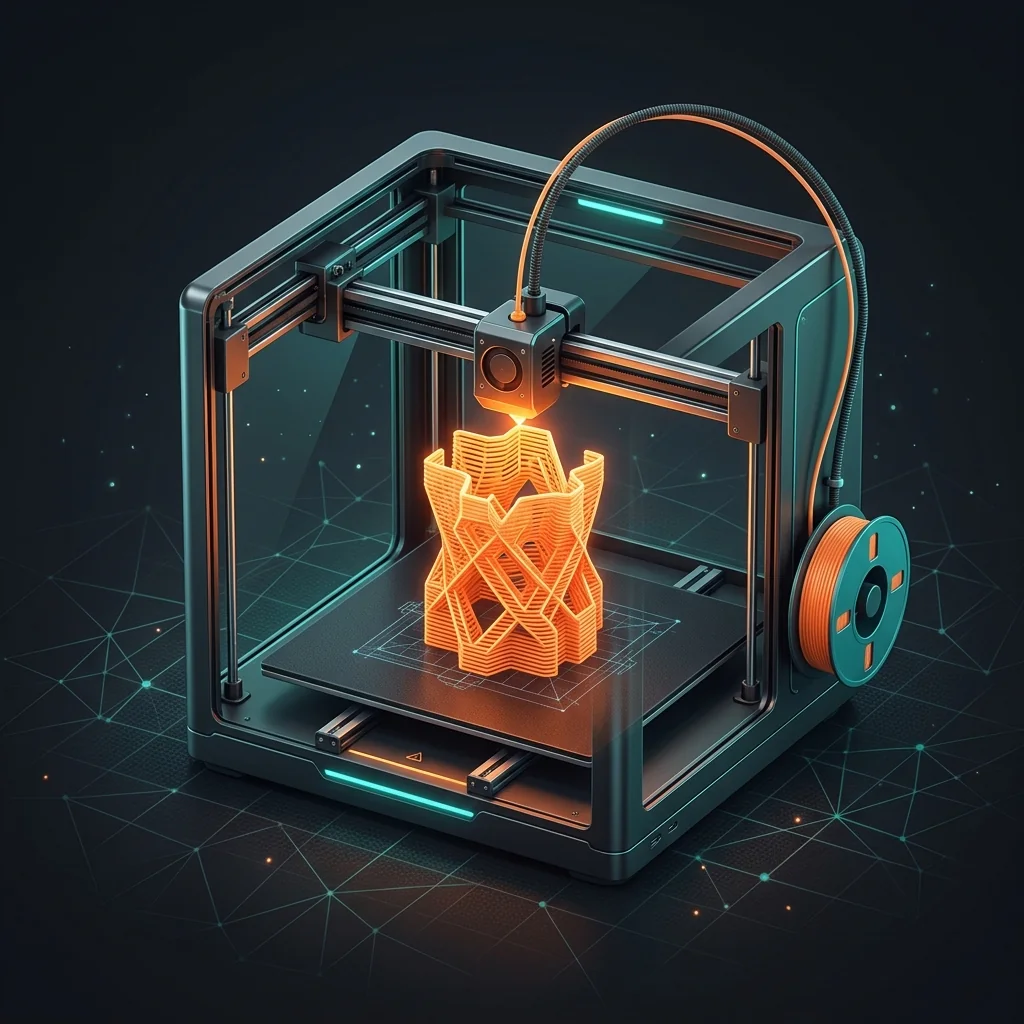
3D printing (also called additive manufacturing) is a technology that builds a physical object directly from a digital model by adding material layer by layer. Unlike traditional manufacturing, where we cut or remove material from a block, here the object is “grown” from the bottom up – using only as much material as needed. This seemingly simple difference unlocks possibilities that conventional methods cannot achieve.
How 3D printing works
The whole process runs through three clear steps, regardless of the technology:
- Digital model. It starts with a 3D model – made in CAD software or downloaded ready. The file is usually in STL or STEP format.
- Slicing. Special software (a slicer) splits the model into hundreds of thin horizontal layers and generates the printer’s instructions – path, temperature, speed.
- Layer-by-layer printing. The printer deposits or cures material layer upon layer until the object is fully formed.
The result is a physical part that existed only as a file hours earlier. It is exactly this speed – from idea to object in a single day – that makes the technology so powerful.
The main 3D printing technologies
“3D printing” is not one technology but a whole family. Here are the most common:
FDM
Fused filament fabrication. A heated nozzle lays down thermoplastic filament layer by layer. The most affordable and widespread technology.
SLA / resin
Curing liquid photopolymer resin with UV light. Exceptional detail and a smooth surface finish.
SLS
Selective laser sintering of powdered polymer. Complex geometries without supports – strong for engineering parts.
MJF
Multi Jet Fusion – HP’s technology for serial production of polymer parts with good mechanical properties.
Metal printing
DMLS, SLM, EBM – melting or sintering metal powder. Titanium, steel, Inconel for aerospace and medicine.
DLP / LCD
Curing resin with a projector or LCD mask. Fast, affordable resin printing for detailed models.
Each technology has strengths and weaknesses. A quick comparison and a selection wizard are in the tools, and the full catalogs are in the printer and material libraries.
Materials for 3D printing
Choosing a material matters just as much as the technology. In short:
- PLA – the easiest filament for beginners; for models and prototypes.
- PETG, ABS, ASA – tougher and heat-resistant; for functional parts.
- TPU – flexible; for seals and dampers.
- Resins – for high detail (miniatures, dental, jewellery).
- Powders (polymer and metal) – for industrial parts and series.
The filament catalog holds over 17,000 products with properties and applications.
What 3D printing is used for
From hobby to space – applications grow every year:
- Prototyping – fast iterations in product development.
- Manufacturing – small series, spare parts, tooling.
- Medicine – prosthetics, implants, surgical planning models.
- Education – hands-on learning of engineering and design.
- Home & hobby – gadgets, toys, repairs.
Why 3D printing matters
It democratizes manufacturing: it lets a single person or a small company create what once required a factory and expensive moulds. Geometric freedom, low cost per unit and fast iterations are changing how things are designed and made.
How to get started
You do not need to know everything upfront – you need your first print. If you are considering a first printer, see the buyer’s guide. For a systematic start, The Big Book of 3D Printing and the Academy cover the whole path from basics to production. And if you just need a finished part without buying a machine – our 3D printing services are available.
3D printing is not the future – it is the present, accessible to everyone. EduFacturing is the platform that makes it understandable: tools, catalogs, knowledge and services in one place. Explore the whole ecosystem and start creating.
The full picture
This article is one page from The Big Book of 3D Printing: 704 illustrated pages covering every technology, material and fix in one reference.
Read it on Kindle →Frequently asked questions
How does 3D printing work?
What are the main types of 3D printing technology?
What materials can be used in 3D printing?
What is 3D printing used for?
Engineer, author of The Big Book of 3D Printing and additive manufacturing expert
Updated on 30 May 2026
This article was written with AI assistance; the facts were checked against the sources on 30 May 2026.