

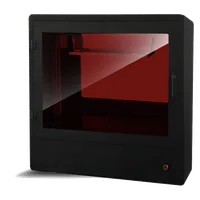
The Photocentric Liquid Crystal HR is a large-format LCD/MSLA printer in the prosumer class, designed for serious production use: dental laboratories, casting masters and small-batch functional parts. With a 160 × 120 × 200 mm build volume, a mono LCD matrix and optimisation for Photocentric's own resins, the HR combines industrial reliability with an accessible acquisition price.
What it is
The Liquid Crystal HR is Photocentric's flagship in the desktop LCD printer segment. Unlike FDM machines, it does not extrude plastic: instead, it dips the build platform into a vat of photopolymer resin and cures it layer by layer with a UV LCD matrix. Photocentric is notable for manufacturing both printers and resins, which means tight hardware-to-material optimisation. The HR model targets dental clinics, jewellers, foundries and small manufacturers seeking high detail and repeatable batch output.
Technical specifications
| Technology | LCD / MSLA (mono matrix) |
|---|---|
| Build volume | 160 × 120 × 200 mm |
| XY resolution | ~75 µm (mono LCD panel) |
| Layer thickness | 25 – 100 µm |
| Light source | UV LED array + mono LCD screen |
| Compatible resins | Photocentric own + third-party (405 nm) |
| Class / Price | Prosumer · ~€1850 |
Who it’s for
- Serial dental printing (crowns, temporary prostheses and orthodontic models at high accuracy) multiple parts per build (Dental medicine)
- Casting master models: wax-like and direct casting resin for precision casting of jewellery, figurines and metal parts with zero ash residue (Jewellery and foundry)
- Functional batch prototypes: tough ABS-like or rigid resins for mechanical testing of small batches before committing to production tooling (Product design and R&D)
- Precision technical parts: connectors, housings and micro-components with tight tolerances unachievable via FDM (Electronics and medical)
Setup and calibration
- Level the build platform against the FEP/nFEP film of the resin vat. Even first-layer contact across the full area: no corner delamination.
- Run an Exposure Validation Matrix test with the specific resin. Determines optimal exposure time and lift speed for the resin: no under-cured holes or over-cured blooming.
- Check resin level in the vat (between the min and max marks). Sufficient resin for full platform immersion: no air pockets at print start.
- Inspect the FEP/nFEP film against light for cloudiness, holes or stuck resin. A clear transparent film ensures even UV transmission and layer release without tearing.
Common defects and fixes
Resin exposure helper
Pick a resin type for starting exposure values (typical for mono-LCD machines). These are STARTING points: always run an exposure test, because the exact seconds depend on your screen power and the specific resin:
Conclusion
The Liquid Crystal HR is a compelling choice for any workshop or laboratory that needs to produce in series using LCD technology: large volume, fine detail and Photocentric's mature resin ecosystem offset the lower throughput compared to FDM. The investment pays off wherever precision and repeatability have direct value: dental, casting, precision prototyping.
The full picture
This article is one page from The Big Book of 3D Printing: 704 illustrated pages covering every technology, material and fix in one reference.
Read it on Kindle →Engineer, author of The Big Book of 3D Printing and additive manufacturing expert