

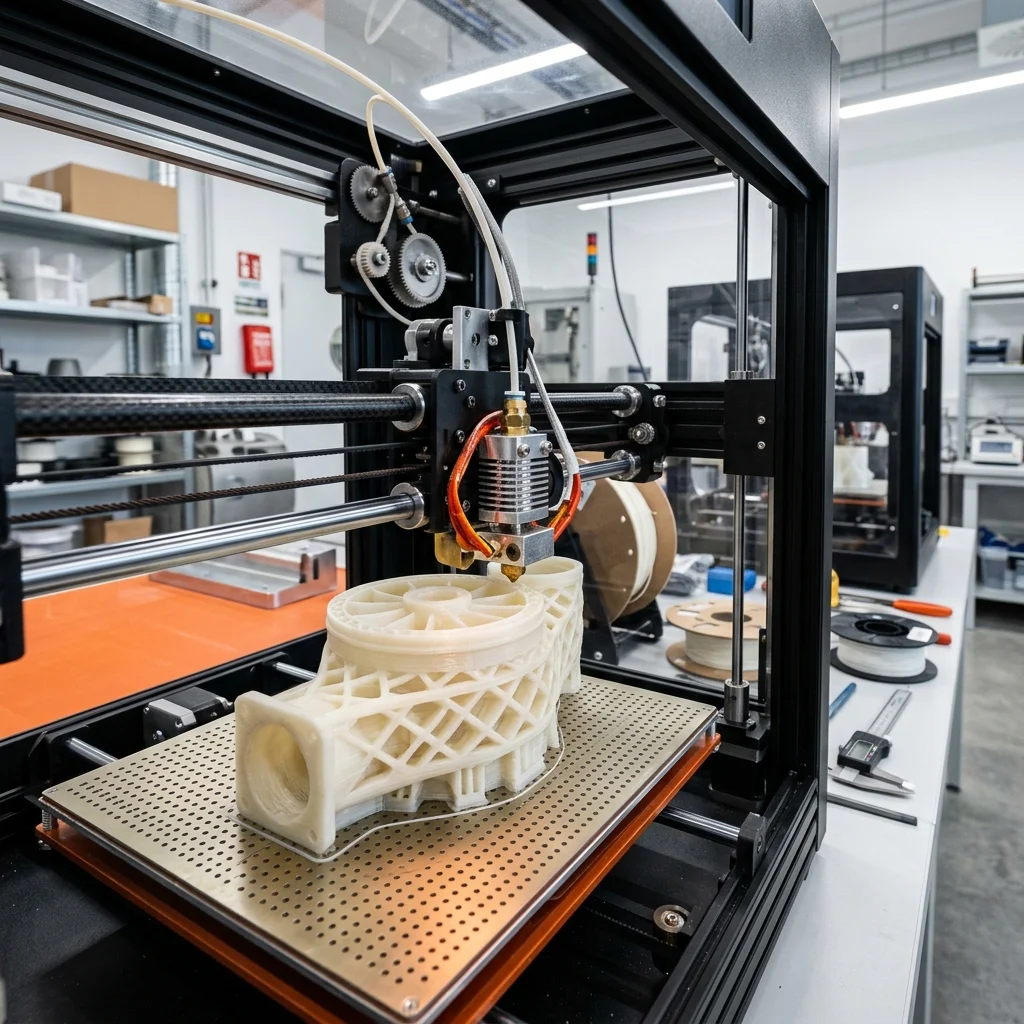
Nylon (Polyamide – PA) is arguably one of the most versatile and durable materials in additive manufacturing. Its exceptional wear resistance, chemical tolerance, and high mechanical strength make it the go-to choice for functional prototyping, custom gears, and high-stress load-bearing components. High-temperature variants of nylon, such as PA12, PPA, and carbon fiber composites (PA-CF), push the boundaries even further, offering extreme thermal resistance and structural stability.
Despite its undeniable advantages, printing with high-temperature nylon is accompanied by significant challenges. From its highly hygroscopic nature to its notorious tendency for thermal warping, the material demands a zero-compromise approach regarding hardware and preparation. In this article, we dive deep into the best practices, technological requirements, and engineering secrets to achieving flawless, industrial-grade results with technical polyamides.
Hygroscopy: Nylon's Invisible Enemy
Nylon is an exceptionally hygroscopic polymer, meaning it absorbs ambient moisture from the air at an alarming rate. Even just a few hours of exposure to normal room humidity can compromise a spool. When wet filament passes through the hotend, the trapped water rapidly flashes into steam. This causes micro-explosions within the nozzle, leading to stringing, inconsistent extrusion, popping sounds, and a drastic reduction in part strength due to poor layer adhesion.
To combat this, drying your filament prior to printing is absolutely non-negotiable. It is highly recommended to dry the spool in a dedicated filament dehydrator or convection oven at temperatures between 75°C and 90°C for 6 to 12 hours. For optimal results and guaranteed industrial quality, the printing process itself should occur directly out of an active dry box to prevent re-absorption during prolonged multi-hour print jobs.
Hardware Requirements: Preparing the Machine
High-temperature nylon requires extrusion temperatures that typically exceed 250°C, and often reach between 280°C and 300°C depending on the specific blend. This makes a true All-Metal hotend mandatory. Standard hotends equipped with a PTFE (Teflon) liner will rapidly degrade at these temperatures, off-gassing toxic fumes and leading to catastrophic clogs and failures.
Furthermore, if you are working with reinforced nylon composites such as glass-filled (PA-GF) or carbon-filled (PA-CF) nylon, it is critical to use a hardened nozzle: such as hardened steel, tungsten carbide, or a ruby-tipped nozzle. These composite materials are highly abrasive and will literally chew through a standard brass nozzle in less than a single kilogram of printed material. Additionally, a direct-drive extruder with strong gearing is highly recommended to handle the extrusion force required by the viscous molten polymer.
Managing Thermal Stress: Warping and Bed Adhesion
Due to its semi-crystalline structure, nylon has a high coefficient of thermal contraction as it cools. This induces massive internal stresses within the printed part, leading to severe warping and premature detachment from the build plate. An enclosed printer (Enclosure) is critical for success here: it maintains a stable, elevated ambient temperature (ideally 40°C-60°C or more), allowing the part to cool down slowly and evenly, which radically minimizes stress.
For perfect bed adhesion, the build plate temperature should be set between 70°C and 120°C. Build surfaces like Garolite (G-10), PEI, or specialized textured glass are the preferred choices. However, a specialized nylon adhesive (like Magigoo PA) or a heavy coat of PVA glue is practically required to guarantee the first layer stays down. Utilizing a generous Brim in your slicer will further increase the contact surface area, pinning the corners of the print down against the pulling forces of contraction.
Slicing Strategies and Cooling Control
When configuring your slicer profile for nylon, the golden rule of cooling is simple: turn it off! The part cooling fan should be set to 0% for almost the entirety of the print. Excessive, or even mild cooling, induces thermal shock, causing instantaneous shrinkage, aggressive warping, and catastrophic delamination of the Z-axis layers. A very slight fan speed (10-20%) should only be enabled for extremely complex bridging or tiny features that lack the time to cool naturally.
Optimal print speeds are generally conservative, typically falling within the 30 – 50 mm/s range, ensuring a steady melt rate and superior layer fusion. Layer heights between 0.1mm and 0.3mm yield excellent results. Pro-tip: If you are struggling with geometric accuracy and warping, consider transitioning to a carbon fiber-filled variant (PA-CF). The suspended rigid fibers significantly restrict thermal shrinkage, making the material drastically easier to print while simultaneously increasing its overall stiffness and dimensional stability.
Conclusion
3D printing with high-temperature nylon unlocks the ability to manufacture true industrial, wear-resistant, and enduring components. Mastering this material requires a commitment to the right hardware and strict adherence to preparation protocols: most notably, the absolute elimination of moisture and the careful control of the thermal environment. Armed with the right knowledge and best practices, you can transform your 3D printer into a formidable production machine capable of fabricating engineering parts that thrive in extreme conditions.
The full picture
This article is one page from The Big Book of 3D Printing: 704 illustrated pages covering every technology, material and fix in one reference.
Read it on Kindle →Engineer, author of The Big Book of 3D Printing and additive manufacturing expert