

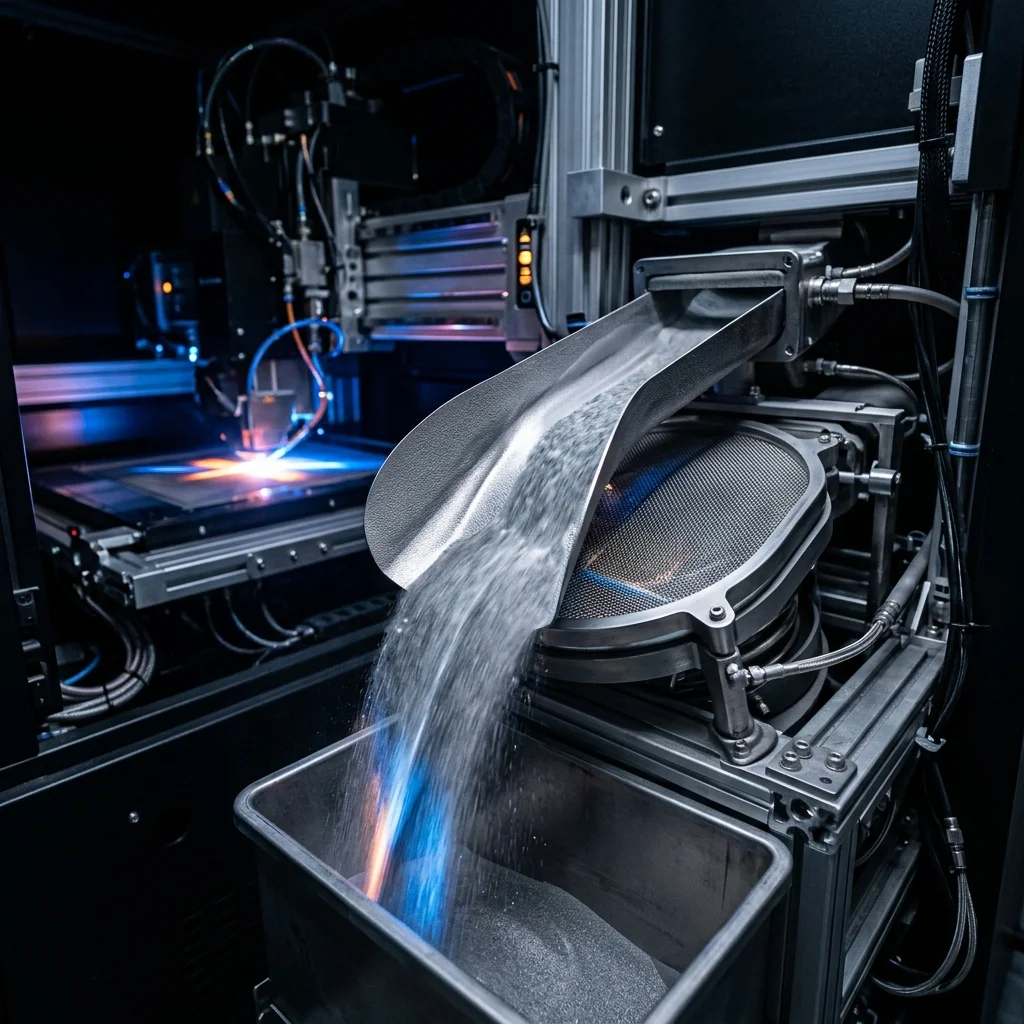
In 2025–2026, zero-waste metal powder recycling in PBF and Binder Jetting is critical for both sustainability and economics. Only 5–15% of powder becomes parts; the remaining 85–95% can potentially be recycled.
Powder Recycling Effects
| Property | Virgin | 5× Recycled | 10× Recycled |
|---|---|---|---|
| Sphericity | > 95% | 90–95% | 85–90% |
| Oxygen Content | < 300 ppm | 400–600 | 600–1000 |
| Mechanical Properties | Baseline | ≈ Baseline | ↓ 5–10% |
Interactive Filament Selector
Answer 3 quick questions and find the optimal material for your project.
1. What are the mechanical requirements for the part?
2. What temperature will the part operate at?
3. Are there any specific environmental requirements?
Our recommendation:
PLA filament
Ideal for easy printing, model visualization and decorative parts.
Zero-Waste Strategies
- Refresh Rate: Mix virgin + recycled at set ratio (e.g., 30/70).
- Sieving: Remove agglomerates and oversized particles.
- Plasma Spheroidization: Reprocess irregular particles into spheres.
- Closed-Loop Systems: Machines with integrated sieving (EOS, HP).
Pros and Cons
Pros:
- Cost Reduction: Metal powder €50–€500/kg, recycling saves significantly.
- Sustainability: Less waste and emissions.
Cons:
- Degradation: Multiple recycling degrades properties.
- Certification: Aviation/medical requires additional testing.
FAQ
Zero-Waste Metal Powder Recycling For Pbf And Binder Jetting Calculator
Interactive optimization calculator.
The full picture
This article is one page from The Big Book of 3D Printing: 704 illustrated pages covering every technology, material and fix in one reference.
Read it on Kindle →Engineer, author of The Big Book of 3D Printing and additive manufacturing expert