

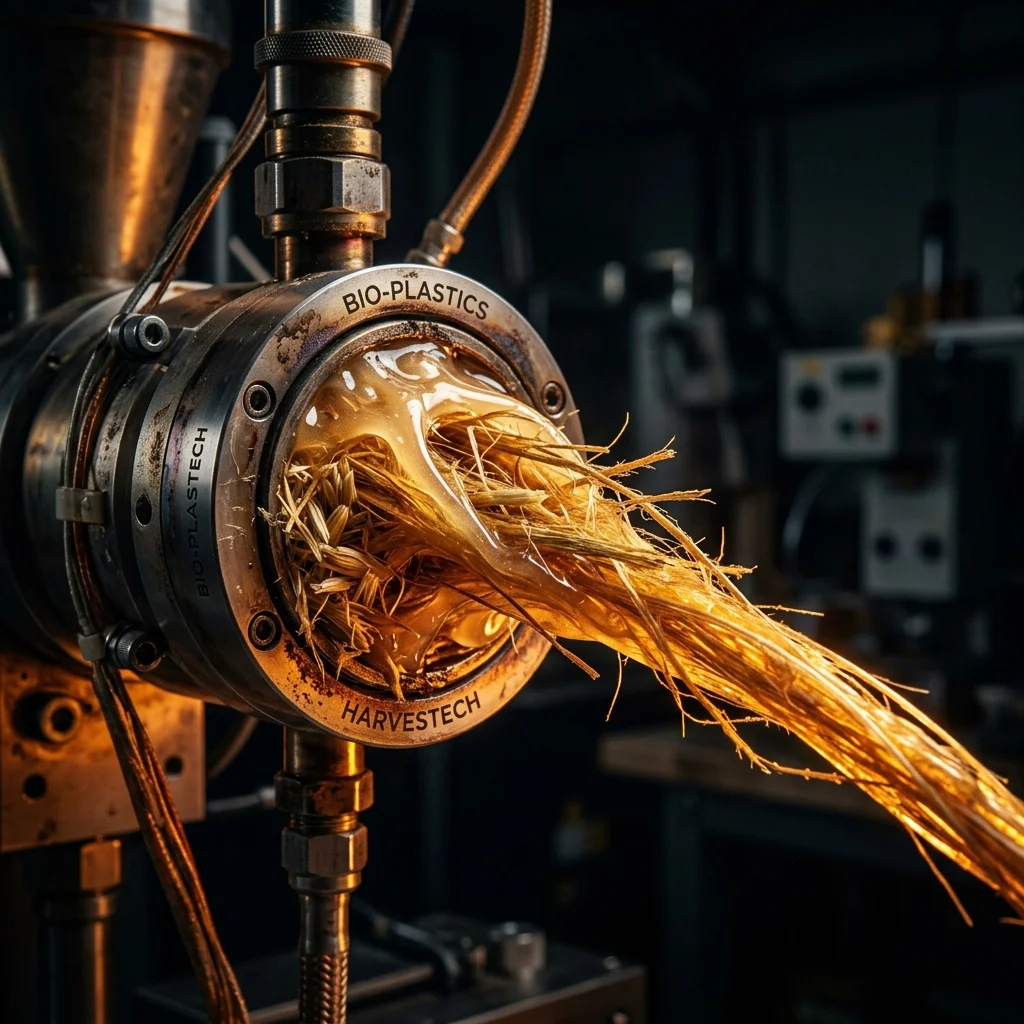
In 2025–2026, upcycling agricultural waste into 3D printing polymers transforms farm “waste” into engineering materials. Bio-based polymers from agricultural residues are the next generation of sustainable AM materials.
Agricultural Waste as Feedstock
| Source | Polymer | Properties | Status |
|---|---|---|---|
| Corn Starch | PLA | Biodegradable | Commercial |
| Sugarcane | Bio-PE | Identical to petroleum PE | Commercial |
| Castor Oil | PA11 (Bio-Nylon) | Excellent strength | Commercial |
| Wood Waste | Wood-filled PLA | Aesthetics, texture | Commercial |
| Algae | Algae-based PLA | Carbon-negative | Research |
Interactive Filament Selector
Answer 3 quick questions and find the optimal material for your project.
1. What are the mechanical requirements for the part?
2. What temperature will the part operate at?
3. Are there any specific environmental requirements?
Our recommendation:
PLA filament
Ideal for easy printing, model visualization and decorative parts.
Pros and Cons
Pros: Carbon neutral/negative, waste valorization, biodegradable, local sourcing. Cons: Weaker mechanical properties, potential land use competition, requires industrial composting.
FAQ
Upcycling Agricultural Waste Into 3D Printing Polymers Calculator
Interactive optimization calculator.
The full picture
This article is one page from The Big Book of 3D Printing: 704 illustrated pages covering every technology, material and fix in one reference.
Read it on Kindle →Engineer, author of The Big Book of 3D Printing and additive manufacturing expert