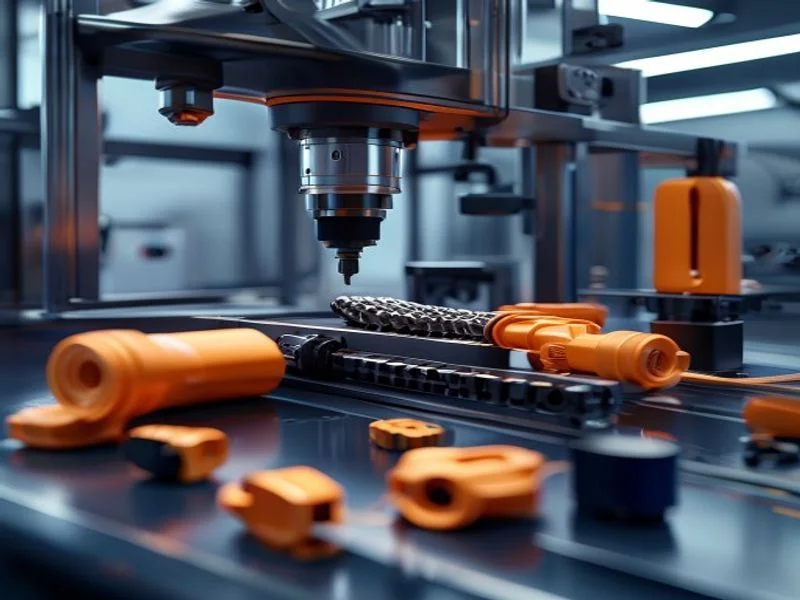
3D printing is a rapidly evolving technology that is finding increasing applications in various fields. One of these areas is the production of sports equipment and spare parts. In this guide, we will explore the typical requirements for 3D printing sports equipment, recommended technologies and materials, as well as common challenges and real-world examples.
Typical Requirements
When producing sports equipment and spare parts using 3D printing, several important requirements must be considered. Pros:
- Lightweight construction
- Increased material strength
-
Possibility for personalized design Cons:
-
Limitations when printing large volumes
- High production costs Some of the recommended technologies for 3D printing sports equipment are: FDM (Fused Deposition Modeling), SLS (Selective Laser Sintering), MJF (Multi Jet Fusion), CFF (Continuous Filament Fabrication).
Recommended Technologies and Printers
Some of the recommended printers for 3D printing sports equipment are:
- FDM-1: Ultimaker 3
- FDM-2: Prusa i3
- SLS-2: Sinterit Lisa
- MJF-1: HP Jet Fusion 4200
- MJF-2: HP Jet Fusion 5200
- CFF-1: MarkForged X7
- CFF-2: MarkForged X5 [IMAGE: /images/3d_printer.webp]
Recommended Materials
When 3D printing sports equipment and spare parts, materials must be chosen that meet the requirements for strength, lightness, and durability. Some of the recommended materials are:
- PLA (Polylactic Acid)
- ABS (Acrylonitrile Butadiene Styrene)
- PETG (Polyethylene Terephthalate Glycol)
- Nylon
- Carbon Fiber
Real-World Examples
Some real-world examples of 3D printing sports equipment and spare parts include the production of running shoes, bicycle seats, and car parts. These examples demonstrate the potential of 3D printing to produce personalized and high-quality products that meet the individual needs of athletes.
Cost Expectations
The expected costs for 3D printing sports equipment and spare parts vary widely, depending on the technology, material, and complexity of the product. Here is an example breakdown of costs:
- Investment: 5000
- Training: 1000
- Materials: 2000
- Total: 8000
Common Challenges
Some of the common challenges of 3D printing sports equipment and spare parts are limitations when printing large volumes, high production costs, and the need for highly qualified specialists. To overcome these challenges, it is essential to invest in the right technologies and training.
Frequently Asked Questions (FAQ)
Interactive Analyzer for Sports Equipment Spare Parts 3D Printing
Select a profile to view detailed analysis.
The full picture
This article is one page from The Big Book of 3D Printing: 704 illustrated pages covering every technology, material and fix in one reference.
Read it on Kindle →Engineer, author of The Big Book of 3D Printing and additive manufacturing expert
Updated on 27 June 2026
This article was written with AI assistance; the facts were checked against the sources on 27 June 2026.