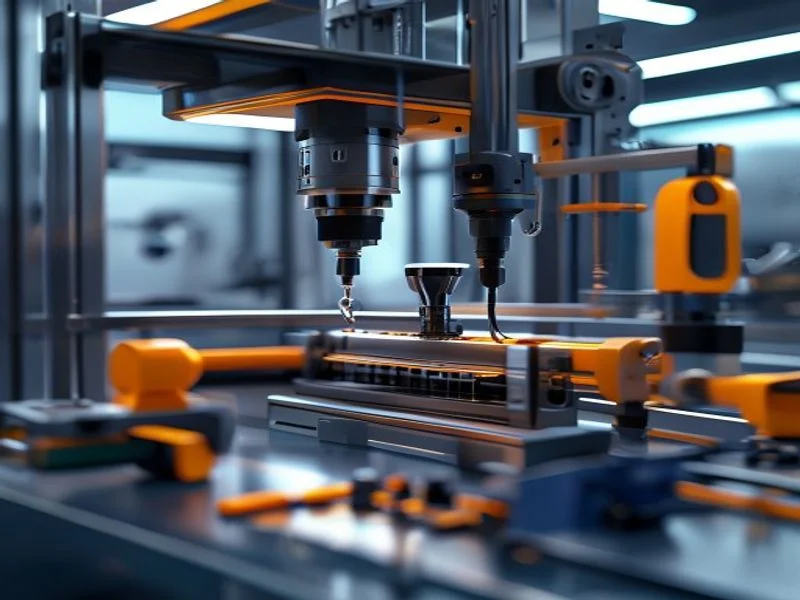
Sports equipment and tools are crucial for athletes looking to improve their performance and reduce the risk of injury. 3D printing offers a unique opportunity to create personalized and optimized sports equipment and tools. In this guide, we will explore typical requirements, recommended technologies, recommended printers and materials, real-world examples, cost expectations, and common challenges in 3D printing sports equipment tools and jigs.
Typical Requirements
When 3D printing sports equipment tools and jigs, it is essential to meet some basic requirements. These include: conformity to the athlete’s size and shape, optimization of weight and strength, ensuring comfort and ergonomics. Additionally, the equipment must be durable and able to withstand intensive use.
Recommended Technologies
Pros:
     * FDM (Fused Deposition Modeling) - suitable for printing large and complex objects
     * SLS (Selective Laser Sintering) - suitable for printing parts with high accuracy and strength
     * MJF (Multi Jet Fusion) - suitable for printing objects with high accuracy and speed
     * CFF (Continuous Fiber Fabrication) - suitable for printing objects with high strength and stability
     Cons:

     * FDM - limited accuracy and speed
     * SLS - high cost and limited availability of materials
     * MJF - high cost and limited availability of materials
     * CFF - limited availability of materials and high cost
Recommended Printers
Some recommended printers for 3D printing sports equipment tools and jigs are:
     * FDM-1: Monoprice Select Mini V2
     * FDM-2: Prusa i3
     * SLS-2: Sinterit Lisa
     * MJF-1: HP Jet Fusion 4200
     * MJF-2: HP Jet Fusion 5200
     * CFF-1: MarkForged X7
     * CFF-2: MarkForged X5
Recommended Materials
Some recommended materials for 3D printing sports equipment tools and jigs are:
     * PLA (Polylactic Acid) - biodegradable and resistant to wear
     * ABS (Acrylonitrile Butadiene Styrene) - strong and resistant to wear
     * PETG (Polyethylene Terephthalate Glycol) - resistant to wear and chemically stable
     * Nylon - strong and resistant to wear
     * Carbon Fiber - strong and lightweight
Real-World Examples
[IMAGE: /images/sport_equipment.webp] Sports equipment and tools made through 3D printing are already being used by many athletes and teams. For example, the American football team “New England Patriots” uses 3D printed helmets for training and games.
Cost Expectations
- Investment: $5000 – Training: $1000 – Materials: $2000 – Total: $8000
Common Challenges
When 3D printing sports equipment tools and jigs, some common challenges may arise, such as:
     * Stability and accuracy of the print
     * Quality of materials
     * Limitations of print speed and productivity
Frequently Asked Questions (FAQ)
Interactive Analyzer for Guide To 3D Printing Sports Equipment Tools And Jigs
Select a profile to view detailed analysis.
The full picture
This article is one page from The Big Book of 3D Printing: 704 illustrated pages covering every technology, material and fix in one reference.
Read it on Kindle →Engineer, author of The Big Book of 3D Printing and additive manufacturing expert
Updated on 27 June 2026
This article was written with AI assistance; the facts were checked against the sources on 27 June 2026.