

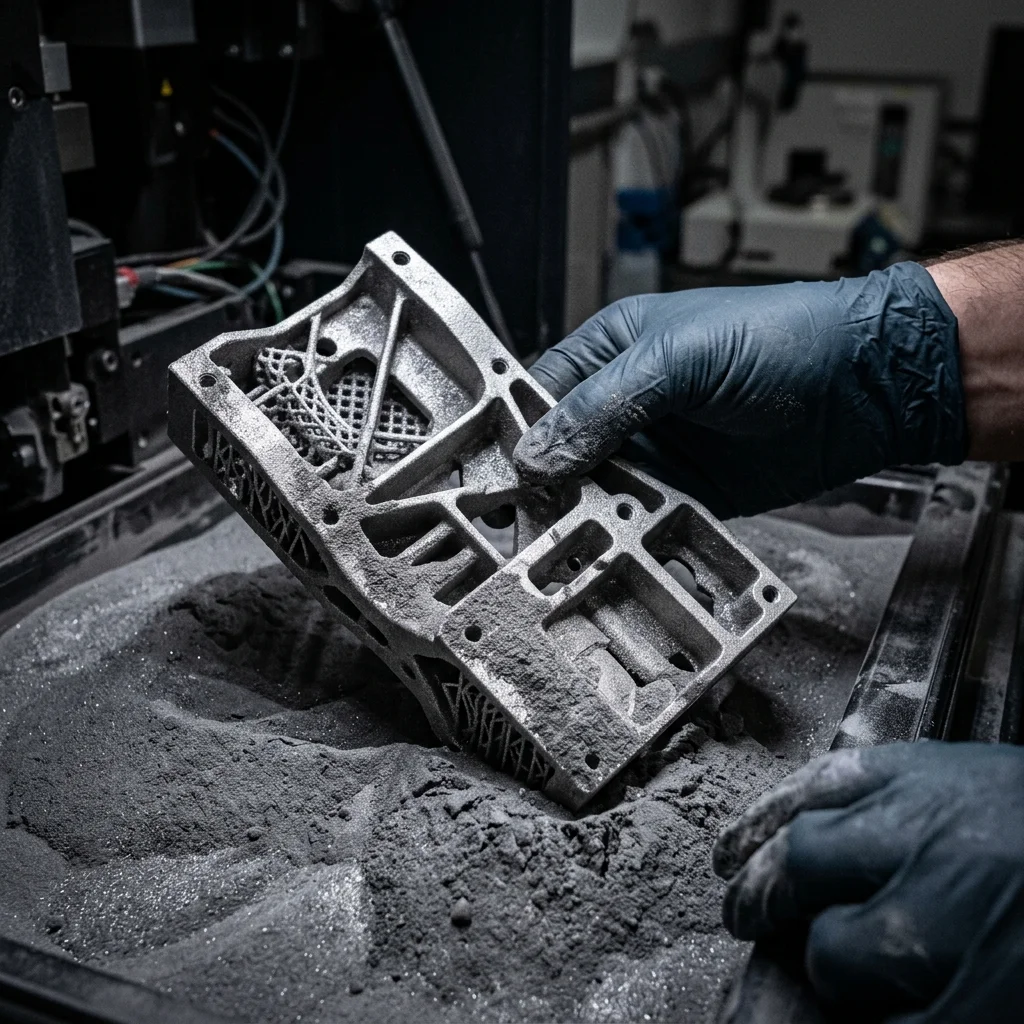
PA11 (Nylon 11) and Alumide are specialized powders for SLS technology that offer unique mechanical and visual properties. PA11 provides exceptional durability and flexibility, while Alumide adds fine aluminum particles for a metallic appearance and increased stiffness.
Technology Basics of PA11 and Alumide
SLS printers use these powders to create high-quality engineering parts. PA11 is a bio-based polymer derived from castor oil, making it more eco-friendly than PA12.
Alumide is a blend of polyamide and fine aluminum powder. This combination results in parts with a metallic sheen and excellent machinability.
-
Exceptional Elongation: PA11 can withstand significant stress before breaking, making it perfect for hinges and brackets.
-
Metallic Appearance: Alumide gives parts a specific look and feel, resembling metal components.
-
Thermal Resistance: Both materials offer good resistance to high temperatures.
Recommended SLS Printers
Not every SLS printer can handle these specific materials, as they require precise temperature control.
-
Formlabs Fuse 1+ 30W: Designed to work excellently with PA11 and carbon-reinforced powders at high speeds.
-
Sinterit Lisa Pro: Supports a nitrogen environment, which is crucial for printing with PA11.
-
Sintratec S2: A high-temperature system, ideal for experimenting with complex blends like Alumide.
Popular Brands and Specifications
Choosing the right manufacturer is important for consistent results. Here are the market leaders:
-
Formlabs Nylon 11 CF: Carbon-reinforced PA11 for maximum strength and stiffness.
-
Sinterit PA11 Black: A classic black Nylon 11, ideal for end-use products.
-
EOS Alumide: The original and most popular aluminum-polyamide blend on the market.
Tensile Strength (PA11): 48 MPa
Elongation at Break (PA11): 40%
Melting Temperature (Alumide): 176°C
Density (Alumide): 1.36 g/cm³
Applications and Pitfalls
These materials are used where standard PA12 falls short.
-
Automotive Parts: Alumide is often used for decorative elements and panels requiring a metallic look.
-
Medical Prosthetics: PA11 is preferred for its elasticity and high impact resistance.
-
Living Hinges: PA11 is a leader in creating durable built-in hinge mechanisms.
The main challenges involve operating in an inert environment and post-processing:
-
Nitrogen Requirement: To prevent oxidation and preserve material properties, PA11 often requires printing in a nitrogen atmosphere.
-
Cold Warping: PA11 is more prone to warping than PA12 if not cooled down properly.
-
Alumide Machining: The presence of aluminum means parts must be sanded and polished differently than pure plastics.
Costs and Pricing
Printing with PA11 and Alumide is more expensive than standard PA12 due to raw material costs and the need for nitrogen.
Price per kg of PA11: €90 – €160
Price per kg of Alumide: €100 – €180
Refresh Rate: ~30-50%
Frequently Asked Questions (FAQ)
Interactive Analyzer for 3D Printing With Sls: Pa11 & Alumide Guide
Select a profile to view detailed analysis.
The full picture
This article is one page from The Big Book of 3D Printing: 704 illustrated pages covering every technology, material and fix in one reference.
Read it on Kindle →Engineer, author of The Big Book of 3D Printing and additive manufacturing expert