

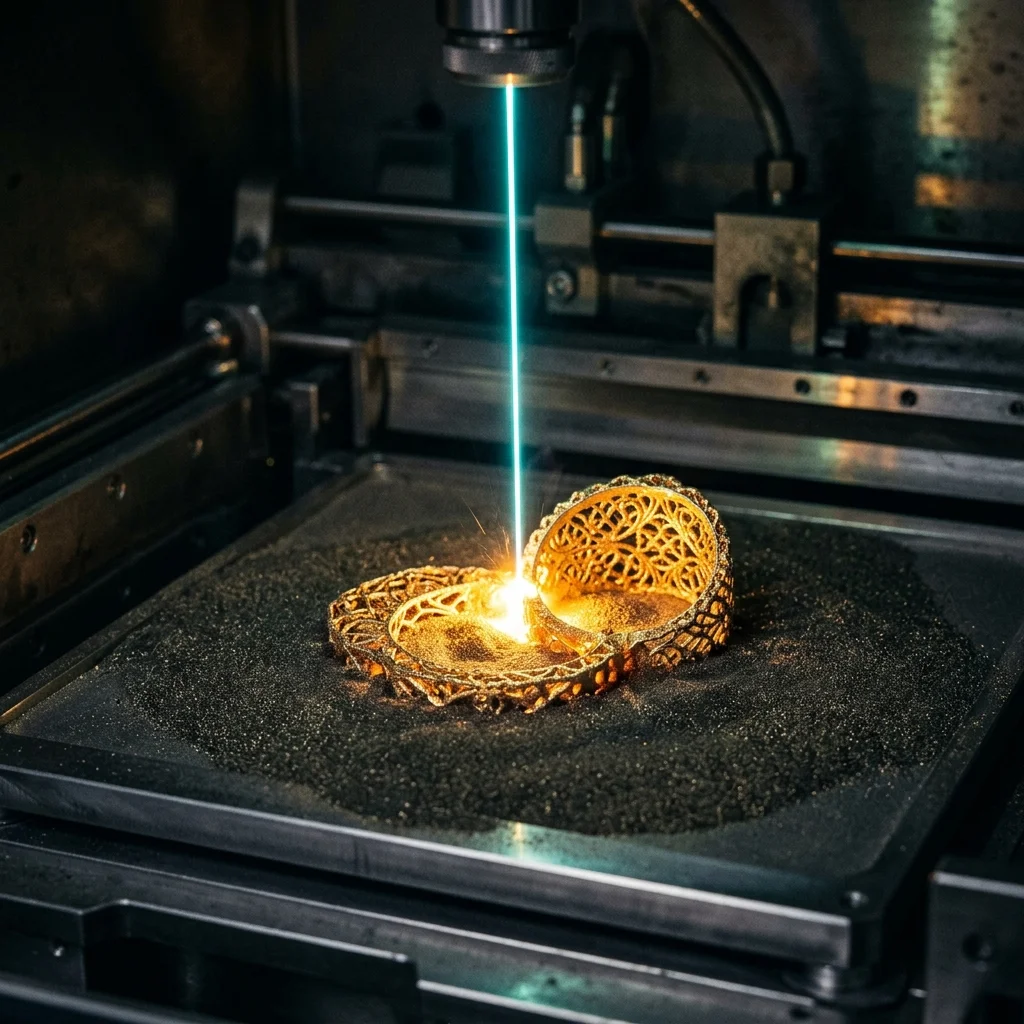
3D printing of precious metals like gold, silver, and platinum directly from a digital file marks a turning point not only in jewelry but also in the manufacturing of luxury watches, customized dentistry, and specialized electronics. By utilizing Selective Laser Melting (SLM) technology, fine powders of precious metals are melted layer by layer with high precision, creating objects of extraordinary complexity without the need for casting molds. Direct 3D printing of these expensive materials offers unprecedented design freedom, allowing the creation of hollow structures, interlocking chains in a single step, and shapes unimaginable through traditional investment casting. In this guide, we will dive into the specifics of SLM printing with precious metals, the leading machines and materials, as well as the significant economic considerations when working with them.
Basics of SLM Technology for Precious Metals
The SLM process for precious metals follows the same basic principles as for industrial metals: a laser beam melts specific areas on a layer of metal powder, then a new layer is applied, and the process repeats. However, precious metals possess specific physical and optical properties that require a specialized approach.
For instance, gold and silver have very high thermal conductivity and high reflectivity to standard infrared lasers used in most SLM printers. This means a large portion of the laser energy is reflected, and the absorbed energy quickly dissipates into the surrounding material. To compensate for this, printers for precious metals often use lasers with higher power or a specific wavelength (e.g., green lasers) that are absorbed more efficiently by these metals. Another critical aspect is the focal spot size of the laser, which must be extremely small to achieve the resolution and smoothness required in jewelry.
Applications: From Jewelry to Specialized Electronics
The direct printing of precious metals finds applications in several key sectors:
- Jewelry and Luxury Goods: This is the largest market for the technology. Designers can create ultra-lightweight jewelry with complex mesh structures, customized engagement rings, and unique watch cases that require no assembly.
- Dentistry: Gold and platinum-based alloys have traditionally been used for dental crowns and bridges due to ratios of biocompatibility. SLM enables mass customized production of these elements with a perfect fit.
- Electronics and Aerospace: Precious metals, especially gold and silver, have superior electrical conductivity and corrosion resistance. 3D printed components from these metals are used for high-frequency antennas, specialized connectors, and microelectronic components for satellites.
Recommended SLM Machines for Precious Metals
Machines for printing precious metals typically have a smaller build volume to minimize the amount of expensive powder needed to start the process.
- EOS EOS M 290: While it is a mid-range industrial machine, with the right settings and adaptations, it can be used for printing precious metals, especially when higher productivity and larger batches are sought. However, EOS also offers specialized smaller machines (like the M 100) more optimized for expensive materials.
- Desktop Metal Shop System: As mentioned, this is a Binder Jetting system. It is actively being tested for mass jewelry production as it allows fast printing of hundreds of parts without the need for supports, which are subsequently sintered.
- SLM Solutions SLM 280 2.0 / Sisma Systems: Sisma (often in partnership with Trumpf) is among the absolute leaders in creating machines specifically for the jewelry industry (e.g., the Mysint series). These printers are designed with a focus on recovering 100% of the unused powder and working with small material volumes.
Leading Materials and Alloys
The development of precious metal powders for SLM is a complex process ensuring the correct shape and homogeneity of the alloy.
- CooksonGold 18K Gold Powder: CooksonGold are pioneers in providing ready-to-use powders of various gold alloys (yellow, white, and rose gold 18K), specifically atomized for the 3D printing process. Their materials guarantee density and color meeting the standards in luxury jewelry.
- Sisma Sterling Silver (925): Silver is notoriously difficult for SLM due to its high reflectivity, but Sisma and their partners offer optimized powders and printing parameters for 925 sterling silver, enabling the creation of intricate silver artifacts.
- Progold Platinum 950: Platinum is ideal for 3D printing. Its high melting point, which complicates traditional casting, is not an issue for powerful lasers. SLM platinum is highly pure, and typical defects like porosity found in casting are avoided.
Challenges and Cost Considerations
Printing precious metals comes with a unique set of challenges:
- Material Loss and Powder Management: When working with a material costing tens of thousands of euros per kilogram, every lost speck matters. Machines must be perfectly cleaned, and recycling unused powder is critical. Support structures must be minimalist, as removing them leads to the loss of valuable material in the form of chips.
- Reflectivity: As mentioned, metals like pure gold and silver reflect lasers. This necessitates fine-tuning the laser power and speed to avoid porosity.
- Post-Processing for Perfect Shine: 3D printed jewelry has a matte and slightly rough surface. They require extensive mechanical and chemical polishing to reach the quality of traditional jewelry. Complex internal cavities can be difficult to polish.
- Huge Initial Investment: Beyond the cost of the machine itself, an initial volume of metal powder must be purchased, which can cost more than the printer alone.
Frequently Asked Questions (FAQ)
Interactive Analyzer for 3D Printing Precious Metals With Slm Technology | Edufacturing
Select a profile to view detailed analysis.
The full picture
This article is one page from The Big Book of 3D Printing: 704 illustrated pages covering every technology, material and fix in one reference.
Read it on Kindle →Engineer, author of The Big Book of 3D Printing and additive manufacturing expert