

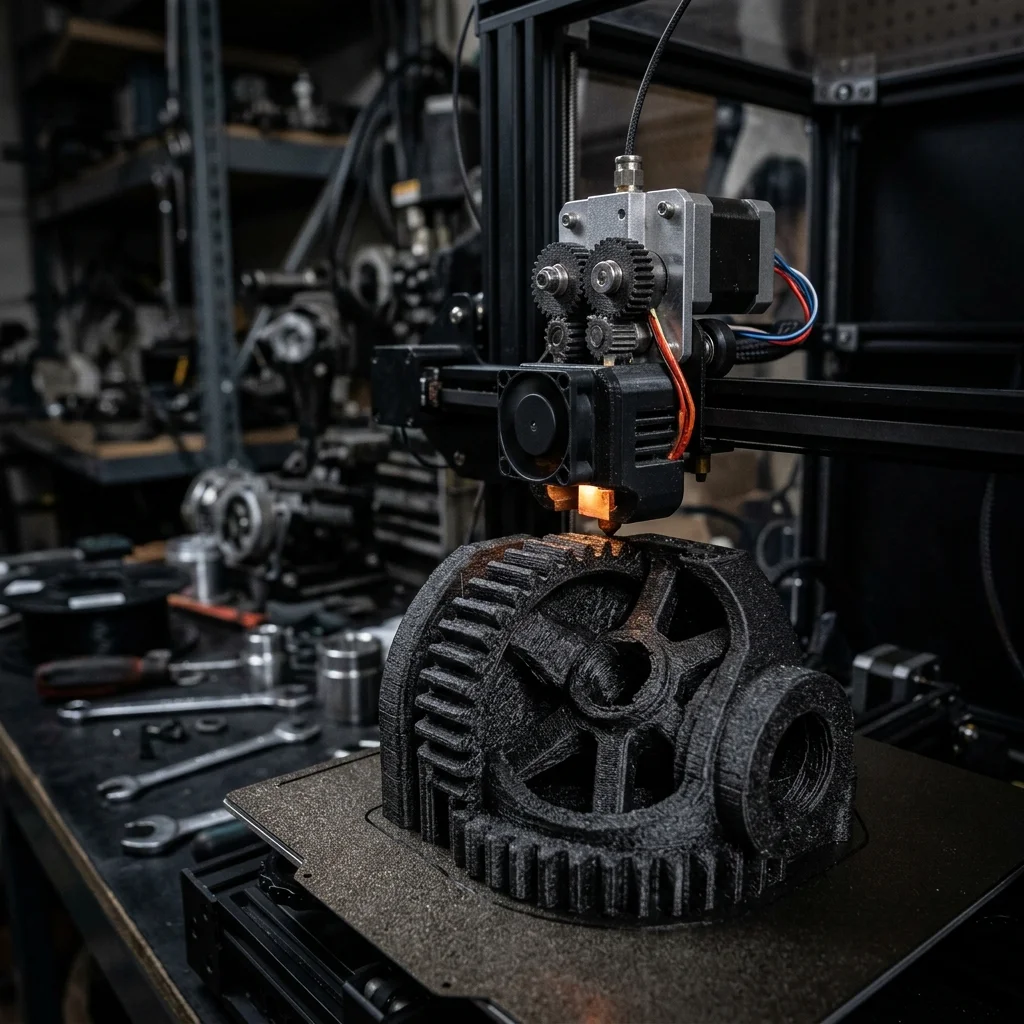
3D printing for Robotics spare parts offers immense opportunities for innovation and production process optimization.
Pros and Cons
- Pros: Rapid manufacturing and extreme customizability.
- Pros: Reduction in tooling costs.
- Cons: Size limitations compared to some traditional methods.
- Cons: Post-processing required for certain technologies.
Recommended Technologies and Materials
Choosing the right tech depends on the specifics of the Robotics spare parts. FDM, SLS, and resin technologies are often used, combined with materials like Carbon Fiber, Nylon, PETG, or engineering resins.
Cost Breakdown
Sample cost implementation for Robotics spare parts:
- Equipment: 15000
- Materials: 2000
- Training: 1000
- Total: 18000
Workflow
- Step 1: Design and 3D model optimization.
- Step 2: Print preparation and slicing.
- Step 3: 3D printing the part.
- Step 4: Post-processing and quality assurance.
Frequently Asked Questions (FAQ)
Q:
How long does printing take?
A:
Time varies from a few hours to a few days depending on size.
Q:
Are the parts durable?
A:
Yes, with the right material choice (e.g., carbon fiber composites or PA12).
Q:
Is post-processing required?
A:
In most cases, support removal is necessary.
Interactive Analyzer for 3D Printing For Robotics Spare Parts – Guide
Select a profile to view detailed analysis.
Strength / Durability
74%
Print Speed
50%
The full picture
This article is one page from The Big Book of 3D Printing: 704 illustrated pages covering every technology, material and fix in one reference.
Read it on Kindle →Engineer, author of The Big Book of 3D Printing and additive manufacturing expert