

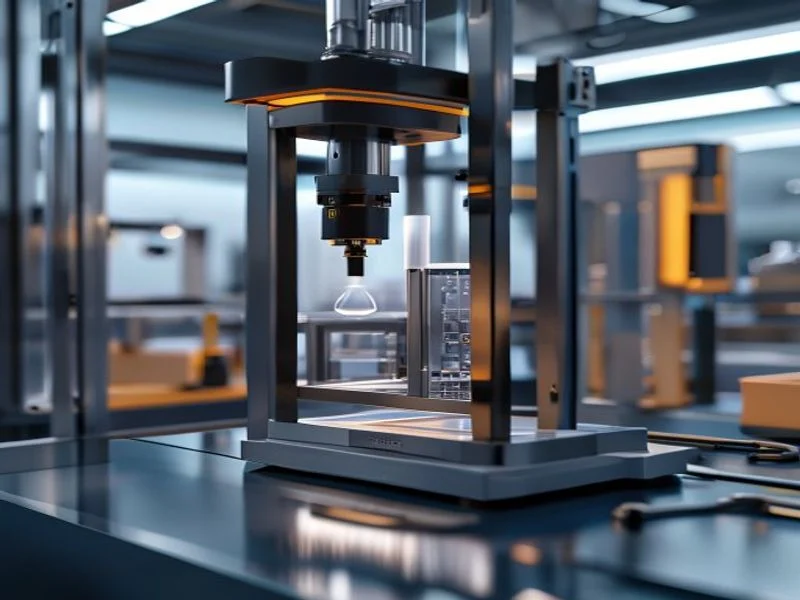
Using 3D printing for Packaging stands and brackets transforms the manufacturing process by offering speed, flexibility, and cost-effectiveness. This technology allows for the creation of customized and complex geometries that traditional methods struggle to achieve.
Typical Requirements
Successful production of Packaging stands and brackets requires high precision and repeatability of parts, along with the strength and durability of the materials used. The ability to rapidly iterate and modify designs is also crucial.
Recommended Technologies and Printers
The most suitable technologies include FDM for robust functional parts, SLA/MSLA for extreme detail, and PolyJet for multi-color solutions. Recommended printers include models 1, fdm-2, msla-1, msla-2, polyjet-1, and polyjet-2.
Recommended Materials
PLA is often used for rapid prototyping, while PETG offers higher strength and temperature resistance. Standard Resin is chosen for fine details, and Flexible Resin for parts requiring elasticity.
Pros and Cons
- Pros: Rapid prototyping, high customization, reduced costs for small batches, design flexibility.
- Cons: Slower production for large volumes, post-processing required for some materials, initial learning curve.
Workflow Timeline
- Step 1: Design and preparation of the 3D model in CAD software.
- Step 2: Slicing and setting print parameters.
- Step 3: 3D printing the part according to settings.
- Step 4: Post-processing including support removal and sanding.
Cost Expectations
- Investment: 1000
- Materials: 250
- Training: 150
- Total: 1400
Real-world Examples
Industry companies utilize 3D printing for Packaging stands and brackets to reduce time-to-market by over 40% and optimize tooling costs significantly.
Common Challenges
Key challenges include proper printer calibration, selecting the right material for the specific application, and managing thermal warping on larger components.
Frequently Asked Questions (FAQ)
Interactive Analyzer for 3D Printing For Packaging Stands And Brackets | Ultimate Guide
Select a profile to view detailed analysis.
The full picture
This article is one page from The Big Book of 3D Printing: 704 illustrated pages covering every technology, material and fix in one reference.
Read it on Kindle →Engineer, author of The Big Book of 3D Printing and additive manufacturing expert