

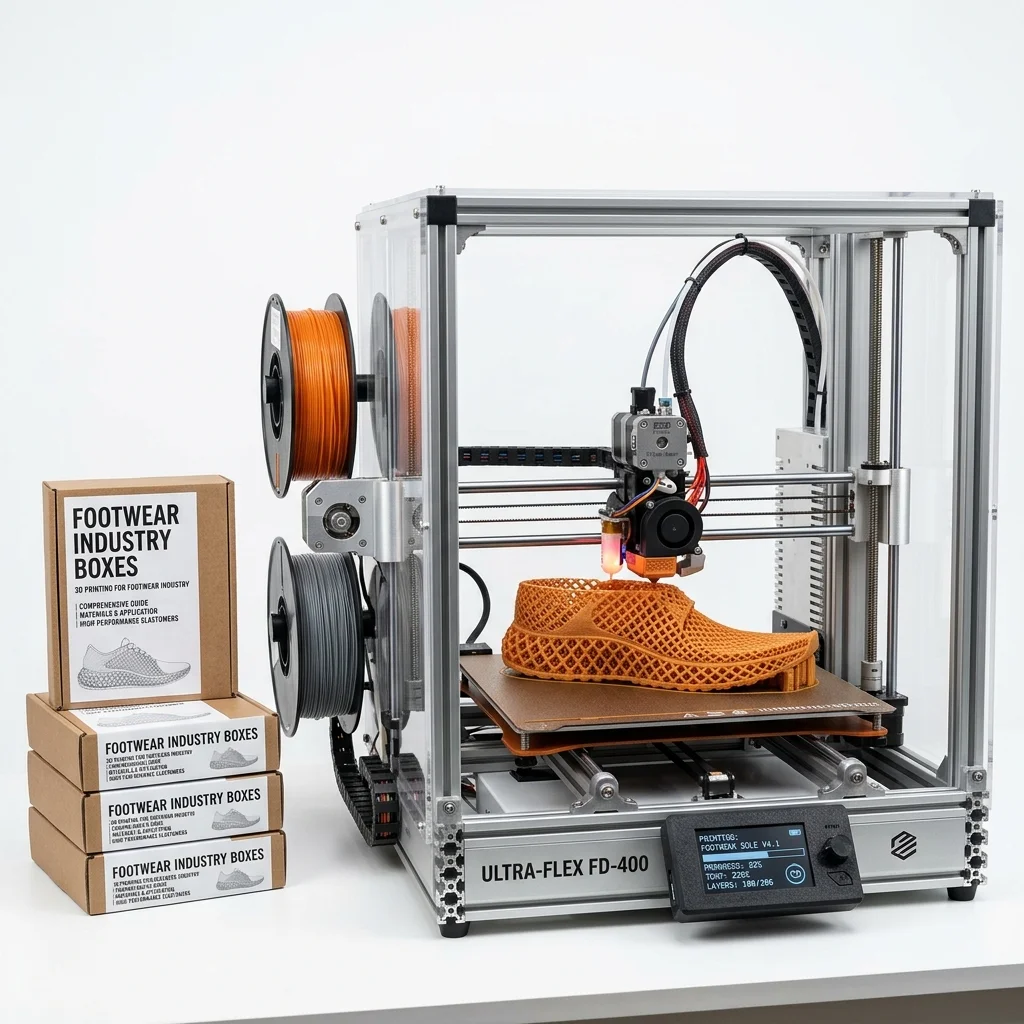
Using 3D printing for footwear industry boxes has revolutionized the industry’s approach to manufacturing. This article walks you through the essential requirements, recommended technologies, cost expectations, and real-world applications.
Typical Requirements and Challenges
When creating footwear industry boxes, strict requirements must be considered.
Pros:
- Rapid iteration and testing
- Ability to create complex geometries
- Weight optimization
Cons:
- High initial cost for industrial machines
- Need for specialized materials for harsh conditions
The main challenges include corrosion resistance, mechanical strength, and durability under extreme conditions.
Recommended Technologies and Materials
Depending on the requirements, different technologies like FDM, SLS, SLM, and MJF can be utilized. Recommended materials include PETG, ABS, PA12, as well as metal alloys like titanium and aluminum.
Manufacturing Process:
- Step 1: Design and 3D model preparation
- Step 2: Selecting the right material and technology
- Step 3: The actual printing process
- Step 4: Post-processing and quality control
Cost Expectations and Real-world Examples
Implementing 3D printing can significantly reduce the costs of producing footwear industry boxes. Here is a sample cost breakdown for a typical batch:
- Equipment investment: 5000
- Personnel training: 1000
- Materials: 500
- Total: 6500
Real-world examples show a reduction in manufacturing time by up to 60% and part weight by 30%, while maintaining the same mechanical characteristics.
Frequently Asked Questions (FAQ)
Interactive Analyzer for 3D Printing For Footwear Industry Boxes – Guide
Select a profile to view detailed analysis.
The full picture
This article is one page from The Big Book of 3D Printing: 704 illustrated pages covering every technology, material and fix in one reference.
Read it on Kindle →Engineer, author of The Big Book of 3D Printing and additive manufacturing expert