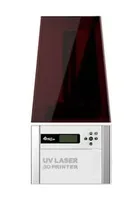
The XYZprinting Nobel 1.0 is an affordable desktop SLA printer using laser stereolithography, designed to deliver smooth, high-detail prints at an accessible price point. With a 128×128×200 mm build volume and an enclosed design, the Nobel 1.0 is an entry point into the world of resin 3D printing for hobbyists, jewelers and prototype workshops.
What it is
The Nobel 1.0 uses a 405 nm UV laser to cure liquid photopolymer resin layer by layer from the bottom up (bottom-up SLA). XY resolution is 300 µm and layer thickness goes down to 25 µm: parameters unachievable by FDM at this price point. The printer works with XYZprinting's proprietary resin cartridge system and targets users who are entering resin printing for the first time and value ease of use over broad material openness.
Technical specifications
| Technology | SLA (laser stereolithography, bottom-up) |
|---|---|
| Build volume | 128 × 128 × 200 mm |
| Laser | UV 405 nm |
| XY resolution | 300 µm |
| Layer thickness | 25 – 100 µm |
| Material system | XYZprinting proprietary resins (cartridge system) |
| Class / Price | Budget · ~€1500 |
Applications and industries
- High-detail prototypes: models with fine surfaces and thin walls for form and aesthetics verification, impossible with FDM (Product design and R&D)
- Jewelry and decorative objects: rings, pendants and ornaments with smooth surfaces ready for polishing or metal casting using castable resin (Jewelry and art)
- Hobby and collectible figurines: tabletop miniatures, anime figures and architectural maquettes with detail level competitive with injection molding (Hobby and education)
Production workflow
- Check the resin level in the cartridge and seat it firmly in the designated compartment. Ensured even resin flow across the entire vat bottom: no dry spots.
- Perform build-platform leveling via the XYZware Nobel instructions. Perfectly even gap between the platform and the FEP vat bottom: ensures first-layer adhesion.
- Print in an enclosed, dimly lit room (ambient UV light prematurely cures the resin. Curing only by the laser) no parasitic hardening of uncured zones.
- After printing: remove the platform, let excess resin drip off, wash the part in IPA (10 min) then fully post-cure under UV light (UV station or sunlight 2–5 min). A fully cured, stable and safe-to-handle print with finalized mechanical properties.
Key considerations
Materials and applications
Pick a material/alloy this machine processes to see its properties and typical applications:
Conclusion
The Nobel 1.0 is a solid entry point into SLA printing at an accessible price: its smooth surfaces and precision make it well-suited for jewelry, hobby figurines and detailed prototypes. The limited material ecosystem and slower laser scanning are the trade-offs to be aware of. If your needs grow, a newer open MSLA platform will offer greater flexibility.
The full picture
This article is one page from The Big Book of 3D Printing: 704 illustrated pages covering every technology, material and fix in one reference.
Read it on Kindle →Engineer, author of The Big Book of 3D Printing and additive manufacturing expert
Updated on 11 September 2026
This article was written with AI assistance; the facts were checked against the sources on 11 September 2026.