

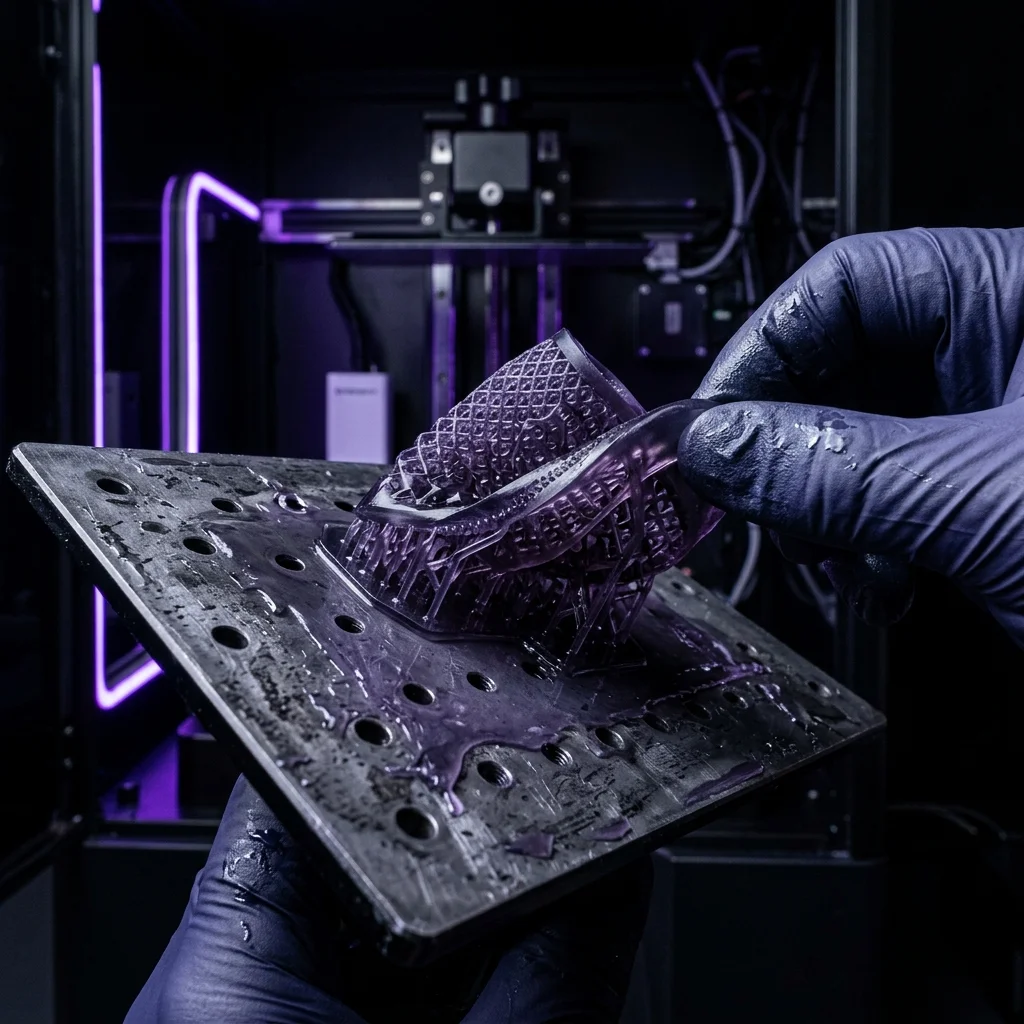
MSLA (Masked Stereolithography) or LCD technology offers incredible detail. When using flexible and elastic resins, we gain the ability to create soft parts resembling rubber or silicone.
These resins are perfect for prototyping wearables, seals, shock absorbers, and ergonomic components.
While printing flexible resins is challenging due to their high viscosity and tendency to deform, modern MSLA printers offer features that significantly ease this process.
Core Characteristics of Flexible Resins
-
Elongation at Break: Elastic resins can stretch significantly before tearing, often exceeding 100% elongation.
-
Shore Hardness: These materials are available in various hardness grades, typically between 50A (very soft) and 80A (similar to a car tire).
-
Shock Absorption: Flexible resins absorb impact energy, making them ideal for protective cases and bumpers.
-
Chemical Resistance: Many of these resins offer good resistance to oils and light solvents.
Recommended 3D Printers and Materials
Here are our top suggestions for printers and resins to achieve the best results:
Anycubic Photon Mono M5s: Offers automatic platform leveling and resin sensors. The high 12K resolution guarantees perfect detail.
Elegoo Saturn 3 Ultra: Equipped with an ACF release film for faster printing and easier peeling, which is critical for soft resins.
Phrozen Sonic Mega 8K S: Large build volume, ideal for producing large flexible arrays or sole prototypes.
Formlabs Elastic 50A: The softest resin, ideal for simulating silicone. Requires careful support generation.
Siraya Tech Tenacious: A highly durable resin that is often mixed with standard resins to increase impact resistance.
Formlabs Flexible 80A: Imitates rubber. Suitable for flexible joints, bellows, and gaskets.
Common Issues and Printing Tips
Printing flexible resins requires specific settings. Supports must be denser because the part bends easily during printing.
-
Platform Adhesion Failure: Soft resins often have weak adhesion. Increase the bottom layer exposure times.
-
Support Deformation: Use thicker support structures. Thin supports will flex, leading to print failure.
-
Post-print Cleaning: Flexible resins tend to remain sticky. They require prolonged washing in isopropyl alcohol (IPA) and thorough drying before final curing.
Frequently Asked Questions (FAQ)
Interactive Analyzer for Printing Flexible (Elastic) Parts With Msla / Lcd Printers
Select a profile to view detailed analysis.
The full picture
This article is one page from The Big Book of 3D Printing: 704 illustrated pages covering every technology, material and fix in one reference.
Read it on Kindle →Engineer, author of The Big Book of 3D Printing and additive manufacturing expert