

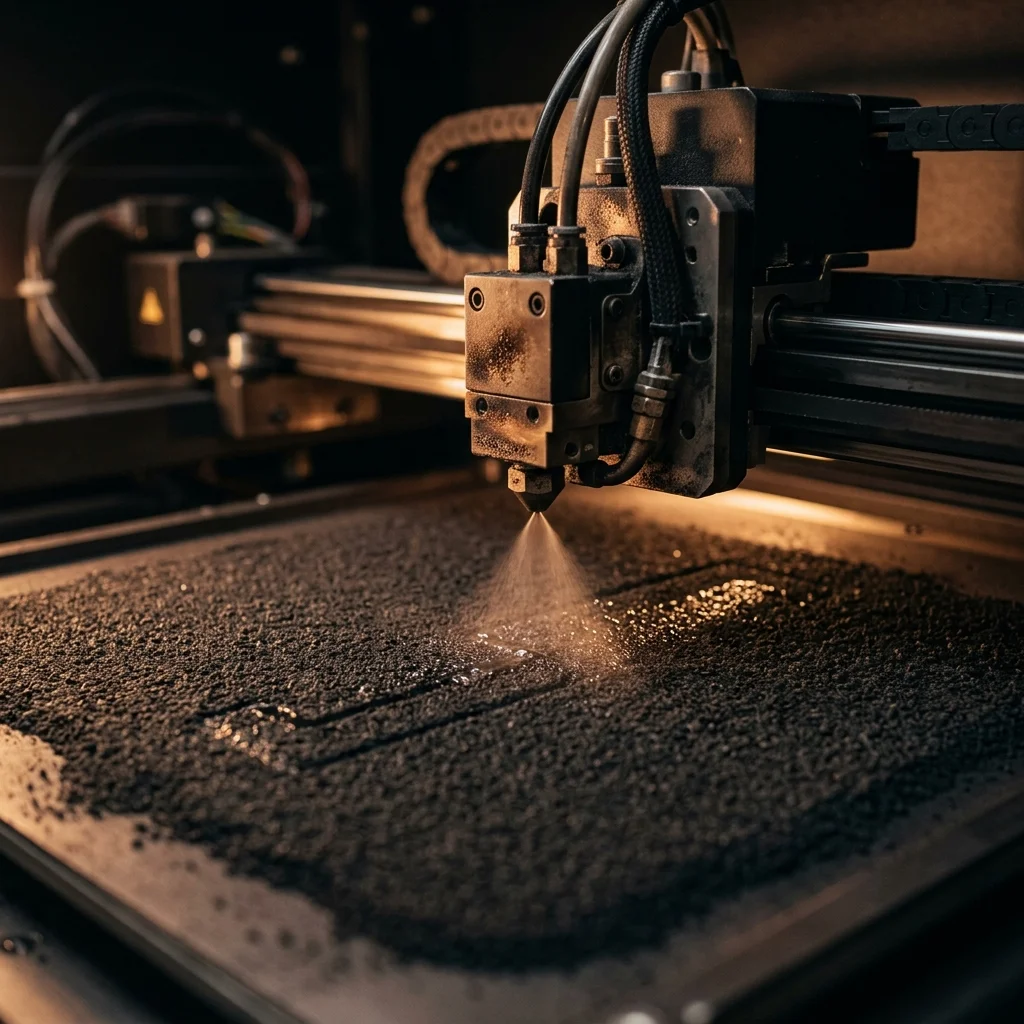
HP’s Multi Jet Fusion (MJF) technology has revolutionized industrial 3D printing by delivering unprecedented speed and part quality. When this powerful process is combined with flexible materials like TPU powders, the possibilities for manufacturing functional, resilient parts become virtually limitless.
In this guide, we will explore why TPU (Thermoplastic Polyurethane) is an ideal match for MJF. We will cover typical applications, top-tier printers, recommended material brands, and essential cost considerations for your next production run.
Understanding MJF Technology with TPU
MJF operates by spreading a fine layer of powder and selectively applying fusing and detailing agents. An infrared lamp then passes over the bed, melting the targeted areas to form a solid layer.
Using TPU powders in this process yields parts that possess exceptional elasticity, impact resistance, and durability. This makes the combination perfect for industrial seals, footwear, and flexible wearables.
-
Unmatched Speed: MJF is significantly faster than competing powder-bed technologies like SLS.
-
Isotropic Strength: The printed parts exhibit equal strength and flexibility in all dimensions.
-
Zero Support Structures: The unfused powder acts as a natural support, enabling highly complex geometries.
Recommended 3D Printers for MJF
To truly harness the potential of TPU powders, an industrial-grade system is essential. Here are some of the most capable machines available:
-
HP Jet Fusion 5200: An industrial powerhouse designed for high-volume manufacturing with incredible reliability and part consistency.
-
HP Jet Fusion 5420W: Perfect for producing white or light-colored parts that are primed for vibrant post-dyeing processes.
-
HP Jet Fusion 4200: A versatile classic that excels in both rapid prototyping and agile end-use production.
Top TPU Material Brands
Selecting the right powder is critical for achieving optimal mechanical properties. The market offers several proven options:
-
Sinterit Flexa Grey: A highly elastic material providing excellent surface finish and long-lasting durability.
-
Formlabs TPU 90A: Engineered for robust strength, making it ideal for parts that endure continuous flexing cycles.
-
BASF Ultrasint TPU: A premium industrial material that guarantees consistent quality for the most demanding applications.
Technical Specifications & Pricing
Hardness (Shore A): Typically ranges between 80A and 95A, striking a perfect balance between flexibility and toughness.
Elongation at Break: Can reach up to 300% depending on the specific brand and processing parameters.
Equipment Cost: MJF systems are enterprise-grade investments, generally starting upwards of $100,000.
Material Cost: Premium TPU powders typically range from $80 to $150 per kilogram.
Post-Processing: Vapor smoothing is highly recommended to seal the surface and achieve a flawless, watertight finish.
Frequently Asked Questions (FAQ)
Interactive Analyzer for Printing With Mjf And Tpu Powders: A Complete Guide
Select a profile to view detailed analysis.
The full picture
This article is one page from The Big Book of 3D Printing: 704 illustrated pages covering every technology, material and fix in one reference.
Read it on Kindle →Engineer, author of The Big Book of 3D Printing and additive manufacturing expert