

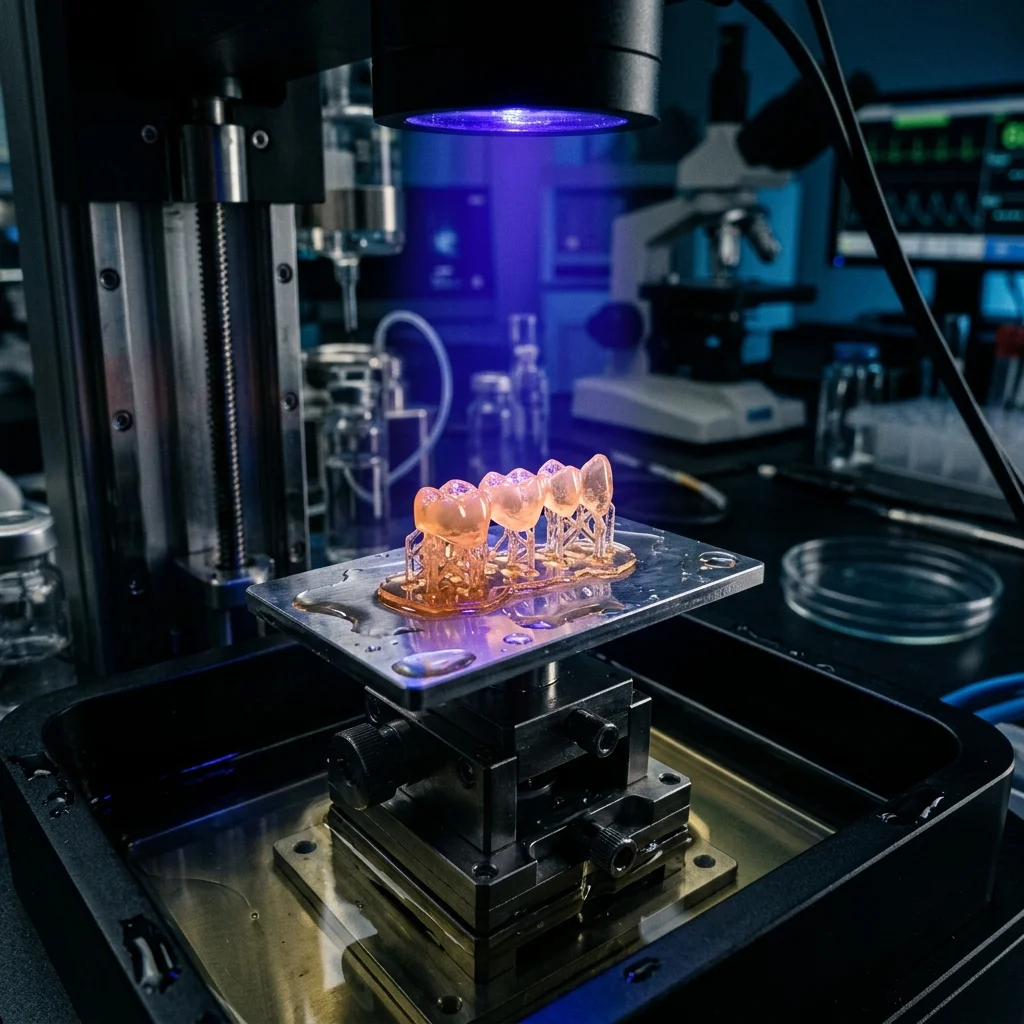
Welcome to the guide on micro 3D printing with biocompatible resins. Two-Photon Polymerization (2PP) technology takes 3D printing into the nanoscale. When you combine this incredible precision with certified dental and medical resins, the result is microscopic medical devices and implants of unprecedented quality. This guide will introduce you to the fundamentals of this field.
Technology Basics and Material Synergy
Micro 3D technology, specifically 2PP, uses femtosecond lasers to cure photopolymer resin. Unlike SLA, which cures an entire layer at the surface, 2PP cures the resin at a specific 3D point (voxel) directly inside the liquid volume.
This enables the creation of sub-micron features. Using biocompatible resins in this process is crucial for the medical industry. These resins are specially formulated to avoid toxic reactions, making them ideal for contact with living tissues.
-
Sub-micron Precision: Allows printing of structures smaller than a human cell.
-
Full Biocompatibility: Materials are certified for medical and dental use, guaranteeing safety for patients.
-
Optical Clarity: Many bio-resins for micro-printing offer excellent transparency, which is vital for microfluidic applications.
-
Complex Geometry: 2PP enables the creation of intricate internal channels and structures without the need for support materials.
Recommended Printers for Micro 3D Printing
To achieve microscopic details with bio-resins, you need highly specialized and advanced equipment.
-
Nanoscribe Quantum X bio: A leader in 2PP bioprinting, offering incredible resolution and specialized features tailored for tissue engineering.
-
UpNano NanoOne: An exceptionally fast 2PP printer capable of processing a wide range of materials, including biocompatible hydrogels.
-
Boston Micro Fabrication microArch S240: Based on PµSL technology, this system is ideal for the industrial micro-manufacturing of medical components.
Recommended Biocompatible Resins
Materials for micro-printing must meet strict requirements regarding viscosity and photoreactivity.
-
Formlabs Dental SG: Known for its precision and strength, widely used for surgical guides. (Note: specialized micro-versions are often adapted for these systems).
-
NextDent NextDent Ortho: A premium resin designed for orthodontic applications, splints, and retainers.
-
Formlabs BioMed Amber: A transparent, rigid material certified for short-term mucosal and skin contact, perfect for microfluidic chips.
Typical Applications and Use Cases
Where is the combination of micro-precision and biocompatibility utilized? The applications sit at the frontier of modern science.
-
Microfluidic Chips (Lab-on-a-chip): Creating complex microchannels for precise blood and cellular analysis.
-
Tissue Engineering Scaffolds: Printing microscopic 3D structures on which living cells can attach and grow.
-
Microneedle Arrays: Manufacturing painless transdermal patches for precise drug delivery through the skin.
-
Micro-Implants: Developing miniature sensors and stents designed for implantation within the body.
Common Pitfalls and Challenges
Micro 3D printing is an incredibly sensitive process. Here is what you need to watch out for.
-
Vibration Sensitivity: Even minute environmental vibrations can completely ruin a microscopic print job.
-
Difficult Post-Processing: Removing uncured resin from microchannels requires specialized solvents and delicate ultrasonic cleaning.
-
Slow Print Speeds: 2PP is inherently slow. Printing parts that are considered ‘large’ in the micro-scale can take days.
Cost Estimate
This technology is among the most expensive in the additive manufacturing sector, targeted primarily at research institutes and specialized medical labs.
Price of specialized micro bio-resin: – per liter.
Initial printer investment:,000 -,000+.
Maintenance costs: High (due to lasers, precision optics, and software).
Cost per finished micro-part: – + (highly dependent on print time).
Frequently Asked Questions (FAQ)
Ultimate Guide: Micro 3D / 2Pp Printing With Biocompatible Resins (Dental/Medical) Exposure Calculator
Calculate optimal resin print time.
The full picture
This article is one page from The Big Book of 3D Printing: 704 illustrated pages covering every technology, material and fix in one reference.
Read it on Kindle →Engineer, author of The Big Book of 3D Printing and additive manufacturing expert