

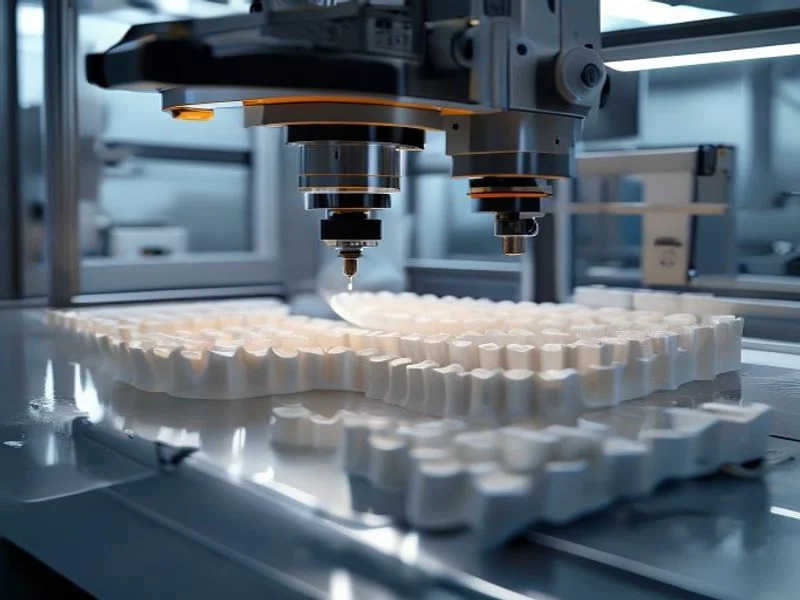
Producing medical casting molds using 3D technologies revolutionizes how custom implants and tools are created. This process allows for high precision, biocompatibility, and rapid manufacturing.
Requirements and Technologies
Medical molds require high resolution and smooth surfaces. Recommended technologies are SLA, MSLA, and DLP (e.g., sla-2, msla-1, dlp-3), offering exceptional detail.
Pros and Cons
- Pros: Exceptional precision, rapid prototyping, complex geometries.
- Cons: Requires post-processing after printing.
Workflow
Step 1: 3D scanning or MRI data of the patient. Step 2: CAD modeling of the mold. Step 3: 3D printing. Step 4: Sterilization.
Costs
- Equipment: 15000
- Consumables: 2000
- Total: 17000
Frequently Asked Questions (FAQ)
Interactive Analyzer for Medical Casting Molds | 3D Printing
Select a profile to view detailed analysis.
The full picture
This article is one page from The Big Book of 3D Printing: 704 illustrated pages covering every technology, material and fix in one reference.
Read it on Kindle →Engineer, author of The Big Book of 3D Printing and additive manufacturing expert