

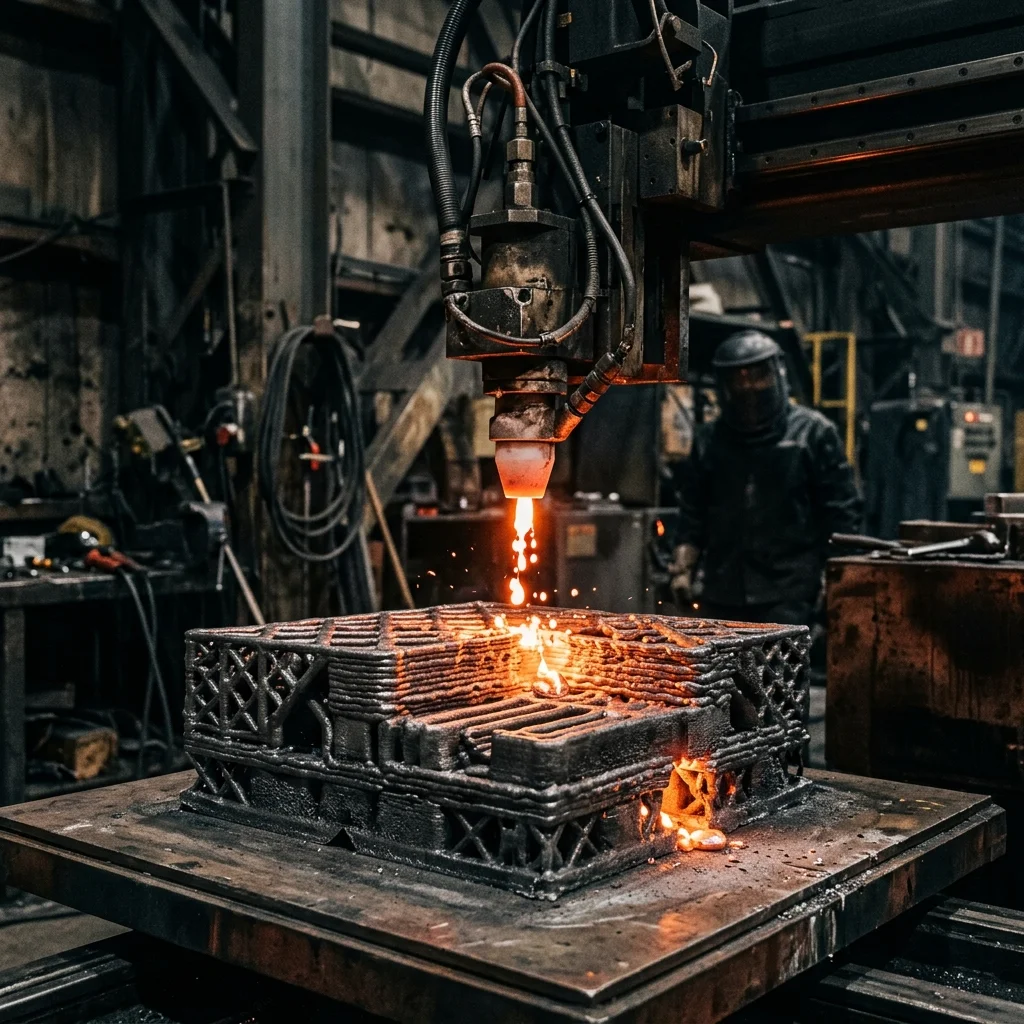
In 2025–2026, Liquid Metal Printing (LMP) has emerged as a novel approach to metal additive manufacturing. Instead of powder beds and lasers, LMP directly dispenses molten aluminum through an electromagnetically controlled nozzle: conceptually “FDM for metals” at 660°C+ extrusion temperatures.
Principle: Magnetohydrodynamic (MHD) Jetting
- Metal Melt: Aluminum alloy (e.g., 4008, 6061) is maintained in molten state at ~700–750°C in a ceramic reservoir.
- Electromagnetic Pump: An MHD actuator creates pulsed pressure, ejecting controlled droplets (0.5–1.0 mm diameter).
- Drop-by-Drop Deposition: Droplets solidify upon contact with the build platform.
- Layer-by-Layer Build: The process repeats, building metallic parts.
The key commercial platform is Xerox ElemX, based on MHD jetting technology.
Interactive Filament Selector
Answer 3 quick questions and find the optimal material for your project.
1. What are the mechanical requirements for the part?
2. What temperature will the part operate at?
3. Are there any specific environmental requirements?
Our recommendation:
PLA filament
Ideal for easy printing, model visualization and decorative parts.
Pros and Cons
Pros:
- No Powder: Uses standard aluminum wire or ingots, no expensive, hazardous metal powder.
- Fast Printing: 200–500 cm³/hr (faster than PBF).
- Low Feedstock Cost: Standard aluminum alloys (€5–15/kg).
- Safe Environment: No powder explosion risk.
Cons:
- Low Resolution: 0.5–1.0 mm droplets yield rough surfaces.
- Aluminum Only: Currently limited to low-melting-point aluminum alloys.
- Porosity: 1–5% from occluded gas.
- CNC Required: Mandatory for all functional surfaces.
FAQ
Liquid Metal Printing (Lmp): Aluminum From Droplets Calculator
Interactive optimization calculator.
The full picture
This article is one page from The Big Book of 3D Printing: 704 illustrated pages covering every technology, material and fix in one reference.
Read it on Kindle →Engineer, author of The Big Book of 3D Printing and additive manufacturing expert