

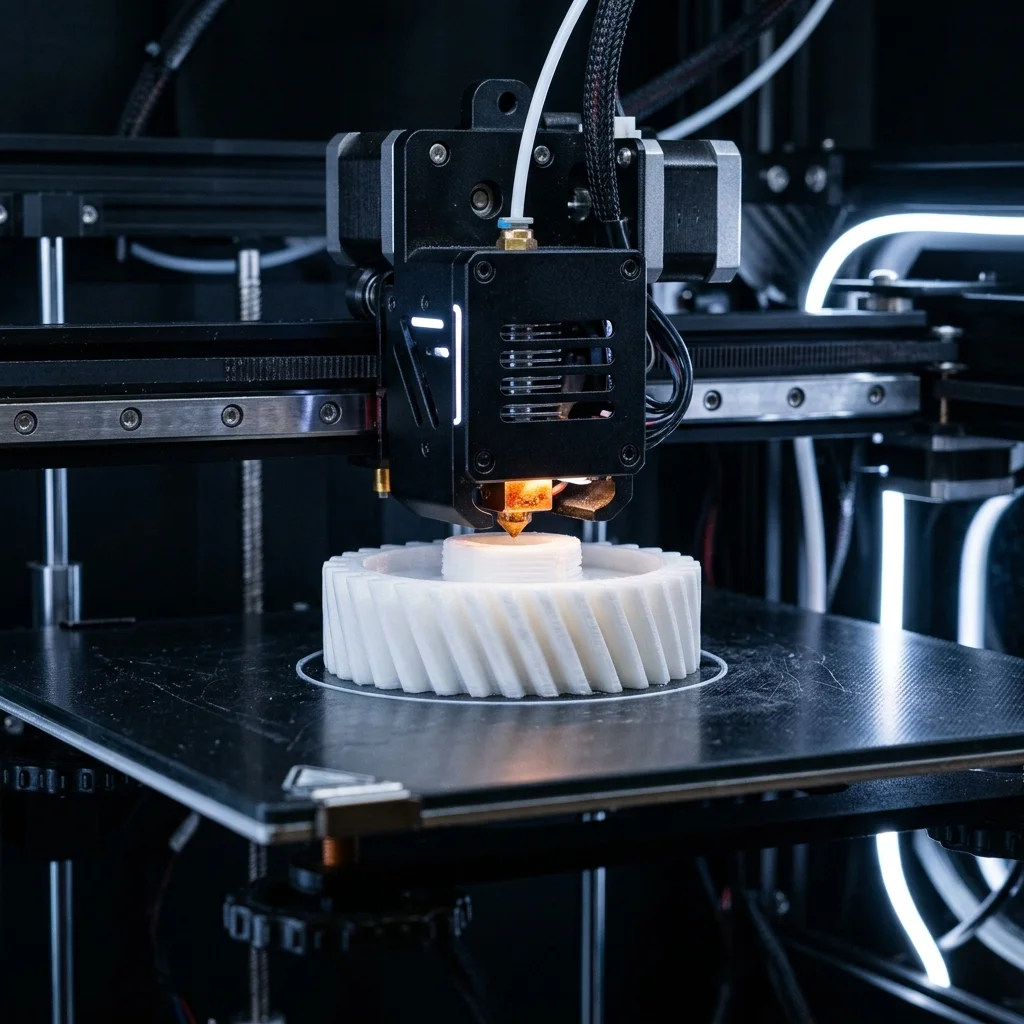
POM (Polyoxymethylene), also known as Acetal, is a high-performance engineering thermoplastic offering excellent mechanical strength and low friction. Through FDM technology, this material enables the production of precise and wear-resistant parts.
It is widely used in the industry for manufacturing gears, bearings, and sliding mechanisms. Let’s explore how to use it successfully.
Basics of FDM and the advantages of POM
FDM technology is an excellent method for rapid prototyping, but printing with POM requires specific conditions and attention to detail.
Acetal is extremely tough and possesses self-lubricating properties. This makes it a preferred choice for mechanical components that operate under constant load.
-
Low Friction: Ideal for gears and moving mechanisms.
-
High Stiffness: Retains its shape and structure even under severe mechanical stress.
-
Excellent Wear Resistance: Guarantees a long lifespan for printed parts.
Recommended Printers for POM
To cope with the severe shrinkage of POM during printing, you need a printer with an enclosed chamber and a heated bed capable of reaching high temperatures.
-
Prusa Research i3 MK4: A great choice for small POM parts, especially if you equip it with an additional enclosure.
-
Bambu Lab X1-Carbon: A high-speed printer with an enclosed chamber that helps maintain the required microclimate for quality POM printing.
-
UltiMaker S7: Offers reliable printing thanks to its intelligent temperature control system and excellent bed surface.
Recommended Material Brands and Applications
The quality of the filament is crucial with a difficult material like POM.
- GIZMO Dorks POM-C: Known for its consistency and good mechanical performance during printing, this filament is an excellent choice for engineers and hobbyists.
The most common applications of POM involve creating custom mechanical parts. Gears, bearings, latches, and sliders are just a few possibilities.
Common Pitfalls and Costs
Printing with POM is challenging mainly due to its poor bed adhesion and massive thermal shrinkage. It often requires using a wooden or cellulose-based surface (like heavy paper or plywood) on the print bed to achieve good adhesion.
Furthermore, when heated, POM can emit formaldehyde, so it is mandatory that the printer is located in a well-ventilated area.
Expected Costs: The price of POM filament is typically around 40-50 EUR per kilogram.
Extruder Temperature: 220°C – 230°C
Bed Temperature: 100°C – 130°C
Enclosure Required: Yes, strictly required
Print Speed: 20 – 40 mm/s
Frequently Asked Questions (FAQ)
Complete Guide To 3D Printing With Fdm And Pom (Acetal) Calculator
Interactive optimization calculator.
The full picture
This article is one page from The Big Book of 3D Printing: 704 illustrated pages covering every technology, material and fix in one reference.
Read it on Kindle →Engineer, author of The Big Book of 3D Printing and additive manufacturing expert