

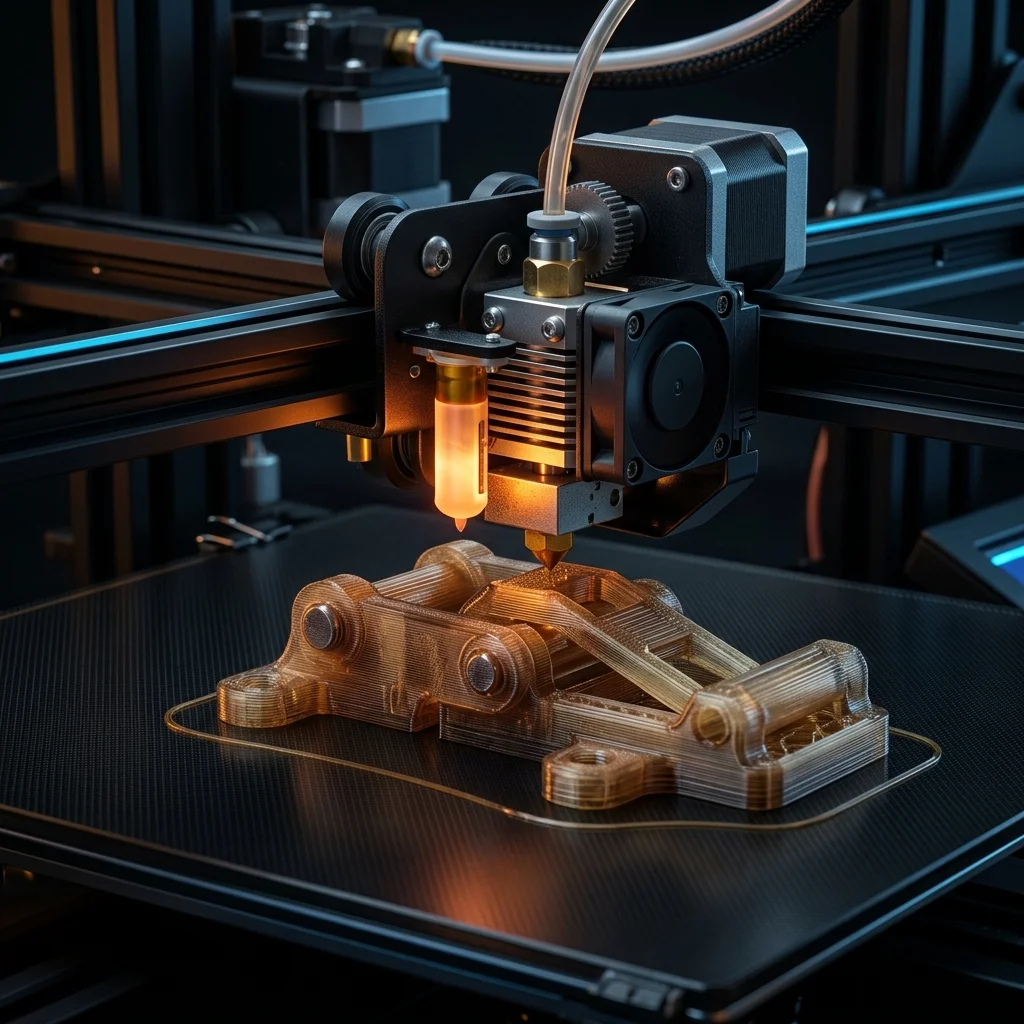
PCTG is an advanced copolyester that offers greater strength, transparency, and chemical resistance compared to the popular PETG. With FDM technology, this material is quickly becoming the preferred choice for industrial and hobby projects.
With its ease of printing and excellent impact resistance, PCTG is the perfect step up for those seeking reliability and aesthetics. Let’s find out how to get the most out of it.
Basics of FDM technology and PCTG
PCTG retains all the positive characteristics of PETG but adds improved mechanical durability and higher optical clarity. FDM printers handle it perfectly without the need for major modifications.
This material is resistant to high temperatures and chemicals, making it highly versatile in its applications.
-
Extreme Impact Resistance: Up to several times tougher on impact than PETG.
-
High Transparency: An excellent choice for creating light-transmitting parts.
-
Easy to Print: Minimal shrinkage and excellent layer adhesion.
Recommended Printers
PCTG can be printed on almost any modern FDM printer with a heated bed. It does not strictly require an enclosed chamber.
-
Prusa Research i3 MK4: Ideal for PCTG thanks to its direct drive extruder and perfectly tuned print profiles.
-
Bambu Lab X1-Carbon: The speed and precision of this model make it great for series production of tough PCTG components.
-
UltiMaker S7: Offers industrial-grade reliability and excellent integration with third-party materials.
Recommended Material Brands and Applications
Choosing a high-quality PCTG ensures predictable results and greater part strength.
-
Fiberlogy PCTG: Popular for its incredible toughness and wide range of colors.
-
Formfutura Centaur PCTG: Extremely durable material suitable for functional prototypes.
-
Zortrax Z-PCTG: An industrial solution with high optical clarity and temperature resistance.
Applications range from protective covers and electronics enclosures to sports accessories and automotive components.
Common Pitfalls and Costs
Although easy to print, PCTG is highly hygroscopic. This means it absorbs moisture from the air and must be stored in dry boxes or actively dried before use.
Sometimes, excessive oozing and stringing can occur during printing, which requires fine-tuning of retraction settings.
Expected Costs: On average around 35 to 55 EUR per kilogram, positioning it as an affordable engineering filament.
Extrusion Temperature: 250°C – 270°C
Bed Temperature: 80°C – 90°C
Part Cooling: 20% – 50%
Shrinkage: Very low
Frequently Asked Questions (FAQ)
3D Printing Guide To Fdm And Pctg Calculator
Interactive optimization calculator.
The full picture
This article is one page from The Big Book of 3D Printing: 704 illustrated pages covering every technology, material and fix in one reference.
Read it on Kindle →Engineer, author of The Big Book of 3D Printing and additive manufacturing expert