

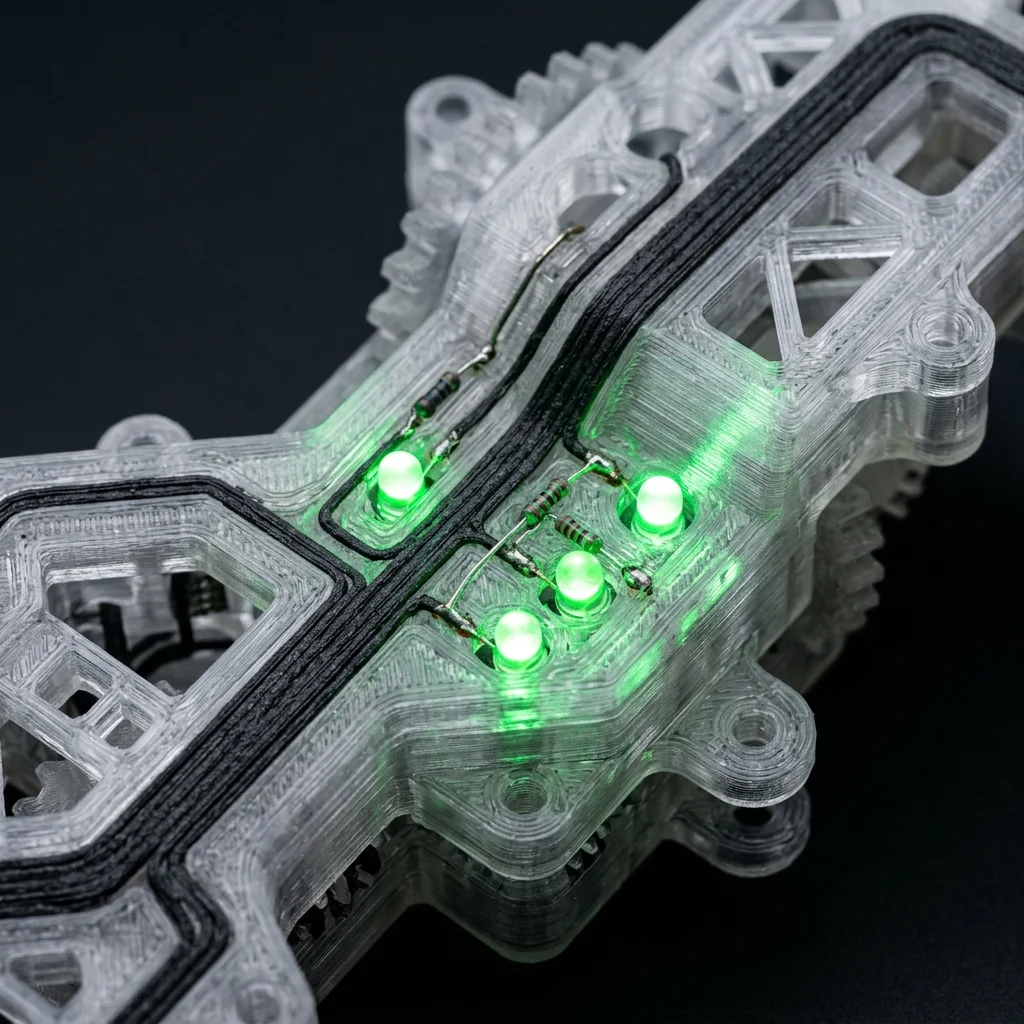
Conductive materials for FDM 3D printing open new doors for creating functional electronic components, sensors, and antistatic (ESD) parts. These materials are usually based on PLA, TPU, or ABS, enriched with carbon nanotubes or graphene.
In this guide, we will explore how printing with conductive filaments works, suitable printers, and how to avoid common pitfalls.
Technology Basics and Applications
FDM technology is ideal for conductive materials as it allows embedding conductive traces directly into a non-conductive part via dual extrusion.
Conductive filaments offer specific resistance that makes them suitable for various engineering tasks.
-
Antistatic Properties: Ideal for electronic enclosures (ESD protection).
-
Integrated Circuits: Printing basic electronic traces and touch sensors.
-
Shielding: Protection against electromagnetic interference (EMI).
Recommended 3D Printers and Materials
Printing conductive materials often requires wear-resistant nozzles, as carbon additives are abrasive.
-
Prusa Research Prusa i3 MK4: A reliable choice when using a hardened nozzle.
-
Bambu Lab X1-Carbon: Perfect due to its factory-hardened components and high speed.
-
UltiMaker S7: Ideal for dual extrusion (combining conductive and standard filament).
Nozzle Temperature: 215 – 230 °C
Bed Temperature: 50 – 60 °C (for PLA base)
Volume Resistivity: 15 – 115 ohm-cm
Recommended Brands: Protopasta Conductive PLA, NinjaTek Conductive TPU, Graphene 3D Black Magic.
Pitfalls and Estimated Costs
Despite their advantages, conductive filaments have some significant drawbacks that you must consider.
-
Abrasiveness: They quickly wear out standard brass nozzles.
-
Brittleness: Due to the high carbon content, the material is more brittle than standard PLA.
Filament Cost: $80 – $130 per kg
Hardened Nozzle Cost: $15 – $30
Frequently Asked Questions (FAQ)
Fdm 3D Printing With Conductive Materials Calculator
Interactive optimization calculator.
The full picture
This article is one page from The Big Book of 3D Printing: 704 illustrated pages covering every technology, material and fix in one reference.
Read it on Kindle →Engineer, author of The Big Book of 3D Printing and additive manufacturing expert