

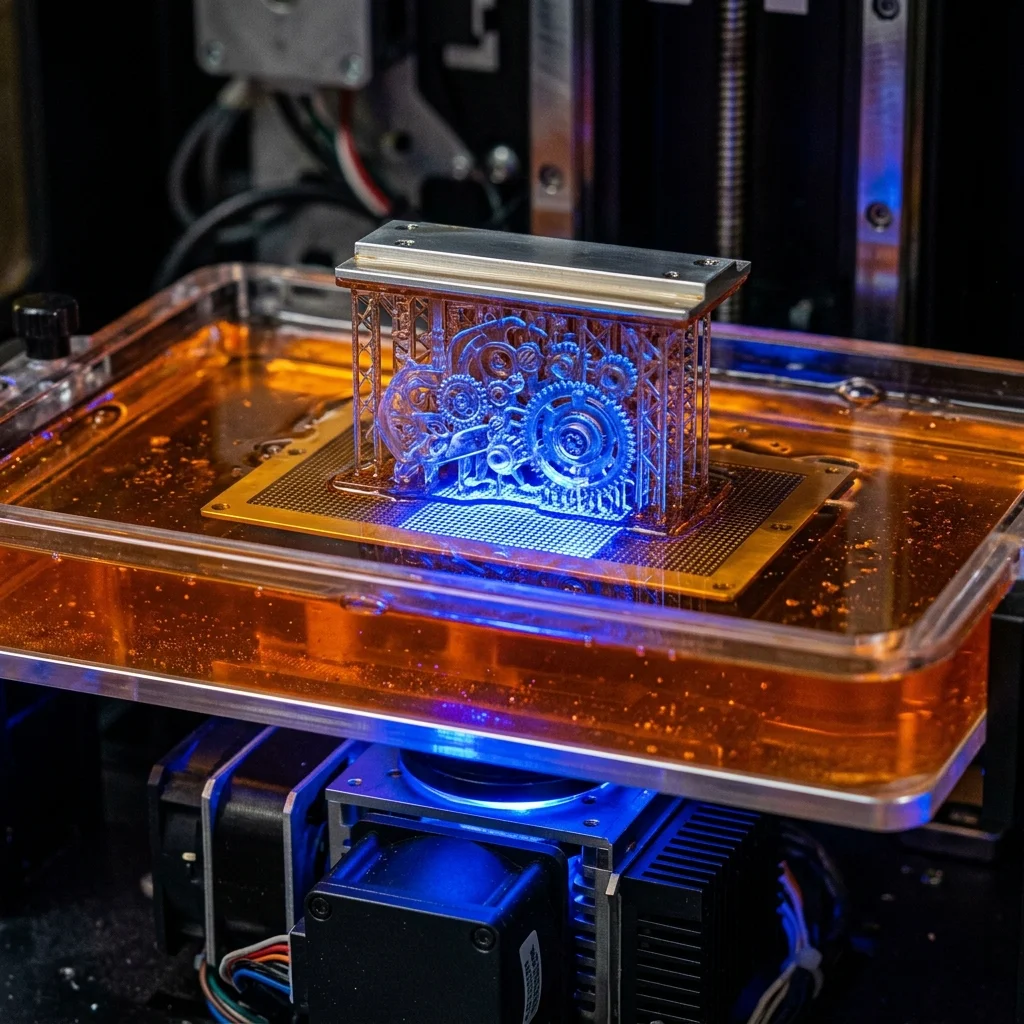
DLP (Digital Light Processing) technology offers incredible precision and speed in resin 3D printing. When paired with Standard or Fast resins, it becomes a powerhouse for rapid prototyping and creating highly detailed miniatures.
In this guide, we will explore why these resins are perfect for DLP printers. We will cover how to select the right printer and material, as well as what to expect regarding costs and maintenance.
Understanding DLP Technology
Unlike SLA, where a laser traces each layer, DLP uses a digital light projector to flash a single image of the entire layer all at once. This makes the process remarkably fast.
Standard and Fast resins are formulated to react instantly to the projector’s light, enabling rapid curing times and exceptional surface quality.
-
Print Speed: Because the entire layer cures simultaneously, print time depends solely on the model’s height, not its complexity.
-
High Resolution: DLP projectors deliver crisp edges and extraordinary micro-details.
-
Ease of Use: Standard resins are highly forgiving and require minimal tweaking to achieve great results.
Recommended 3D Printers for DLP
To achieve the best results, you need a printer with a high-quality optical engine. Here are some of the top picks:
-
Desktop Health Einstein Pro XL: An industrial system delivering uncompromising precision for medical and engineering applications.
-
Flashforge Hunter: A highly reliable DLP printer designed for jewelry and dentistry, featuring a long-lasting light source.
-
Anycubic Photon D2: An affordable consumer DLP printer that brings industrial micro-detail to hobbyists.
Top Resin Brands
The choice of resin dictates the final look and feel of your prints. Here are some proven Standard and Fast resins:
-
Siraya Tech Fast Resin: Extremely popular for its rapid curing times, excellent resolution, and ease of cleaning.
-
Formlabs Standard Resin: Guarantees smooth surfaces and perfect consistency print after print.
-
Elegoo 8K Water Washable: Easy to clean using only water, delivering stunning details without the need for IPA.
Technical Specifications & Pricing
Exposure Time: Fast resins can cure in under 2 seconds per layer on modern DLP systems.
Cleaning: Typically requires Isopropyl Alcohol (IPA), unless you are using a water-washable formulation.
Equipment Cost: DLP printers range from $500 for hobbyist models to over $10,000 for professional systems.
Material Cost: Standard resins are very budget-friendly, usually priced between $20 and $50 per liter.
Post-Processing Gear: A Wash & Cure station is highly recommended for proper cleaning and final UV curing.
Frequently Asked Questions (FAQ)
Printing With Dlp And Standard/Fast Resins: A Complete Guide Exposure Calculator
Calculate optimal resin print time.
The full picture
This article is one page from The Big Book of 3D Printing: 704 illustrated pages covering every technology, material and fix in one reference.
Read it on Kindle →Engineer, author of The Big Book of 3D Printing and additive manufacturing expert