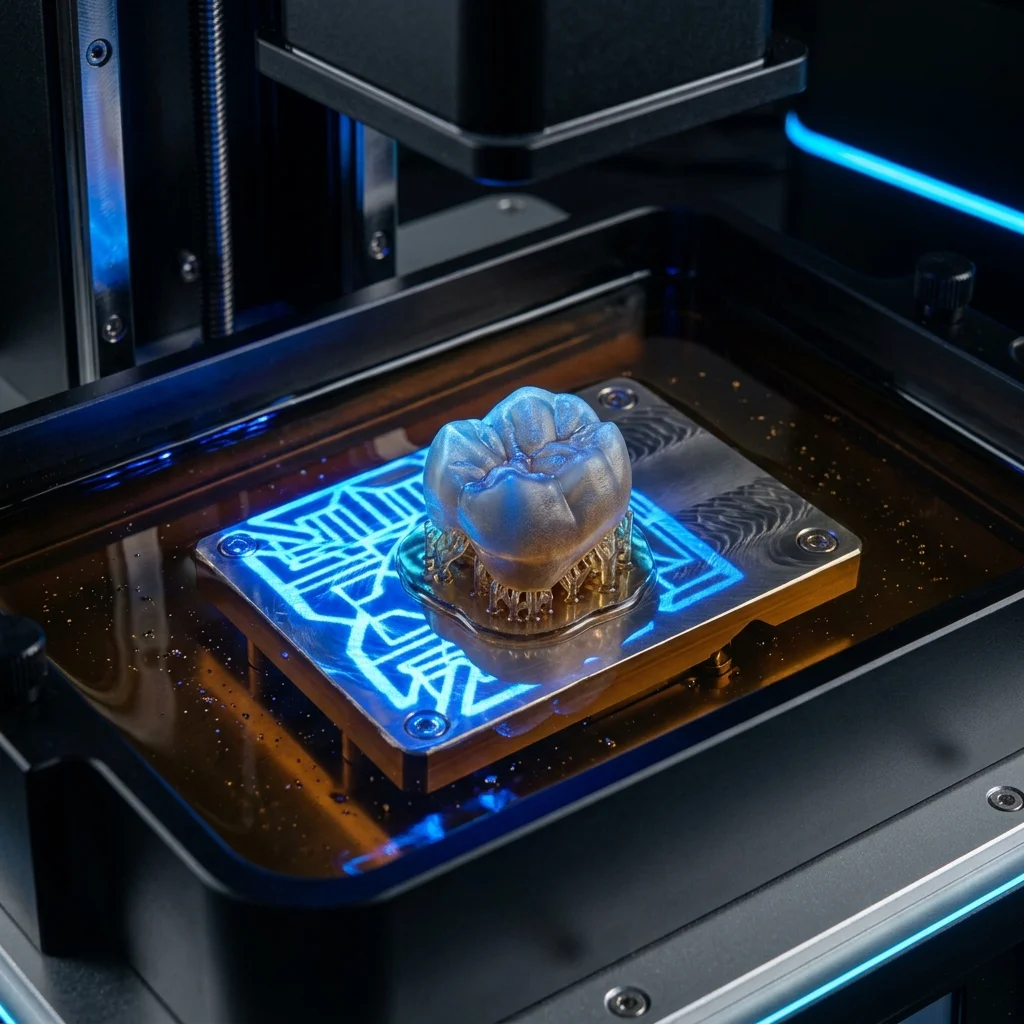
This is a comparison between two machines separated by a chasm in price and intent. Desktop Health Einstein Pro XL (€8500) is a dental specialist DLP for labs and orthodontists, with certified resins, validated accuracy, and integration with dental CAD software. Anycubic Photon D2 (€580) is a hobbyist DLP for miniatures and jewelry prototypes, with excellent resolution for the price tier, but without certified materials. Why compare them? Because owners of small dental practices often ask: ‘Why pay €8500 when I get the same technology for €580?’ The answer is complex and depends on regulations, material accuracy, the operator, and the end application. In this comparison we explain exactly when the 14× price difference is worth it, and when you’re just burning money.
Specs point by point
Price: Einstein Pro XL €8500 (includes one starter resin + Wash & Cure station for dental use). Photon D2 €580 (printer only). 14× gap.
Technology: both are DLP, Digital Light Processing with a projector. UV LEDs pass through a DMD chip that projects an entire plane at once (unlike MSLA, which uses an LCD mask). DLP is more accurate than MSLA because DMD pixels are physically separated micro-mirrors.
Build volume: Einstein Pro XL 192×120×200 mm = 4.6 liters. Photon D2 130×73×165 mm = 1.6 liters. Einstein has 3× the volume.
XY resolution: Einstein 50 µm. Photon D2 51 µm. Tied. Surprising at €580.
Layer thickness: both 25-100 µm. Tied.
Resins: Einstein works ONLY with Desktop Health certified resins (Flexcera Smile Ultra+, Detax Freeprint Crown, OnX Tough, €350-€650 per liter). Photon D2 works with any MSLA/DLP resin (Anycubic, Phrozen, Siraya: €25-€80 per liter). 4-8× difference in resin cost.
Software: Einstein Pro XL integrates with exocad, 3Shape, Medit (dental CAD). Photon D2: standard ChiTuBox or Lychee. Einstein is a lab solution; Photon is hobbyist.
Calibration: Einstein auto-calibrates every print with built-in sensors. Photon D2 calibrates manually (5-15 minutes quarterly). Einstein is plug-and-play; Photon requires an operator.
Warranty: Einstein 24 months with European support from Desktop Health. Photon D2 12 months with China-based support (1-2 month replacement on defects).
Material accuracy and validated process
This is the key thing you don’t see on a spec sheet. Einstein Pro XL is a certified dental device: Desktop Health has validated it as an IVD (in-vitro diagnostic) Class IIa device under EU MDR. That means you can legally print dental crowns, partial dentures, surgical guides, orthodontic models, and use them on real patients (with a licensed dentist and the relevant national medical-device clearance).
Photon D2 is not a certified medical device. You can print dental models for in-house education or R&D, but you CANNOT deliver the end product to a patient. That matters legally: regulators inspect dental practices and penalize improper use of 3D printers in clinical workflows.
Validated process: Einstein Pro XL keeps digital logs for every print (resin lot number, exposure time, temperature) that provide full traceability. This is a requirement for EU MDR. Photon D2 does not offer such logs.
Repeatability: Einstein prints the same part within ±50 µm tolerance 1000 times in a row. Photon D2, about ±100-150 µm, with variability between resins and sessions. For artistic applications the difference isn’t critical. For a dental crown that must fit a patient’s mouth, 100 µm is the difference between comfort and pain.
Conclusion: if you’ll use the printer for patient applications, Einstein Pro XL is the only legal choice.
Print quality for miniatures and jewelry
For artistic applications (Warhammer miniatures, D&D, jewelry casting models), the gap between the two is smaller than expected.
Photon D2 prints 28 mm miniatures with resolution that impresses for €580. Facial features, weapons, fabric textures, metal plates are legible. With a quality resin (Siraya Tech Tenacious Resin, Phrozen Aqua Resin: €40-€70/L) and proper tuning, prints compete with significantly more expensive MSLA machines.
Einstein Pro XL is not optimized for miniatures. It prints them excellently but is overkill. €8500 for a machine that prints miniatures that Photon D2 also prints well: that’s madness. Unless the miniatures are for an art gallery or high-value sculpture where Einstein’s repeatability justifies the spend.
For jewelry prototypes (wax casting models), Einstein wins clearly thanks to Detax Freeprint Cast and similar certified casting resins with clean burnout. Photon D2 with ordinary castable resin leaves ash residue in the mold, degrading the cast piece’s quality.
Short version: hobbyist miniatures, Photon D2. Serious jeweler in custom production: Einstein.
No discount available for Photon D2: they’re sold directly through Anycubic distributors. Einstein is bought through authorized dental distributors (contact: Devotel, BioDent, or your regional equivalent) with training and installation included.
Operating cost and amortization
Einstein Pro XL monthly cost for a dental lab (10-30 parts/day):
- Amortization: €240/month (€8500 / 36 months)
- Resin: €1500-€3000/month (depends on volume)
- Electricity: €30/month
- Maintenance and spare parts: €100/month
- Total: €1870-€3370/month
For a lab with €5000-€10,000/month in 3D print revenue, that’s entirely sustainable.
Photon D2 monthly cost for a hobbyist (50-100 miniatures/month):
- Amortization: €16/month (€580 / 36 months)
- Resin: €40-€80/month
- Electricity: €5/month
- Maintenance: €5/month
- Total: €66-€106/month
For a hobbyist selling 20-30 miniatures/month at €5-€15, the costs are covered in under a month.
Key takeaway: Einstein is an investment that makes sense only for a business with dental or medical regulatory need. Photon D2 makes sense for everyone else.
For a dental lab considering starting with Photon D2 and upgrading to Einstein later: the problem is that workflow, operator experience, and CAD integration are not portable. Better to start with Einstein directly if you have dental clientele lined up.
Verdict by application
Dental lab for crowns, dentures, partials: Einstein Pro XL. No alternative with MDR Class I clearance.
Orthodontist for models and clear aligners: Einstein Pro XL.
Surgical implant guide (dentist): Einstein Pro XL with Detax Freeprint Cast or similar certified resin.
Jewelry studio at small volume (hobbyist or beginner): Photon D2. €580 for a machine that prints wax models well enough.
Jewelry studio at mid volume (3-10 rings/week for clients): Photon D2 or step up to a Phrozen Sonic Mighty 8K (€420 MSLA). Einstein is overkill.
Miniatures for Warhammer, D&D, RC models: Photon D2 without comparison. Einstein is like driving a Ferrari to the corner store.
Architectural model at small scale (1:200): Photon D2 with clear resin for personal projects. Einstein is way over-spec.
Educational institution (medical university): Einstein Pro XL for dental and surgical-medicine programs. Photon D2 for design, engineering, sculpture.
Frequently Asked Questions (FAQ)
Interactive Analyzer for Desktop Health Einstein Pro Xl Vs Anycubic Photon D2, Dlp Comparison
Select a profile to view detailed analysis.
The full picture
This article is one page from The Big Book of 3D Printing: 704 illustrated pages covering every technology, material and fix in one reference.
Read it on Kindle →Engineer, author of The Big Book of 3D Printing and additive manufacturing expert
Updated on 11 September 2026
This article was written with AI assistance; the facts were checked against the sources on 11 September 2026.