

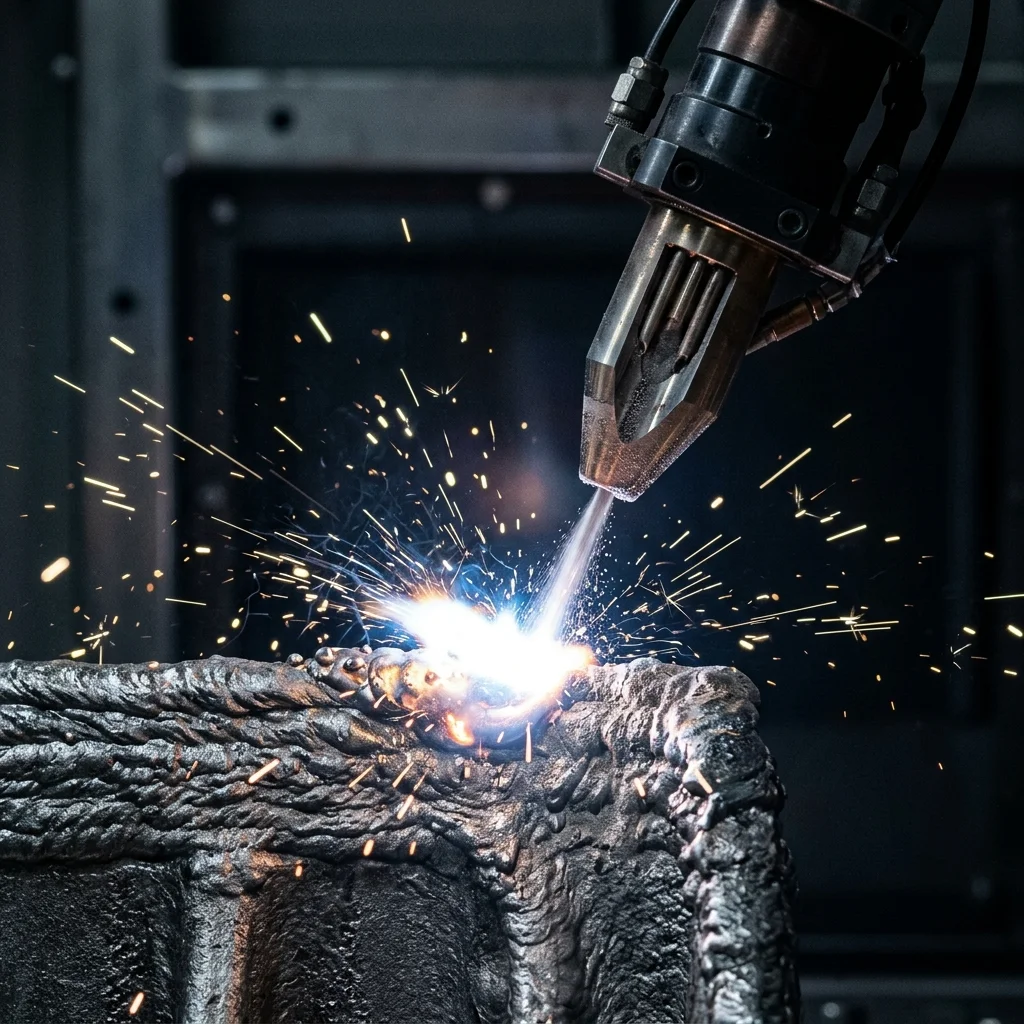
DED (Directed Energy Deposition) technology is a revolutionary method for manufacturing and repairing large metal components.
Using a focused energy source (laser or electron beam), metal powder or wire is melted and deposited directly onto the surface. Stainless steel is among the most sought-after materials due to its exceptional strength and corrosion resistance.
Why Stainless Steel and DED are a Perfect Match
DED technology allows for both building new parts and repairing existing ones.
-
High Speed: Significantly faster material deposition compared to powder bed methods.
-
Excellent Strength: Parts exhibit mechanical properties comparable to forged steel.
-
Repair Capabilities: Enables the addition of fresh material onto worn-out metal components.
Recommended Printers
Selecting the right equipment ensures process stability and quality.
-
Meltio M450: A compact and powerful system for wire-based metal printing.
-
Optomec LENS 850-R: An industrial solution focused heavily on repair and high-quality coatings.
-
Sciaky EBAM 110: A massive system designed for large-scale industrial components.
Leading Materials
Using premium steel wire or powder is critical for achieving optimal results.
-
EOS 316L Stainless Steel: Exceptional corrosion resistance and high ductility.
-
Markforged 17-4 PH: Heat-treatable steel offering extreme hardness and durability.
-
BASF Ultrafuse 316L (FDM): An alternative filament-based option for basic applications and prototyping.
Technical Specifications and Costs
Key parameters for planning your DED projects efficiently.
Deposition Rate: Up to 1-2 kg per hour
Part Density: > 99.5%
Cost Estimate: $100 – $500 per kilogram of deposited material
Frequently Asked Questions (FAQ)
Interactive Analyzer for 3D Printing Stainless Steel With Ded Technology
Select a profile to view detailed analysis.
The full picture
This article is one page from The Big Book of 3D Printing: 704 illustrated pages covering every technology, material and fix in one reference.
Read it on Kindle →Engineer, author of The Big Book of 3D Printing and additive manufacturing expert