

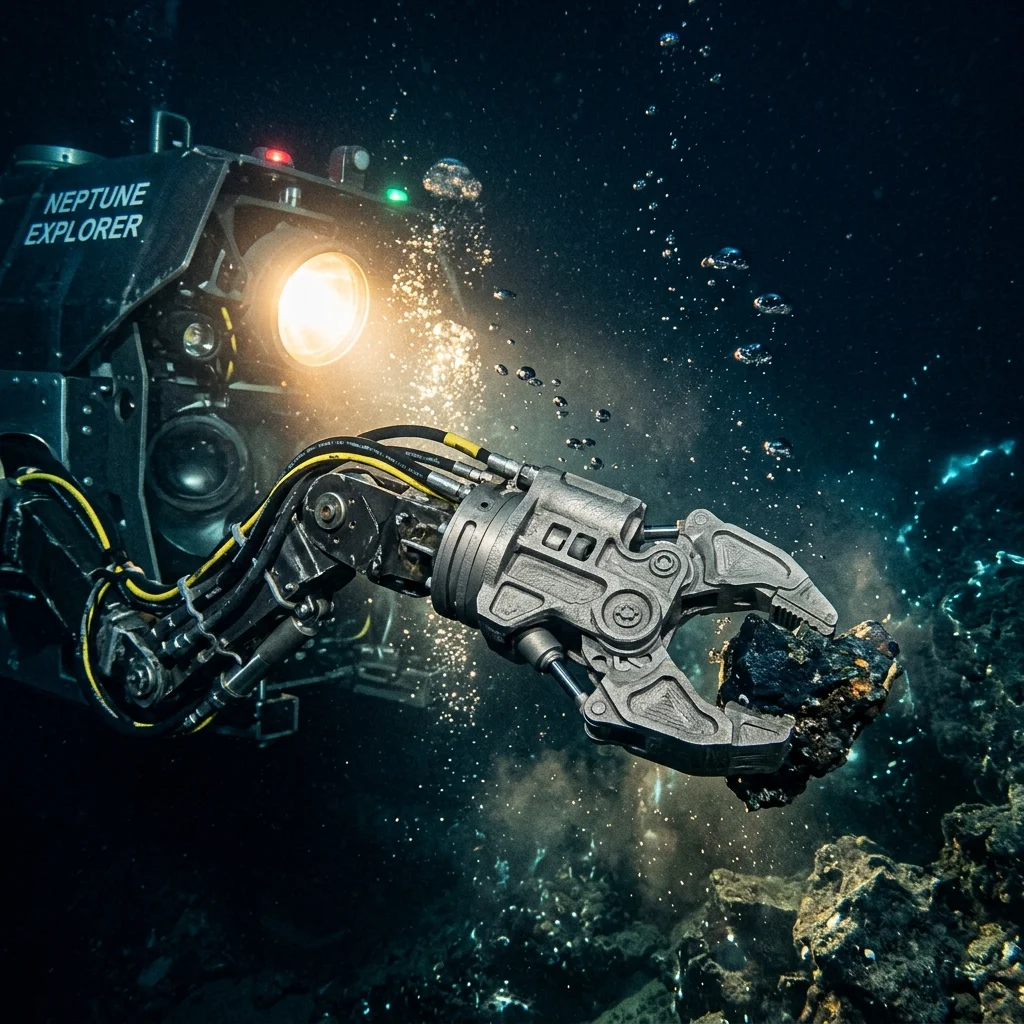
In 2025–2026, 3D printed deep-sea tools operate under extreme pressure (up to 1,100 atm), near-freezing temperatures, and corrosive saltwater.
| Depth | Pressure | Temp | Application |
|---|---|---|---|
| 200 m | 21 atm | 4–10°C | Shelf exploration |
| 4000 m | 401 atm | 1–2°C | Abyssal zone |
| 11000 m | 1101 atm | 1–2°C | Mariana Trench |
Interactive Filament Selector
Answer 3 quick questions and find the optimal material for your project.
1. What are the mechanical requirements for the part?
2. What temperature will the part operate at?
3. Are there any specific environmental requirements?
Our recommendation:
PLA filament
Ideal for easy printing, model visualization and decorative parts.
AM Applications: Ti-6Al-4V sensor housings, Inconel connectors, PEEK jigs, topology-optimized buoys.
FAQ
Q:
Can PLA survive deep-sea pressure?
A:
No: PLA is hydrophilic and deforms. Use Ti-6Al-4V, PEEK, or Inconel.
3D Printed Tools For Deep-Sea Exploration Under High Pressure Calculator
Interactive optimization calculator.
The full picture
This article is one page from The Big Book of 3D Printing: 704 illustrated pages covering every technology, material and fix in one reference.
Read it on Kindle →Engineer, author of The Big Book of 3D Printing and additive manufacturing expert