

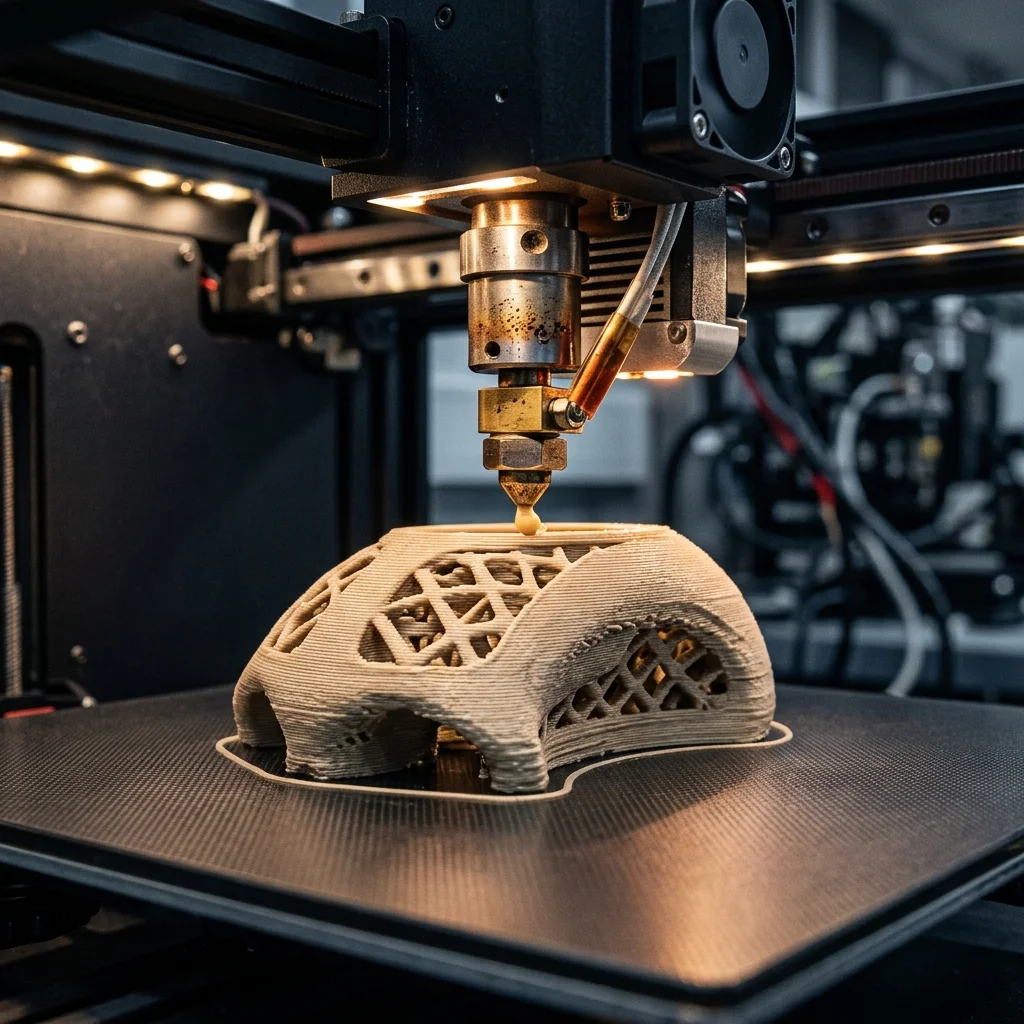
Bioprinting with ultra-high-performance polymers like PEKK and PEEK is completely transforming reconstructive surgery and orthopedics. These medical-grade materials offer a unique combination of extreme strength and excellent biocompatibility.
Medical PEKK/PEEK is one of the few polymer families that can be safely implanted into the human body for extended periods, or even permanently. Their mechanical properties closely mimic those of human cortical bone.
This technology requires highly specialized 3D printers capable of sustaining extreme extrusion temperatures (over 400°C) and actively heated chambers to prevent part warping during the print.
Why Medical PEKK/PEEK is Irreplaceable in Bioprinting
-
Bone Integration: The elastic modulus of these materials matches natural bone, significantly reducing ‘stress shielding’ and promoting better tissue health.
-
Radiolucency: Unlike titanium implants, PEEK/PEKK parts do not create artifacts in X-ray or MRI scans, making postoperative monitoring much clearer.
-
Sterilizability: These polymers can endure repeated steam, gamma, and ethylene oxide sterilization without any structural degradation.
-
Chemical Inertness: They are absolutely non-reactive in biological environments, which practically eliminates the risk of allergies or body rejection.
Recommended Printers and Materials
-
Cellink (BICO) BIO X: An advanced bioprinting platform that, when equipped with high-temperature printheads, can process specialized thermoplastic biomaterials.
-
Allevi (3D Systems) Allevi 3: A powerful tissue engineering platform supporting diverse extruders for comprehensive medical research needs.
-
Desktop Health 3D-Bioplotter: An incredibly reliable system for manufacturing medical implants and tissue engineering scaffolds, fully supporting high-temp bio-polymers.
For the best clinical and research outcomes, we recommend:
-
Evonik VESTAKEEP i4 G: A leading implant-grade PEEK material, offering flawless purity, reliability, and biocompatibility for permanent implants.
-
Solvay Keta-Spire PEEK: An exceptionally robust polymer frequently utilized in orthopedic and spinal fusion surgeries.
-
Evonik Resomer (PCL/PLLA): While bioresorbable (unlike permanent PEEK), it is an excellent complementary material for creating tissue regenerative scaffolds.
Technical Parameters and Costs
Extrusion Temperature: 380°C – 450°C.
Chamber Temperature: Over 120°C to prevent extreme warping.
Tensile Strength: 90 – 110 MPa (closely mimicking human bone).
Estimated Printer Cost: $50,000 – $300,000+ for certified medical additive manufacturing systems.
Material Cost (Medical PEEK): $5,000 – $10,000+ per kilogram.
Frequently Asked Questions (FAQ)
Interactive Analyzer for Bioprinting With Medical Grade Pekk/Peek
Select a profile to view detailed analysis.
The full picture
This article is one page from The Big Book of 3D Printing: 704 illustrated pages covering every technology, material and fix in one reference.
Read it on Kindle →Engineer, author of The Big Book of 3D Printing and additive manufacturing expert