

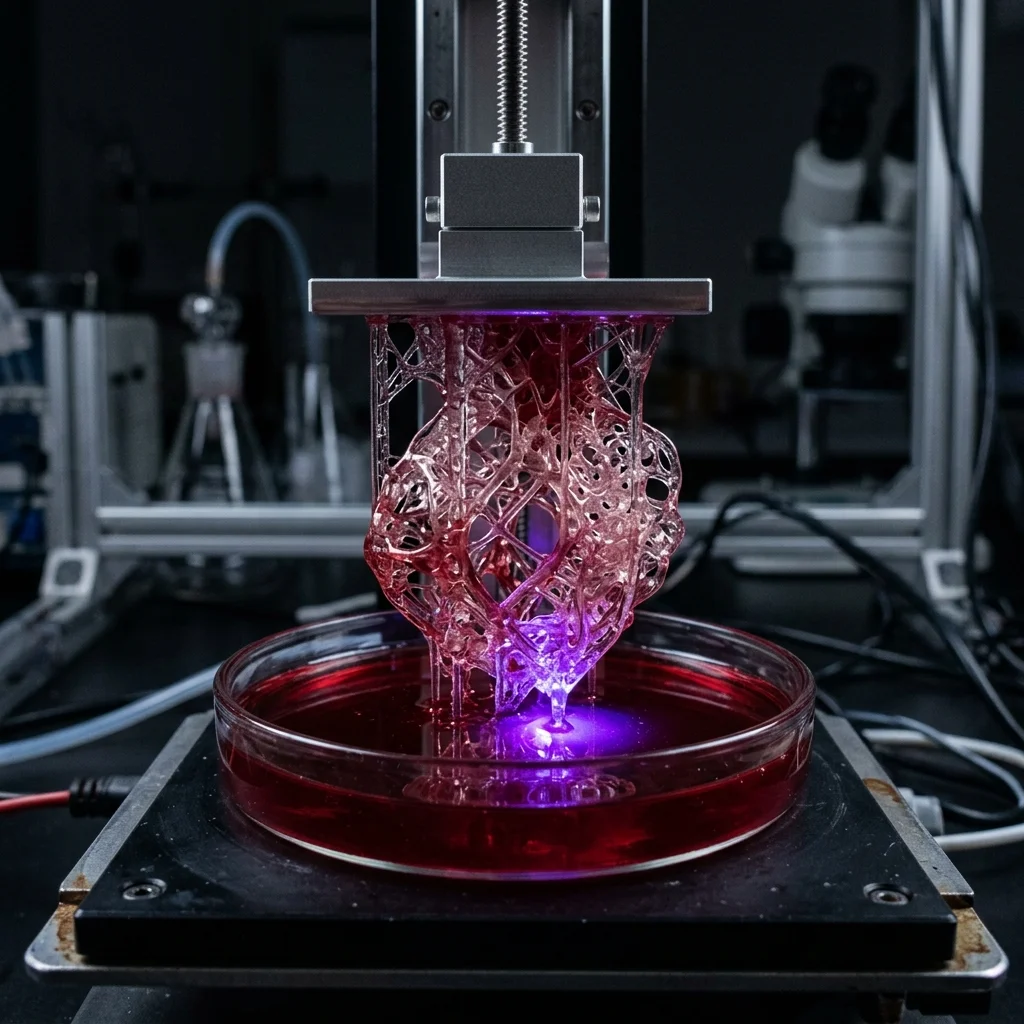
Bioprinting is revolutionizing the dental and medical industries by enabling the creation of highly precise, personalized solutions. The use of biocompatible resins allows for the production of parts that are entirely safe for human contact.
These specialized photopolymer resins cure under UV light, offering incredible resolution and surface finish. This is critically important for items like clear aligners, surgical guides, and customized medical models.
Biocompatible materials undergo rigorous testing and certification (e.g., ISO 10993). This ensures there is no toxicity, irritation, or allergic reaction for the patients.
Why Biocompatible Resins are Perfect for Bioprinting
-
Ultra-High Precision: Resin-based technology (SLA/DLP/LCD) allows for the printing of microscopic details with deviations under 50 microns.
-
Medical Safety: Specifically certified for prolonged contact with skin, mucosal membranes, or even temporary surgical implantation.
-
Sterilizability: Most medical-grade resins can withstand autoclaving and harsh chemical sterilization without losing their mechanical properties.
-
Optimal Aesthetics: For dental applications, these resins offer various shades (from crystal clear to tooth-colored), ensuring a perfect visual outcome.
Recommended Printers and Materials
-
Cellink (BICO) BIO X: One of the most advanced bioprinting systems, supporting multiple printheads and UV curing modules for specialized medical resins.
-
Allevi (3D Systems) Allevi 3: A versatile tri-extruder bioprinter, excellent for research and working with photopolymerizable hydrogels and resins.
-
Desktop Health 3D-Bioplotter: A high-end industrial machine known for its reliability in manufacturing medical and dental devices.
For professional clinical results, we recommend the following biocompatible materials:
-
Formlabs Dental SG: A Class I biocompatible resin designed specifically for highly accurate surgical guides.
-
NextDent NextDent Ortho: A transparent and extremely durable material, perfect for orthodontic splints and aligners.
-
Formlabs BioMed Amber: A sterilization-ready resin suitable for medical devices requiring short-term bodily contact.
Technical Parameters and Costs
Print Accuracy (Z-axis): 10 – 50 microns.
Biocompatibility Standard: ISO 10993 (Class I, IIa).
Sterilization Compatibility: Supports steam autoclaving at 134°C.
Estimated Printer Cost: $10,000 – $250,000+ for specialized clinical bioprinters.
Material Cost (Bio-resin): $250 – $400 per liter.
Frequently Asked Questions (FAQ)
Interactive Analyzer for Bioprinting With Biocompatible Resins
Select a profile to view detailed analysis.
The full picture
This article is one page from The Big Book of 3D Printing: 704 illustrated pages covering every technology, material and fix in one reference.
Read it on Kindle →Engineer, author of The Big Book of 3D Printing and additive manufacturing expert