

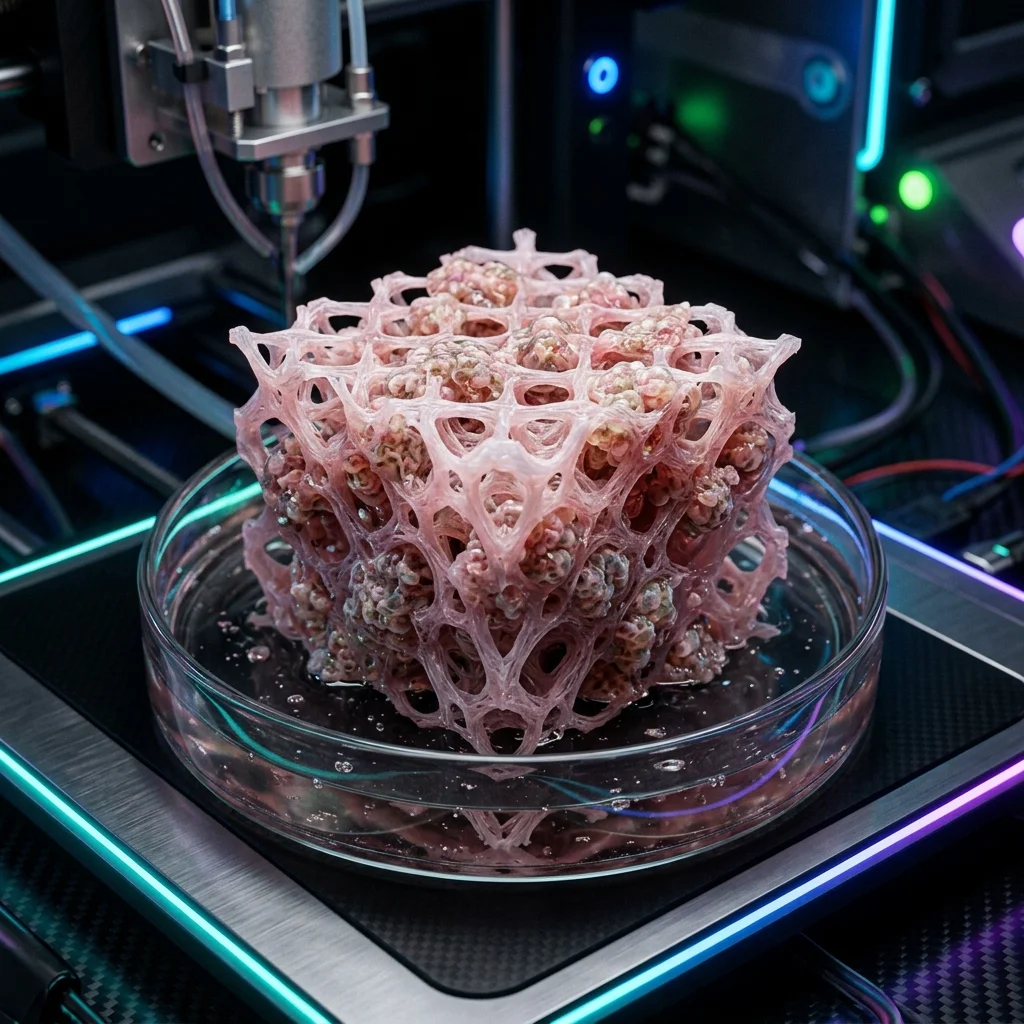
Biofabrication merges additive manufacturing with cell biology to create functional tissue constructs that mimic native anatomy. Leveraging extrusion‑based bioprinters, stereolithographic vat systems, and emerging droplet‑jet platforms, the industry is moving from proof‑of‑concept to scalable production. This article dissects the underlying physics, material ecosystems, high‑value applications, and the financial calculus that executives need to evaluate before committing to a bio‑fabrication line.
Fundamentals of Biofabrication
At its core, biofabrication translates digital tissue models into layer‑by‑layer deposition of cell‑laden bio‑inks. The process relies on precise control of shear stress, nozzle geometry, and cross‑linking kinetics to preserve cell viability above 90 % during printing. Multi‑material heads enable simultaneous deposition of structural polymers (e.g., PCL, PLGA) and extracellular matrix analogues (e.g., gelatin‑methacryloyl). Post‑print maturation in bioreactors provides mechanical conditioning and perfusion, driving tissue maturation toward functional benchmarks such as contractile force for cardiac patches or osteogenic mineralization for bone scaffolds.
Materials and Cell‑Laden Inks
The ink portfolio has expanded beyond simple hydrogel carriers. Composite inks now embed nano‑reinforced fibers for tensile strength, growth‑factor‑loaded microspheres for controlled release, and conductive nanowires for electroactive tissues. Decellularized extracellular matrix (dECM) powders retain tissue‑specific cues, improving lineage commitment without exogenous supplements. Selecting an ink requires balancing rheology (yield stress < 150 Pa for extrusion), cross‑linking method (photoinitiated vs ionic), and regulatory compliance, especially when autologous cells are sourced under GMP conditions.
Industrial Applications and ROI
The total capital outlay hovers around $900k, but revenue projections for a mid‑size contract manufacturing organization (CMO) can reach $3‑5 M annually from oncology organoid services and orthopedic implant contracts, delivering a 3‑4 × ROI within 3 years when capacity utilization exceeds 70 %.
Implementation Timeline and Process Steps
Step 1: Feasibility study and tissue model selection (0‑2 months). Step 2: Procurement of printer, inks, and cleanroom upgrades (2‑5 months). Step 3: Process qualification – print‑parameter optimization, cell viability assays (5‑8 months). Step 4: GMP validation and regulatory filing (8‑12 months). Step 5: Pilot production run and market launch (12‑15 months).
Future Outlook and Business Opportunities
Emerging trends point toward hybrid bio‑manufacturing that fuses robotic assembly with living material deposition, opening avenues in soft robotics and aerospace bio‑structures for adaptive thermal shielding. AI‑driven design optimization will shorten the design‑to‑print cycle, while decentralized micro‑fab units could bring point‑of‑care tissue manufacturing to hospitals, creating new revenue streams through service‑based models rather than pure product sales.
Frequently Asked Questions (FAQ)
Biofabrication Of Organic Tissue Structures: Technical Deep‑Dive And Business Impact Calculator
Interactive optimization calculator.
The full picture
This article is one page from The Big Book of 3D Printing: 704 illustrated pages covering every technology, material and fix in one reference.
Read it on Kindle →Engineer, author of The Big Book of 3D Printing and additive manufacturing expert