

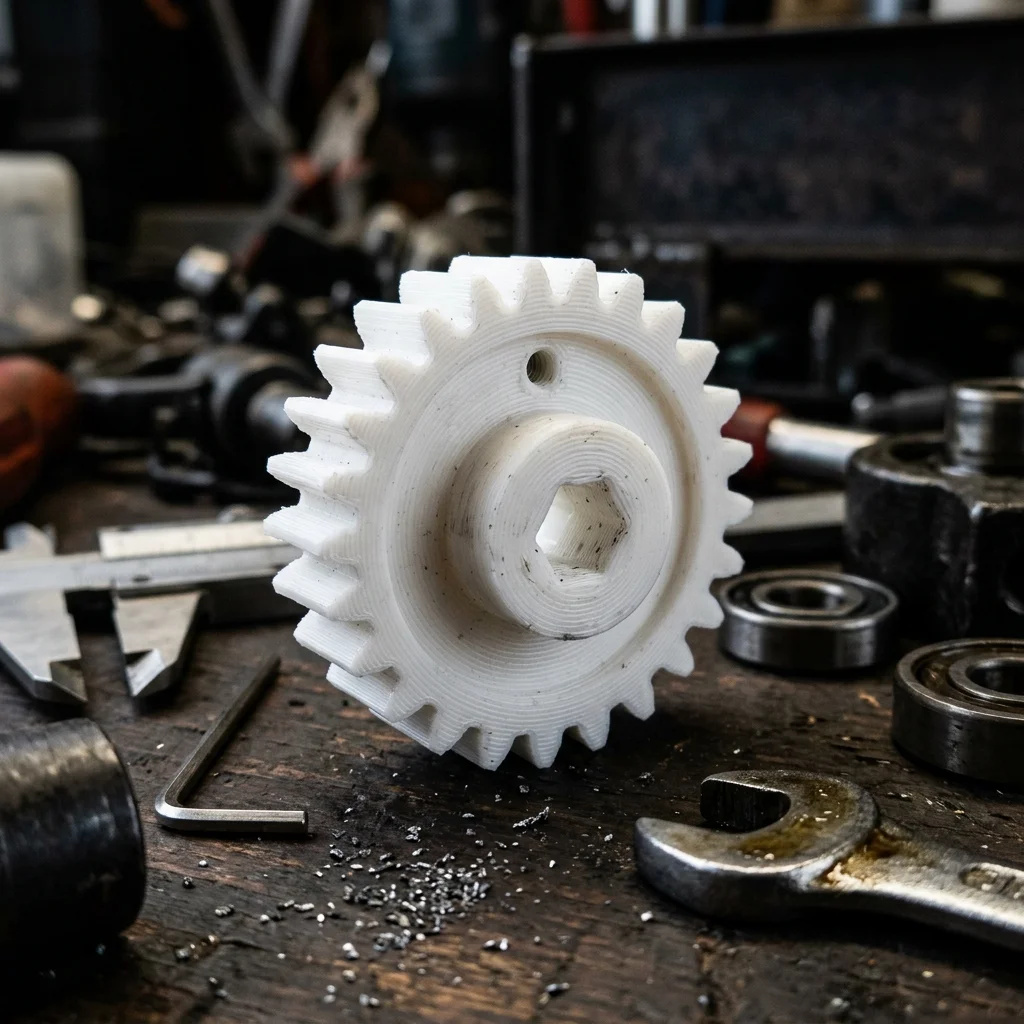
The application of 3D printing for automotive spare parts brings revolutionary benefits to the automotive industry. By accelerating development cycles and reducing costs, it opens up new avenues for customization and rapid prototyping.
Advantages and Limitations
Understanding the pros and cons is crucial for successful implementation.
Pros:
- Drastically reduced time-to-market
- Exceptional design freedom and potential for topological optimization
- Weight reduction, which is critical in the automotive sector
Cons:
- Higher per-part cost for mass production
- Build volume constraints
- Specialized post-processing is often needed
Recommended Technologies and Materials
Technologies like FDM, SLS, and MJF are frequently used for automotive spare parts. Suitable materials include industrial PA12 (Nylon) and Carbon Fiber composites.
Implementation Process
Successful deployment requires a structured approach:
- Step 1: Analyze component requirements and loads.
- Step 2: 3D design (CAD) and generative design.
- Step 3: 3D printing of the part.
- Step 4: Post-processing and testing.
Cost Expectations
Costs can vary based on volume and technology. Here is a sample calculation for a small run:
- Design Costs: 1200
- Materials: 800
- Depreciation: 1500
- Total: 3500
Frequently Asked Questions (FAQ)
3D Printing Automotive Spare Parts Calculator
Interactive optimization calculator.
The full picture
This article is one page from The Big Book of 3D Printing: 704 illustrated pages covering every technology, material and fix in one reference.
Read it on Kindle →Engineer, author of The Big Book of 3D Printing and additive manufacturing expert