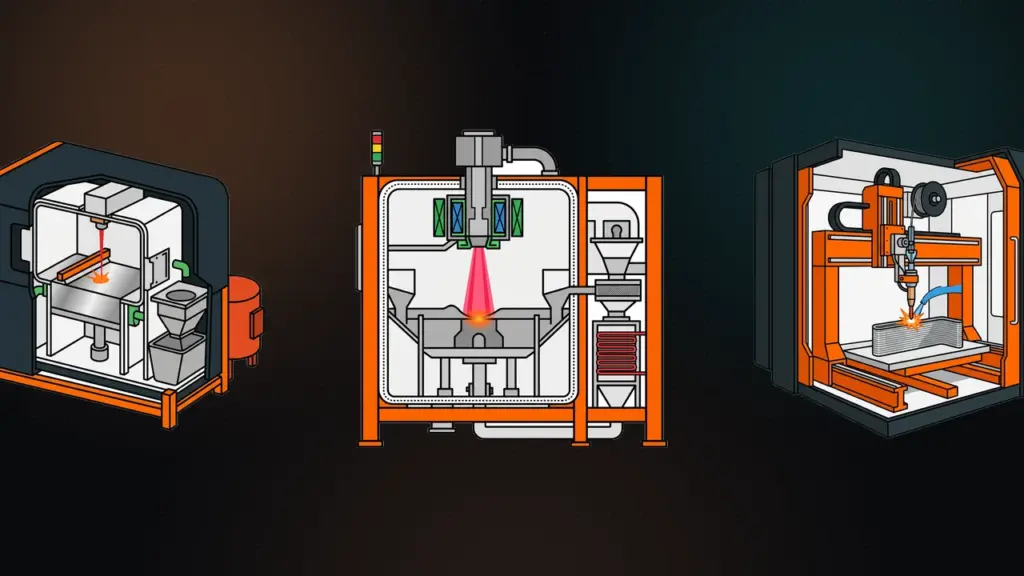
3D printing is travelling from hobby and prototypes to a real production tool. The specific models and records change every year, but the directions of development are lasting. If you want to understand where the technology is heading – not just which printer is new this season – here are the forces shaping the future of additive manufacturing.
1. Faster, smarter machines
Print speed has risen dramatically in recent years – what used to take a whole night now comes out in hours. Alongside this come automatic calibration, sensors and self-diagnostics that make printing more reliable and accessible to beginners. The machine increasingly needs less of an expert to tame it.
2. An explosion of new materials
For a long time the choice was mostly PLA and ABS. Today we have carbon- and glass-fibre composites, high-temperature polymers (PEEK, PEI), flexible and bio-based materials. The more materials, the more real applications. Browse over 17,000 products in the filament catalog and the full materials library.
3. Metal printing toward mass access
Until recently metal 3D printing was aerospace- and medicine-only because of cost. Now more affordable desktop metal systems are emerging, lowering the barrier for small companies and labs. Metal is ceasing to be a luxury.
4. From prototype to serial production
The biggest shift in mindset: 3D printing is no longer just for prototypes. Technologies like MJF and SLS enable series of hundreds and thousands of parts with repeatable quality. More and more products are finally produced by additive methods, not just tested.
5. Artificial intelligence in design and control
AI is entering in two places: generative design (software that proposes the optimal shape for a given load) and quality control (cameras and algorithms detecting defects during printing). The result is better parts with fewer failures.
What this means for you
The technology gets faster, cheaper and more accessible every year. What requires an industrial machine today will be on the desktop tomorrow. The best time to start learning 3D printing is now – the fundamentals stay, and you grow with the technology.
6. Sustainability and local production
Additive manufacturing is inherently more material-efficient. Add to that recycled and bio-based filaments and the “print on demand” model that cuts warehousing and transport. Sustainability becomes a competitive advantage, not just a slogan.
7. Accessible education and community
Knowledge is the last big trend. The more people understand the technology, the faster it develops. That is exactly why resources like The Big Book of 3D Printing, the Academy and the blog exist – to make the complex understandable.
How to keep up
You do not need to chase every headline – it is enough to understand the fundamentals and the directions. Start with what is 3D printing and why it matters, then follow the specific technologies in the tools and catalogs. EduFacturing brings it all together – see the ecosystem.
The full picture
This article is one page from The Big Book of 3D Printing: 704 illustrated pages covering every technology, material and fix in one reference.
Read it on Kindle →Frequently asked questions
How has 3D printing speed improved in recent years?
Is 3D printing now used for mass production, not just prototypes?
How is AI being used in 3D printing?
Is metal 3D printing still only for aerospace and medicine?
Engineer, author of The Big Book of 3D Printing and additive manufacturing expert
Updated on 30 May 2026
This article was written with AI assistance; the facts were checked against the sources on 30 May 2026.