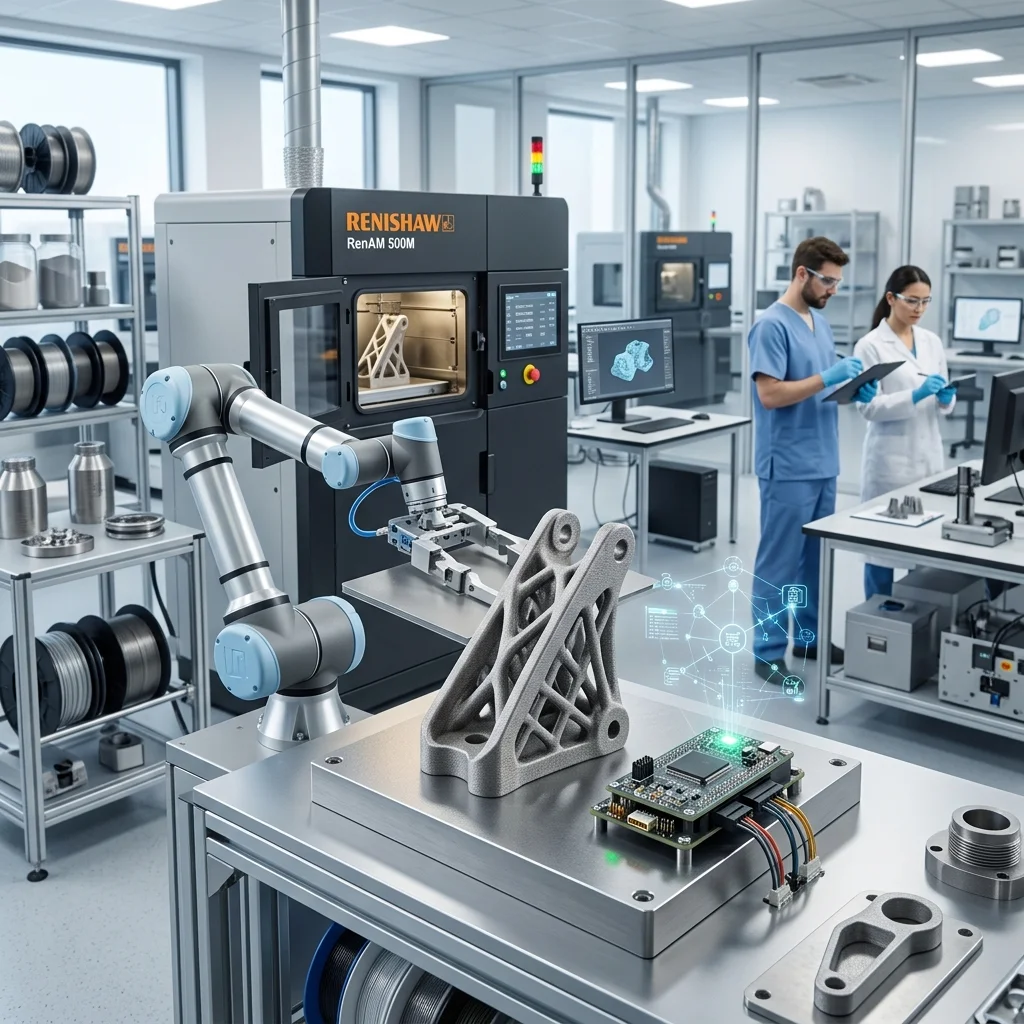
In the era of Industry 4.0, additive manufacturing (3D printing) promises unprecedented decentralization. Imagine a world where, instead of shipping spare parts across oceans, you simply transmit a digital CAD file to a local 3D printer. However, this freedom brings a critical vulnerability: how do we ensure the transmitted file hasn't been tampered with, that intellectual property is protected, and that the printed part meets stringent quality standards? This is where blockchain technology steps in.
As the lead technical architect at EduFacturing, I've always championed the "picks and shovels" philosophy: hardware is merely a tool, while the true value lies in the knowledge and systems governing it. Blockchain acts as the fundamental trust layer for decentralized 3D printing, creating a secure, immutable, and transparent "digital thread" that tracks a part's entire journey from initial design to final physical manifestation.
The Immutable Digital Thread and Cryptographic Hashing
Traceability in additive manufacturing requires recording every stage of a part's lifecycle: CAD design creation, G-code generation, printing parameters (temperature, speed, material), and final quality certifications. Through blockchain, all this data is logged onto a decentralized ledger. Because this ledger is immutable, the history of the part cannot be altered or falsified.
To avoid network congestion, massive files like STLs or STEP models are not stored directly on the blockchain. Instead, they are kept in decentralized, off-chain storage systems like IPFS, while their cryptographic hash (a digital fingerprint) is recorded on-chain. If even a single byte of the design file is altered by a malicious actor, the hash changes completely, instantly alerting the system and preventing the compromised file from being printed.
Smart Contracts and Intellectual Property Protection
Intellectual property (IP) is the most valuable asset in digital manufacturing. Smart contracts offer an elegant solution for its protection. These self-executing software protocols can automatically manage the licensing and distribution of 3D designs.
For example, an aerospace OEM can license a CAD file to a local supplier with permission for exactly 100 prints. The 3D printer's IoT system communicates with the smart contract, decrypting the file only if the license is valid and the machine meets required specifications (e.g., specific filament or resin type). After the 100th print, access is automatically revoked, making unauthorized reproduction and IP theft virtually impossible.
Mitigating Counterfeits and Physical-Digital Linking
One of the greatest challenges is linking the digital blockchain record to the physical 3D printed object. In mission-critical industries like aerospace or medicine, a counterfeit or defective part can have catastrophic consequences.
The solution lies in embedding unique identifiers during the printing process itself. These can be micro-QR codes, NFC tags embedded within the part, or even intentional internal microstructures that act as a physical hash. When the object is scanned, these identifiers link directly back to the blockchain record, instantly verifying its provenance, the exact material batch used, the machine operator, and the specific printer that produced it.
The Road Ahead: Scalability and Interoperability Standards
Despite its immense potential, integrating blockchain into 3D printing is not without technical hurdles. Scalability is a primary concern: modern 3D printers generate terabytes of IoT telemetry data. Recording all this information in real-time requires highly optimized, high-throughput network architectures.
Another significant challenge is the lack of universal interoperability standards across different ERP systems, proprietary printer firmwares, and various blockchain networks. We must also address the "garbage in, garbage out" reality: because the blockchain is immutable, flawed data from a faulty printer sensor will remain on the ledger forever. Therefore, highly robust, automated data capture systems are absolutely essential.
Conclusion
Decentralized manufacturing via 3D printing is the inevitable future of the industry, but it cannot scale without a solid foundation of trust and security. Blockchain technology provides exactly this cryptographic backbone. At EduFacturing, we believe that understanding these deep technological synergies is what transforms a simple printer operator into a visionary engineer. The future belongs to those who not only know how to make a part but also how to prove its undeniable value.
The full picture
This article is one page from The Big Book of 3D Printing: 704 illustrated pages covering every technology, material and fix in one reference.
Read it on Kindle →Engineer, author of The Big Book of 3D Printing and additive manufacturing expert
Updated on 11 September 2026
This article was written with AI assistance; the facts were checked against the sources on 11 September 2026.