

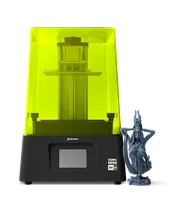
The Phrozen Sonic Mini 8K S is a compact MSLA resin printer with an 8K monochrome LCD screen delivering ~22 µm resolution: a benchmark for miniature painters, scale modellers and jewellers who demand surgical detail at an accessible price under €300.
What it is
The Sonic Mini 8K S uses MSLA (Masked SLA) technology: a monochrome LCD panel at 7680 × 3360 pixels masks UV light, curing an entire layer at once. The monochrome screen is significantly more durable and faster than older RGB panels. The small 165 × 72 mm footprint means the printer is specialised: ideal for figurines, dental models and jewellery wax prototypes rather than large parts. The 8K resolution yields a pixel size of ~22 µm, making layer lines and edges virtually invisible to the naked eye.
Technical specifications
| Technology | MSLA (Mono LCD / Masked SLA) |
|---|---|
| Build volume | 165 × 72 × 180 mm |
| Screen resolution | 8K: 7680 × 3360 px |
| Pixel size (XY) | ~22 µm |
| LCD panel | monochrome, 9.1" |
| Layer thickness (Z) | 0.01 – 0.20 mm (typically 0.05 mm) |
| Class / Price | Hobby · ~€290 |
Who it’s for
- Miniatures and figurines (wargaming) (printing 28–32 mm figurines with visible facial detail, chainmail and weapons) the standard choice for the Warhammer and D&D communities (Hobby and tabletop gaming)
- Jewellery prototypes (castable resin): precise wax or castable resin masters for subsequent casting in gold, silver and bronze (Jewellery and goldsmithing)
- Dental models: production of diagnostic models, surgical guides and temporary crowns using biocompatible resin (Dentistry)
- Architectural details and scale models: ultra-fine ornaments, facade details and 1:100 interior scale models at unmatched resolution (Architecture and product design)
Setup and calibration
- Level the build plate against the FEP film: loosen the 4 bolts, lay the plate flat onto the vat and re-tighten. Uniform first-layer adhesion across the entire plate without detachment.
- Run an exposure calibration test (RERF or AmeraLabs Town) to find the optimal Normal Exposure Time. Visible thin pillars, crisp text and intact holes without bleeding: the correct exposure window.
- Inspect the FEP film for cloudiness, scratches or punctures and replace if needed. A clear, transparent FEP ensures uniform UV transmission and easy layer release every time.
- Fill the vat to the level marked inside: do not exceed the Max line. Enough resin to cover the FEP without spilling; the build plate submerges cleanly.
Common defects and fixes
Resin exposure helper
Pick a resin type for starting exposure values (typical for mono-LCD machines). These are STARTING points: always run an exposure test, because the exact seconds depend on your screen power and the specific resin:
Conclusion
The Sonic Mini 8K S is hard to beat in the high-detail, small-object niche: the 22 µm pixel makes miniatures and jewellery pieces exceptionally realistic, while the monochrome panel delivers fast exposure and a long lifespan. The small build plate is the only real limitation: if your projects are mostly palm-sized or smaller, this machine offers resolution that larger printers can only dream of.
The full picture
This article is one page from The Big Book of 3D Printing: 704 illustrated pages covering every technology, material and fix in one reference.
Read it on Kindle →Engineer, author of The Big Book of 3D Printing and additive manufacturing expert