

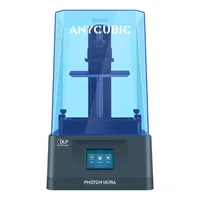
The Elegoo Mars 5 Ultra is a compact 12K mono LCD/MSLA resin printer in the budget class, bringing high resolution, a built-in AI monitoring camera and Wi-Fi connectivity at an accessible price. With a 153 × 77 × 165 mm build volume and a 12K screen, it targets modellers, dental technicians and jewellers seeking outstanding detail from a desktop machine.
What it is
The Mars 5 Ultra is a resin photopolymer printer that uses a monochrome LCD panel with 11,520 × 5,120 pixel resolution (12K) and 405 nm UV light to cure liquid resin layer by layer. The MSLA (Masked Stereolithography Apparatus) technology exposes an entire layer at once, making the process significantly faster than classic laser-based SLA. The built-in AI module detects failed prints in real time and halts the printer, while Wi-Fi and the Elegoo OS app enable remote control and monitoring. The machine is designed for users who prioritise detail over volume.
Technical specifications
| Technology | Mono LCD / MSLA (405 nm UV) |
|---|---|
| Build volume | 153 × 77 × 165 mm |
| Screen resolution | 12K (11,520 × 5,120 px) |
| XY resolution | 19 × 24 µm |
| Print speed | up to 70 mm/h (with fast resin) |
| Connectivity | Wi-Fi, USB, built-in AI camera |
| Class / Price | Budget · ~€260 |
Who it’s for
- Miniatures and collectible figurines: the 12K resolution captures muscle fibres, engravings and 1:72 scale with precision unreachable by FDM printers (Tabletop gaming and collectibles)
- Dental and orthodontic models: precise dental models, surgical guides and temporary crowns from approved biocompatible resins (Dental medicine)
- Jewellery and casting masters: castable wax-substitute resins for lost-wax casting that burn out cleanly without residue (Jewellery and watchmaking)
Setup and calibration
- Level the build plate with a paper sheet: loosen the bolts, place paper, lower the plate to the FEP film and tighten. Even adhesion of the first layer to the build plate without detachment.
- Run an exposure test (Exposure Validation Matrix or RERF): print a test matrix with varying Bottom/Normal Exposure Time. Optimal balance found, details are crisp, without over- or under-cure.
- Inspect and replace the FEP/nFEP film: visually check for clouding, scratches and micro-holes. Clear, taut film without defects, ensures even UV projection.
- Monitor resin level: fill the vat to the Min–Max mark before each print. Enough resin to cover the FEP without overflow that could contaminate the LCD screen.
Common defects and fixes
Resin exposure helper
Pick a resin type for starting exposure values (typical for mono-LCD machines). These are STARTING points: always run an exposure test, because the exact seconds depend on your screen power and the specific resin:
Conclusion
The Mars 5 Ultra offers a rare combination for its price class: 12K precision, AI monitoring and Wi-Fi in a compact body under €260. It is the right choice for anyone who values detail in resin printing over build volume. With the right resin, proper ventilation and regular FEP maintenance, it can produce prints that rival machines twice its price.
The full picture
This article is one page from The Big Book of 3D Printing: 704 illustrated pages covering every technology, material and fix in one reference.
Read it on Kindle →Engineer, author of The Big Book of 3D Printing and additive manufacturing expert