

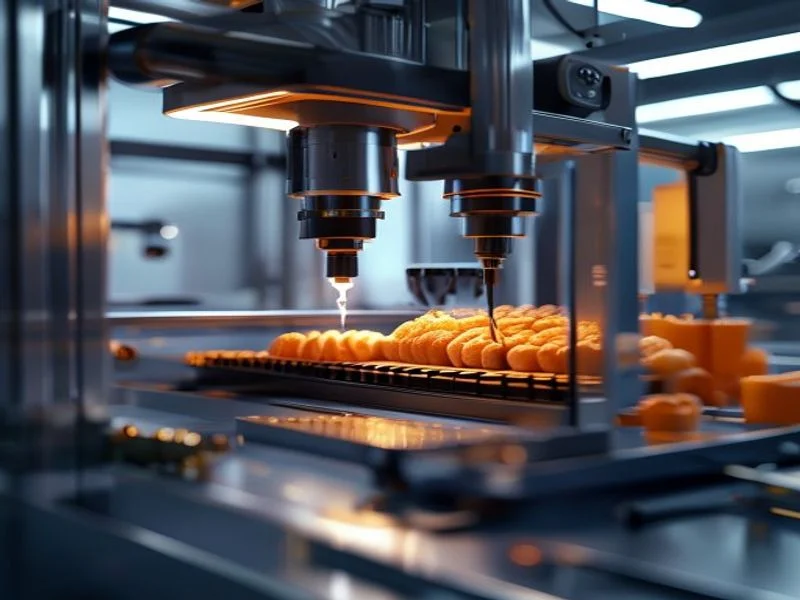
3D printing has revolutionized the process of creating food industry accessories. This guide will walk you through the core requirements, recommended technologies and materials, and real-world industry examples. Modern additive manufacturing provides flexibility and speed in producing these components.
Requirements and Challenges
Creating food industry accessories requires attention to detail, durability, and often adherence to specific industry standards.
Pros:
- Rapid prototyping and iteration
- Reduction in production costs
- High customization capabilities
Cons:
- Limitations in some material properties
- Need for post-processing with certain technologies
- Initial equipment investment
Recommended Technologies and Printers
For food industry accessories, we recommend technologies such as FDM or SLS, specifically printers: 1, fdm-2, 3, sls-2. The choice of technology depends on the required precision, strength, and operating environment.
Recommended Materials
Material choice is critical. Frequently used materials include: petg-1, petg-2, pp-1, pp-2, pa12-1, pa12-2. Each material offers specific mechanical and thermal properties that must be considered.
Workflow Timeline
Following a strict process ensures optimal results:
- Step 1: Design and 3D model optimization
- Step 2: Print preparation and material selection
- Step 3: The actual 3D printing process
- Step 4: Post-processing and functional testing of the final part
Cost Breakdown
Typical costs for implementing this solution include:
- Equipment investment: 5000 EUR
- Staff training: 1000 EUR
- Initial materials stock: 500 EUR
- Total: 6500 EUR
Frequently Asked Questions (FAQ)
Interactive Analyzer for 3D Printing For Food Industry Accessories
Select a profile to view detailed analysis.
The full picture
This article is one page from The Big Book of 3D Printing: 704 illustrated pages covering every technology, material and fix in one reference.
Read it on Kindle →Engineer, author of The Big Book of 3D Printing and additive manufacturing expert