

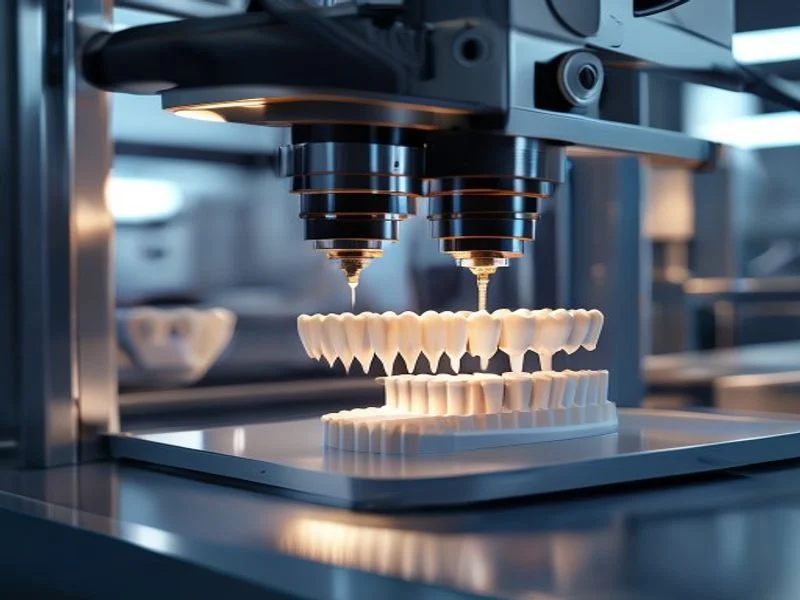
Dental working prototypes (or models) serve as the foundation for manufacturing aligners, retainers, and planning surgical interventions.
intro
Requirements and Technologies
High print speed and dimensional stability are required. DLP and MSLA are preferred due to their speed when printing multiple models simultaneously.
Pros and Cons
- Pros:
- Fast mass production
- High model accuracy
- Improved patient communication
- Cons:
- High material usage for solid models
- Need for digital file storage space
Production Process
- Step 1: Intraoral scanning.
- Step 2: Virtual model preparation (hollowing to save resin).
- Step 3: Simultaneous printing of multiple models on the build plate.
- Step 4: Washing and curing.
- Step 5: Thermoforming of aligners (if applicable).
Cost Breakdown
- Volume Production Printer: 6000
- Model Resin: 1500
- Wash & Cure Station: 800
- Total: 8300
Frequently Asked Questions (FAQ)
Q:
How many models can be printed at once?
A:
Depending on the build plate size, between 4 and 12 models.
Q:
Do the models need to be solid?
A:
No, it is recommended to hollow them out to save resin.
Q:
How long do these models last?
A:
They are highly durable and can be stored for years if protected from direct sunlight.
3D Printing Of Dental Working Prototypes Calculator
Interactive optimization calculator.
The full picture
This article is one page from The Big Book of 3D Printing: 704 illustrated pages covering every technology, material and fix in one reference.
Read it on Kindle →Engineer, author of The Big Book of 3D Printing and additive manufacturing expert