

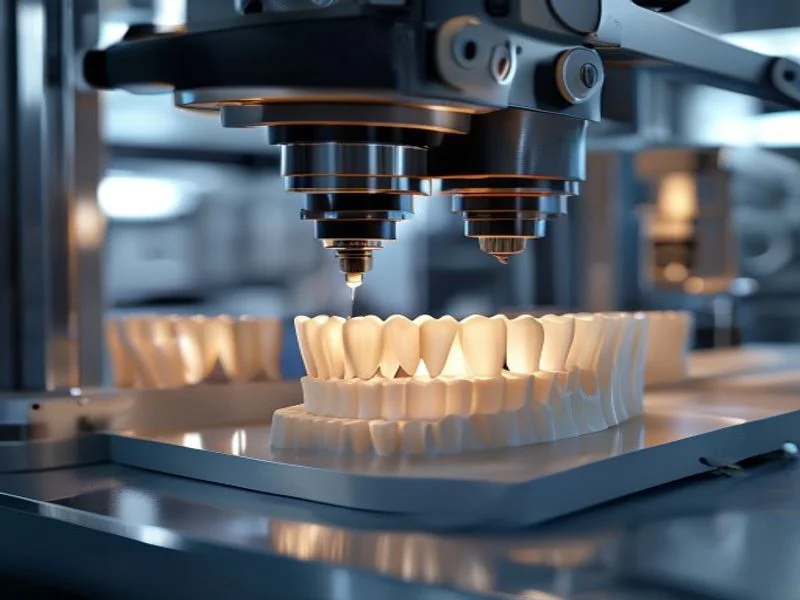
Using 3D printed dental casting molds (castable resins) accelerates the creation of crowns, bridges, and dentures by replacing traditional wax methods.
intro
Requirements and Technologies
The primary requirement is that the material burns out without residue (ash-free burnout). SLA and MSLA printers are perfect for this.
Pros and Cons
- Pros:
- Zero residue during burnout
- Very smooth surface
- Saves time for dental technicians
- Cons:
- Materials are brittle before casting
- Strict requirements for the furnace temperature profile
Production Process
- Step 1: Digital impression.
- Step 2: Design of the restoration.
- Step 3: Printing with castable resin.
- Step 4: Investing in investment material.
- Step 5: Burnout in a furnace and metal casting.
Cost Breakdown
- 3D Printer: 3500
- Castable Resin: 800
- Furnace: 2000
- Total: 6300
Frequently Asked Questions (FAQ)
Q:
What is the ash residue percentage?
A:
For high-quality resins, it is below 0.1%, ensuring a perfect metal casting.
Q:
Can any metal be cast?
A:
Yes, the molds are compatible with all standard dental alloys.
Q:
Is it hard to set up the furnace?
A:
It requires strict adherence to the resin manufacturer’s instructions for the heating profile.
3D Printing Of Dental Casting Molds Calculator
Interactive optimization calculator.
The full picture
This article is one page from The Big Book of 3D Printing: 704 illustrated pages covering every technology, material and fix in one reference.
Read it on Kindle →Engineer, author of The Big Book of 3D Printing and additive manufacturing expert