

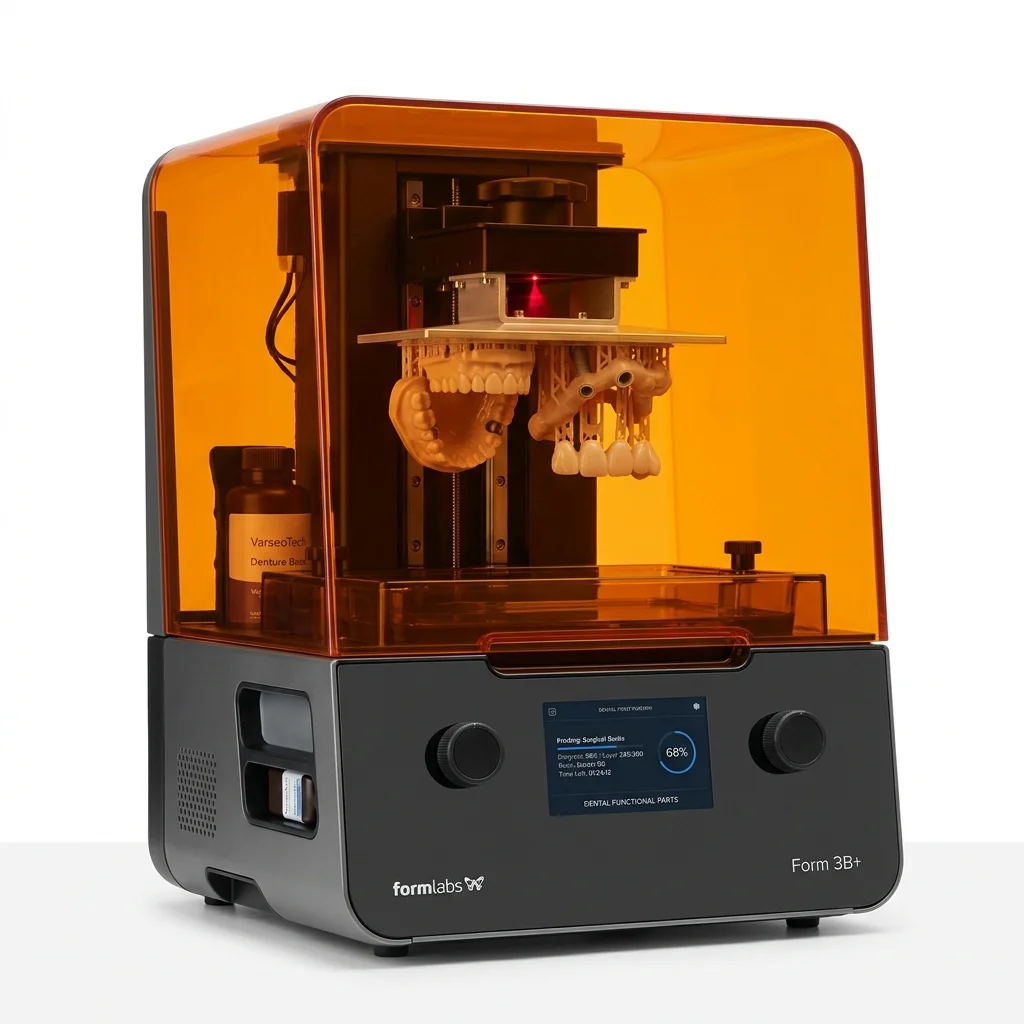
Temporary crowns, bridges, and occlusal splints are now mass-produced via 3D printing.
Materials
Class IIa biocompatible resins with high wear resistance are used.
Pros
- Pros: High aesthetics, excellent functionality, fast production.
- Cons: Brittle compared to zirconia.
Clinical Protocol
Step 1: Intraoral scanning. Step 2: Designing the restoration. Step 3: Printing and curing.
Costs
- Printer: 6000
- Special resins: 1500
- Total: 7500
Frequently Asked Questions (FAQ)
Q:
How long do temporary crowns last?
A:
From a few months to over a year.
Q:
Can they be polished?
A:
Yes, polished to a high gloss with conventional pastes.
Q:
What is the accuracy?
A:
Exceptional, often better than milling.
Dental Functional Parts | 3D Printing Calculator
Interactive optimization calculator.
The full picture
This article is one page from The Big Book of 3D Printing: 704 illustrated pages covering every technology, material and fix in one reference.
Read it on Kindle →Engineer, author of The Big Book of 3D Printing and additive manufacturing expert