

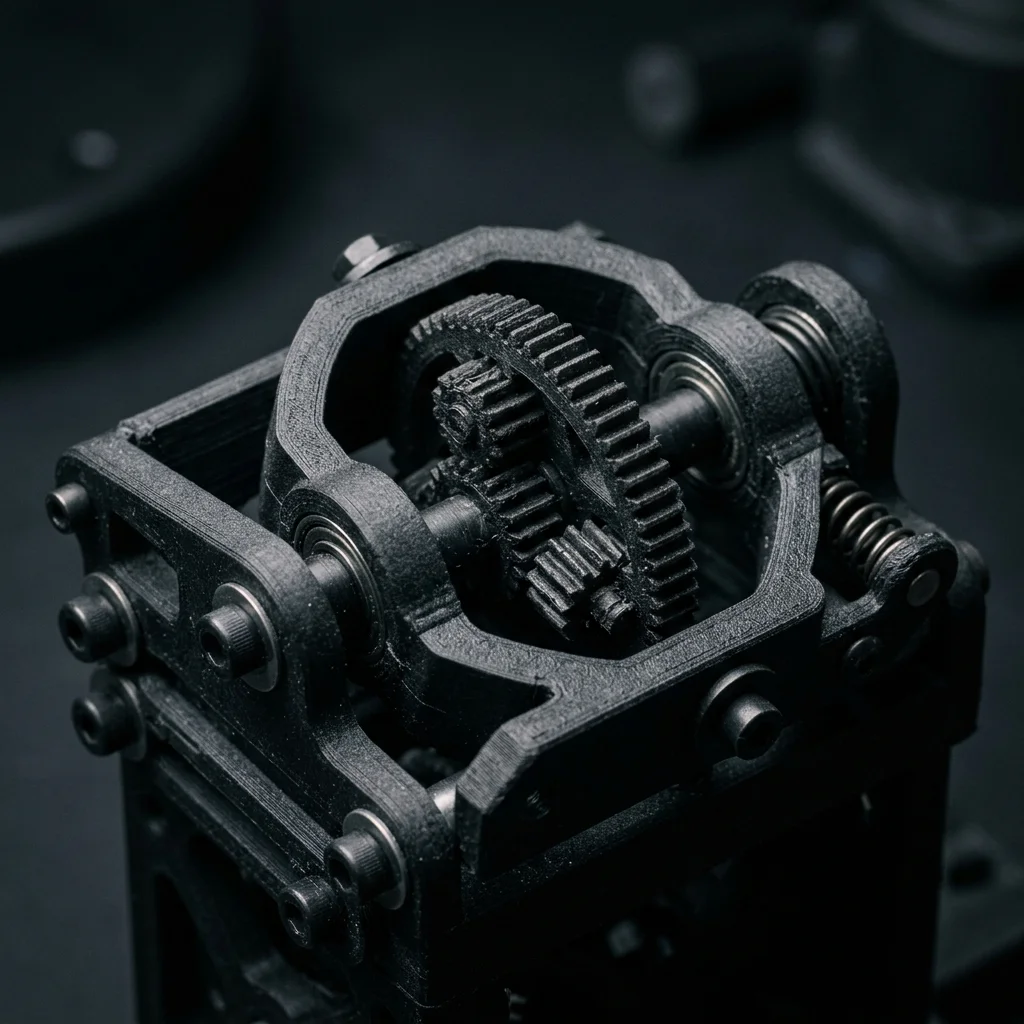
Creating Gaming and Hobby Functional Parts through 3D printing completely transforms our approach to custom manufacturing. This technology offers incredible flexibility, speed, and the ability to produce complex geometries that traditional methods struggle to achieve. Whether for rapid prototyping or end-use products, 3D printing is becoming essential in the production of Gaming and Hobby Functional Parts.
Typical Requirements and Recommended Technologies
When working on Gaming and Hobby Functional Parts, the key requirements usually include precision, strength, environmental durability, and high-quality surface finish. Recommended technologies include FDM (for fast and robust functional parts), SLA and MSLA (for exceptional detail and smooth surfaces), and SLS (for complex geometries without the need for support structures).
Pros:
- Unlimited freedom in design and geometry
- Rapid production of prototypes and short runs
- Easy customization for every single part
- Significant reduction in material waste compared to subtractive methods
Cons:
- Print times can be lengthy for mass production volumes
- Certain materials require specialized printing environments
- Often requires post-processing for a perfect aesthetic finish
Workflow Process
To achieve the best results, follow this proven workflow:
Step 1: Conceptual design and creation of the CAD model. Step 2: Preparing the print file and slicing (adjusting parameters like infill, layer height, and supports). Step 3: Selecting the optimal printer and material based on technical requirements. Step 4: The actual 3D printing process and active monitoring. Step 5: Removing supports and washing (for resin prints). Step 6: Final post-processing, including sanding, painting, or UV curing.
Recommended Materials and Printers
To achieve optimal results for Gaming and Hobby Functional Parts, we highly recommend using the following specialized 3D printers from our lineup: 1, fdm-2, sla-2, 2, msla-1, msla-2. Regarding materials, the best choice varies depending on the specific application, but top recommendations include: s-res-1, s-res-2, pla-1, pla-2, t-res-1, t-res-2.
Real-world Examples
The practical applications of Gaming and Hobby Functional Parts in both industry and hobbyist projects are endless. From creating ergonomic tools that boost efficiency to unique decorative elements and custom cases: the possibilities are limited only by imagination. Users consistently report reduced time-to-market and significant cost savings when leveraging 3D printing for these use cases.
Cost Breakdown
Financial planning is a crucial aspect of successfully integrating 3D printing. Here is a baseline example of expected costs:
- Initial equipment investment: 5000
- Initial materials and consumables: 1500
- Training and software licenses: 800
- Total: 7300
Frequently Asked Questions (FAQ)
3D Printing For Gaming And Hobby Functional Parts: Complete Guide Calculator
Interactive optimization calculator.
The full picture
This article is one page from The Big Book of 3D Printing: 704 illustrated pages covering every technology, material and fix in one reference.
Read it on Kindle →Engineer, author of The Big Book of 3D Printing and additive manufacturing expert