

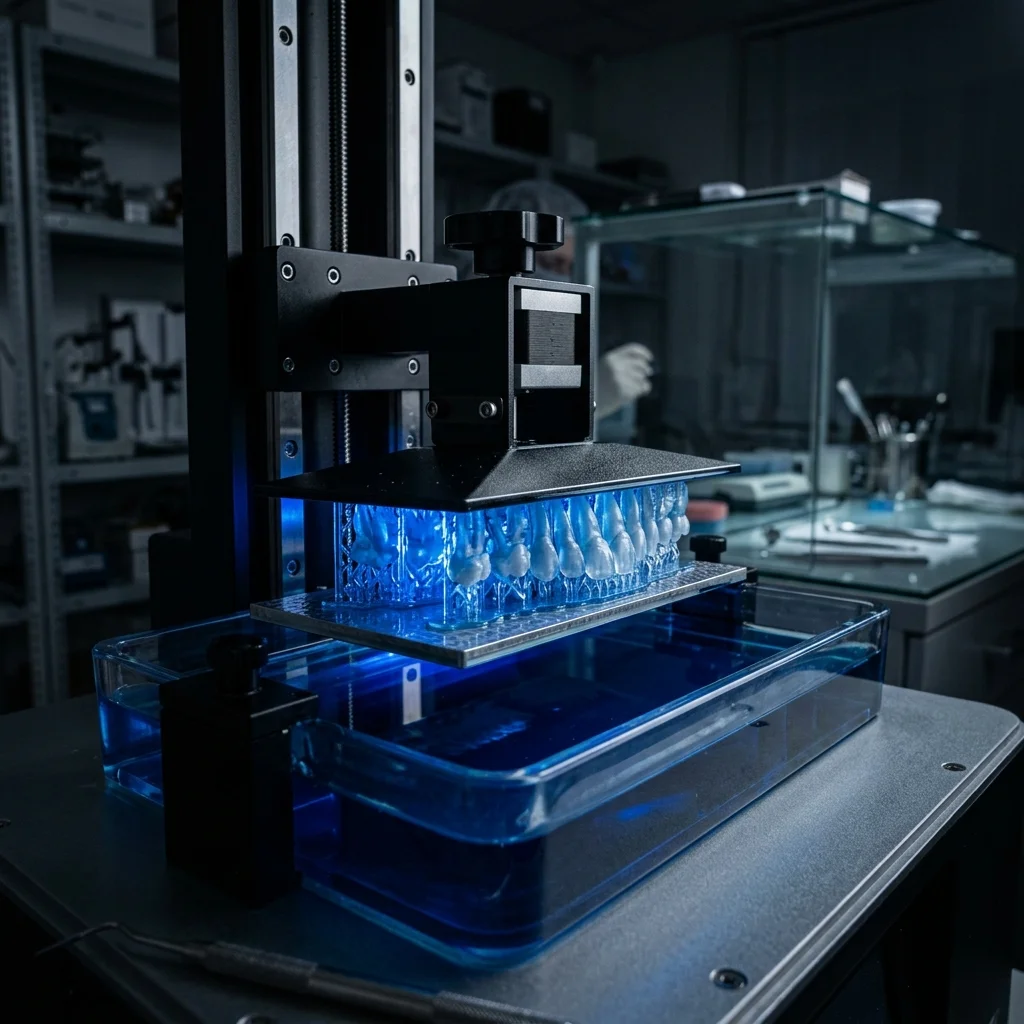
Desktop Health, a division of Desktop Metal, is a global leader in providing advanced 3D printing solutions for the dental and medical industries. Their mission is to transform personalized healthcare through innovative materials and high-precision technologies.
Company History and Mission
Desktop Health was established as a specialized division of Desktop Metal, aiming to unite technologies for healthcare needs. Through strategic acquisitions (such as EnvisionTEC), the company inherited decades of experience in DLP printing.
Today, they offer comprehensive ecosystems of hardware, software, and materials, optimized specifically for clinics, laboratories, and research centers. Their vision is to make 3D printed implants and biocompatible devices a standard in medicine.
Key 3D Printers in the Portfolio
The portfolio includes exceptional machines for both mass production in dentistry and avant-garde bio-research.
-
Einstein Pro XL: A professional DLP printer with a massive build volume, designed specifically for high-throughput dental labs. It guarantees exceptional accuracy thanks to the HyperPrint technology.
-
3D-Bioplotter: A legendary bioprinting system capable of extruding hydrogels, silicones, and bio-ceramics. It is used in hundreds of research institutes worldwide for tissue engineering and bone scaffold creation.
Technical Specifications and Parameters
Printing Technology: DLP (Einstein) / Bioprinting (3D-Bioplotter).
Primary Application: Dentistry and Tissue Engineering.
Materials Used: Biocompatible resins, hydrogels, silicones, and bioceramics.
Industrial Standard: Certified solutions for FDA Class I and Class II medical devices.
Target Audience
Desktop Health’s products are strictly targeted at professionals. Their main audience includes large dental laboratories, orthodontists, hospitals, and university research centers.
These systems are not intended for hobbyists, as they require specialized knowledge and a significant initial investment.
Strengths and Weaknesses
-
Strengths: Exceptionally high precision, a rich library of validated biocompatible materials, and reliable 24/7 operation. The EnvisionTEC heritage guarantees proven DLP technologies.
-
Weaknesses: Very high cost of equipment and consumables. The closed ecosystem means you are tied to their proprietary or strictly approved materials, increasing operational expenses.
Where to Buy and Alternatives
Desktop Health products are typically distributed through specialized medical and dental equipment suppliers. Direct contact with their regional European offices is often required.
If you are looking for alternative brands in the dental sector, you can explore Formlabs Dental, SprintRay, or Asiga, which offer excellent solutions at sometimes more accessible price points. For bioprinting, Cellink and Allevi are strong competitors.
Frequently Asked Questions (FAQ)
Interactive Analyzer for Desktop Health: Innovations In Dental & Medical 3D Printing
Select a profile to view detailed analysis.
The full picture
This article is one page from The Big Book of 3D Printing: 704 illustrated pages covering every technology, material and fix in one reference.
Read it on Kindle →Engineer, author of The Big Book of 3D Printing and additive manufacturing expert