

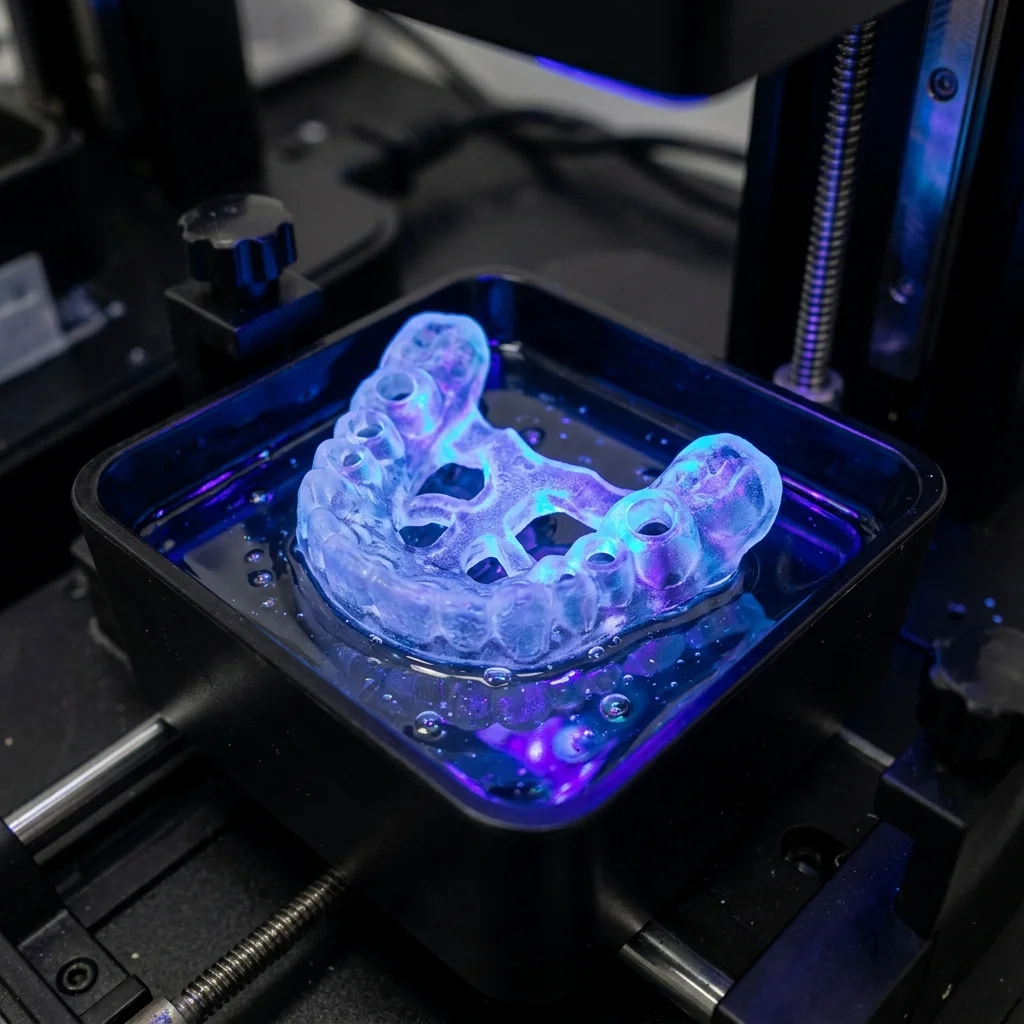
Biocompatible resins used in SLA (Stereolithography) technology have revolutionized the dental and medical industries. They allow the creation of precise tools and devices safe for contact with the human body.
In this guide, we will explore why SLA technology is preferred for these materials, which printers are best suited, and the specifics of the workflow.
Technology Basics and Applicability
SLA technology uses a laser to cure liquid photopolymer resin. This process ensures exceptional accuracy and surface smoothness, which is critical for dental and medical applications.
Biocompatible resins are certified for various safety classes and can be sterilized.
-
High Precision: Micron-level accuracy required for surgical guides and splints.
-
Sterilization: Most biocompatible resins can withstand autoclaving.
-
Certification: Guaranteed safety for short-term or long-term tissue contact.
Recommended 3D Printers and Materials
Medical printing requires a reliable ecosystem with validated printing and washing profiles.
-
Formlabs Form 3+: An industry standard in the dental field with a rich library of validated bio-resins.
-
Prusa Research Prusa SL1S SPEED: Extremely fast and reliable printer with an open material system.
-
Peopoly Peopoly Forge: Suitable for larger batches with its large build volume.
Wavelength: 405 nm
Z-axis accuracy: 25 – 50 microns
Post-curing time: According to manufacturer instructions (often 30-60 min at 60°C)
Recommended Brands: Formlabs Dental SG, NextDent Ortho, Formlabs BioMed Amber.
Challenges and Costs
Working with biocompatible resins requires strict process control to maintain the material’s certification.
-
Strict Protocol: Every step (washing, curing) must be followed literally for the part to be biocompatible.
-
Toxicity Before Curing: In its liquid state, the resin is toxic and requires protective gear.
Biocompatible Resin Cost: $150 – $400 per liter
Wash & Cure Equipment: $500 – $1200
Frequently Asked Questions (FAQ)
Interactive Analyzer for Sla 3D Printing With Biocompatible (Dental/Medical) Resins
Select a profile to view detailed analysis.
The full picture
This article is one page from The Big Book of 3D Printing: 704 illustrated pages covering every technology, material and fix in one reference.
Read it on Kindle →Engineer, author of The Big Book of 3D Printing and additive manufacturing expert