

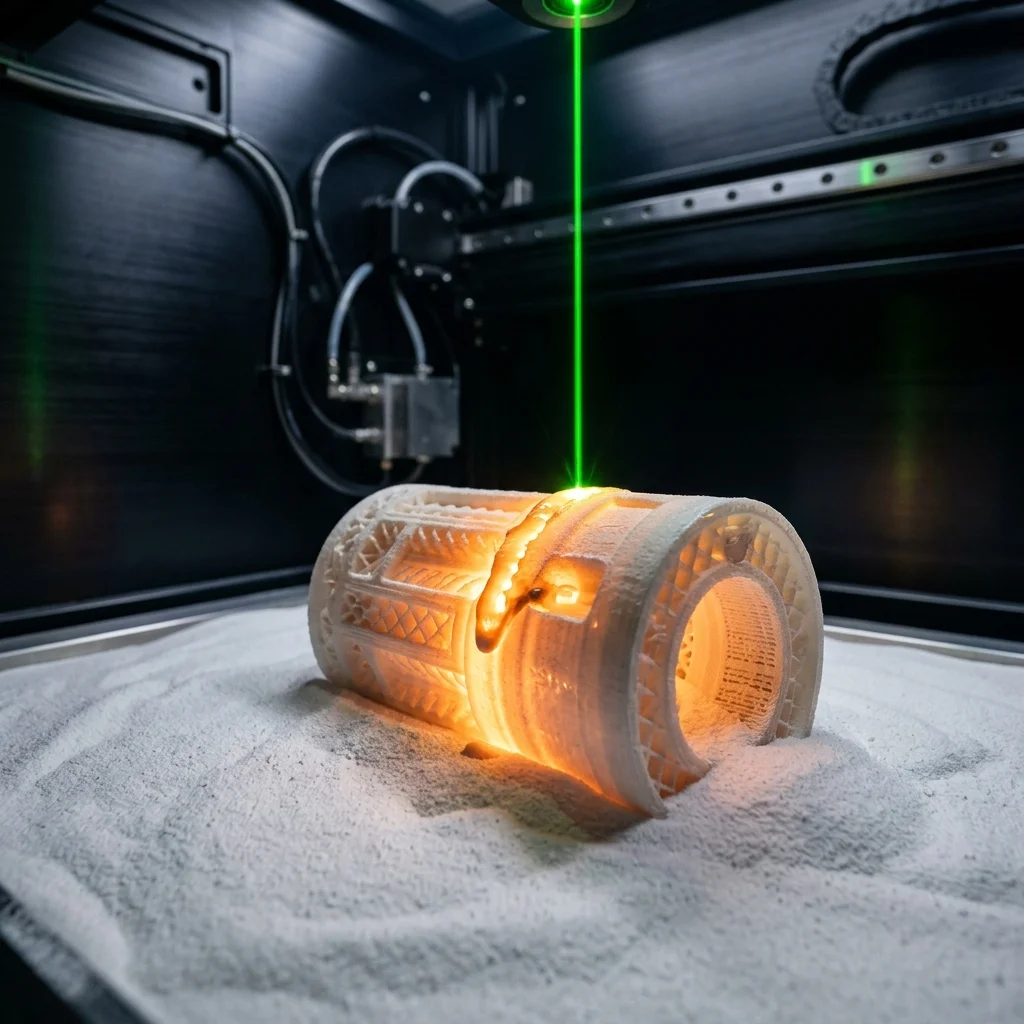
Polypropylene (PP) is one of the most widely used plastics in the world. In the context of SLS 3D printing, PP powder offers incredible chemical resistance, watertightness, and low weight, making it ideal for industrial and medical applications.
Why choose Polypropylene (PP)?
PP stands out with a unique combination of properties that make it indispensable for many specific industrial tasks.
-
Watertightness: PP does not absorb moisture, making it ideal for fluid containers and reservoirs.
-
Chemical Durability: Highly resistant to acids, bases, and organic solvents.
-
Lightweight and Flexible: PP is lighter than most polyamides and possesses excellent elasticity.
Recommended SLS Printers for PP
Not every printer is optimized for printing with polypropylene. These are the best options:
-
Formlabs Fuse 1+ 30W: Capable of handling a variety of powders with a fast heating process.
-
Sinterit Lisa Pro: An excellent choice that directly supports PP powders through its open software.
-
Sintratec S2: Designed for specialized materials and advanced industrial polymers.
Leading PP Powder Brands
Reliable material manufacturers offer certified PP powders:
-
BASF Ultrasint PP: A high-quality material optimized for industrial machines.
-
Sinterit Polypropylene (PP): An excellent solution for desktop SLS systems with high precision.
-
EOS PP 1200: A professional choice for the serial production of robust functional parts.
Tensile Strength: 28 MPa
Elongation at Break: 15%
Density: 0.89 g/cm³
Water Absorption: 0.01%
Applications and Printing Challenges
Polypropylene is a sought-after material in specific fields due to its properties.
-
Automotive Reservoirs: Used for prototyping fluid and chemical containers.
-
Medical Containers: Suitable for storage due to its chemical inertness.
-
Living Hinges: Excellent for designs requiring repeated bending without fatigue.
However, printing with PP comes with its own risks:
-
Shrinkage and Warping: PP has a high thermal shrinkage rate, which can cause deformation in large parts.
-
Specific Cooling: Requires a very slow and controlled cool-down process after printing to maintain dimensional accuracy.
-
Post-processing Difficulty: Its surface is notoriously difficult to glue or paint without special plasma treatment or primers.
Cost of Printing with PP
Although PP is cheap for injection molding, in powder format for SLS, it is a highly specialized product.
Price per kg of PP powder: €70 – €120
Refresh Rate: ~50%
Average Cost per Printed Part: €10 – €40
Frequently Asked Questions (FAQ)
Ultimate Guide To 3D Printing With Pp (Polypropylene) Powder Calculator
Interactive optimization calculator.
The full picture
This article is one page from The Big Book of 3D Printing: 704 illustrated pages covering every technology, material and fix in one reference.
Read it on Kindle →Engineer, author of The Big Book of 3D Printing and additive manufacturing expert