

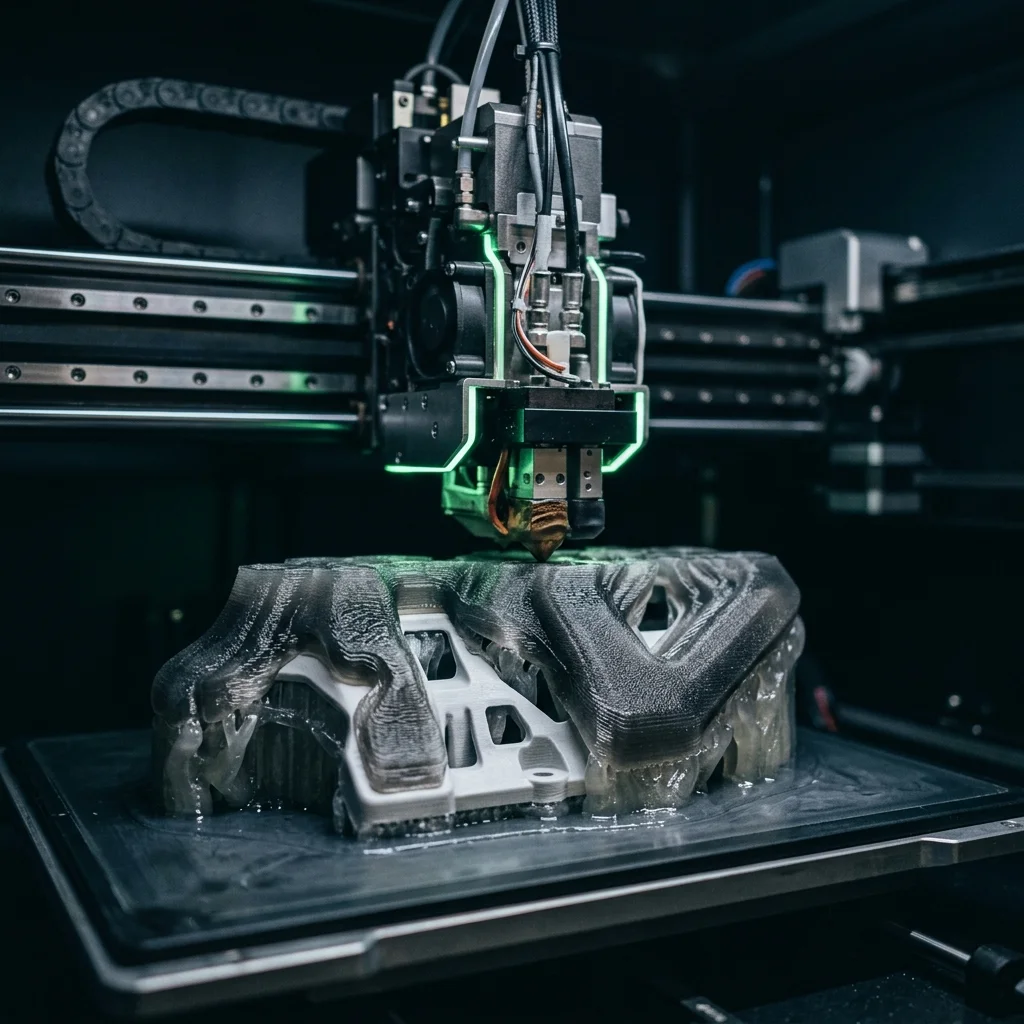
Flexible and elastic resins have revolutionized 3D printing by enabling the creation of parts that bend, stretch, and compress just like rubber or silicone. When combined with PolyJet technology, the possibilities are virtually limitless, from soft seals and gaskets to ergonomic grips with variable stiffness. In this guide, we will explore the best practices for printing with flexible photopolymers, the most suitable 3D printers, and expected material costs.
Why Use Flexible Resins with PolyJet?
PolyJet technology offers the unique capability of blending multiple materials in real-time, known as Digital Materials. This means you can print an object with a rigid internal core and a soft, rubberized outer layer.
Flexible resins are categorized by their Shore A hardness, making them perfect for accurately simulating a wide range of elastomers.
-
Variable Hardness: The ability to dial in specific Shore A values dynamically across a single printed part.
-
Rubber Simulation: Perfect for prototyping automotive gaskets, footwear midsoles, and wearable tech accessories.
-
Soft-Touch Surfaces: PolyJet delivers an exceptionally smooth, tactile finish that is highly desirable in consumer electronics design.
Recommended Printers and Material Brands
For consistent success with elastic materials, high-end systems designed to accurately deposit and cure flexible polymers are strongly recommended.
-
Stratasys J55 Prime: Enables the production of soft-touch, full-color prototypes right in the office.
-
Stratasys J850 Pro: An industry leader in multi-material simulations, excelling with materials like Agilus30.
-
Mimaki 3DUJ-553: Renowned for unmatched color reproduction, which it can effectively apply to soft and flexible components.
For users in the broader SLA/LCD ecosystem, excellent alternatives are available:
-
Formlabs Elastic 50A: An extremely soft resin tailored for simulating silicone parts and flexible tubing.
-
Siraya Tech Tenacious: A highly popular additive used to mix with rigid resins, significantly improving impact resistance and flexibility.
-
Formlabs Flexible 80A: A firmer flexible material, offering a stiffness comparable to a shoe sole or tire tread.
Technical Specifications and Cost
Flexible resins require highly tuned print settings, as the soft layers are prone to deflection and stretching during the printing process.
Shore Hardness Range: 30A to 80A depending on the specific blend.
Elongation at Break: 100% to 250%.
Industrial PolyJet Flexible Resin Cost: $250 – $350 per kilogram.
Desktop Flexible Resin Cost: $40 – $80 per liter.
Common Pitfalls When Printing Elastics
Working with rubber-like photopolymers presents some unique challenges that differ greatly from rigid resins.
-
Support Deflection: Soft material flexes under its own weight and peel forces, requiring much denser support structures.
-
Difficult Cleaning: The uncured resin is often highly viscous and sticky, making it harder to wash off cleanly with isopropyl alcohol.
-
Dimensional Shrinkage: Flexible resins typically exhibit higher shrinkage rates during curing, which can impact the dimensional accuracy of the final prototype.
Frequently Asked Questions (FAQ)
Interactive Analyzer for The Guide To Polyjet 3D Printing With Flexible Resins
Select a profile to view detailed analysis.
The full picture
This article is one page from The Big Book of 3D Printing: 704 illustrated pages covering every technology, material and fix in one reference.
Read it on Kindle →Engineer, author of The Big Book of 3D Printing and additive manufacturing expert