

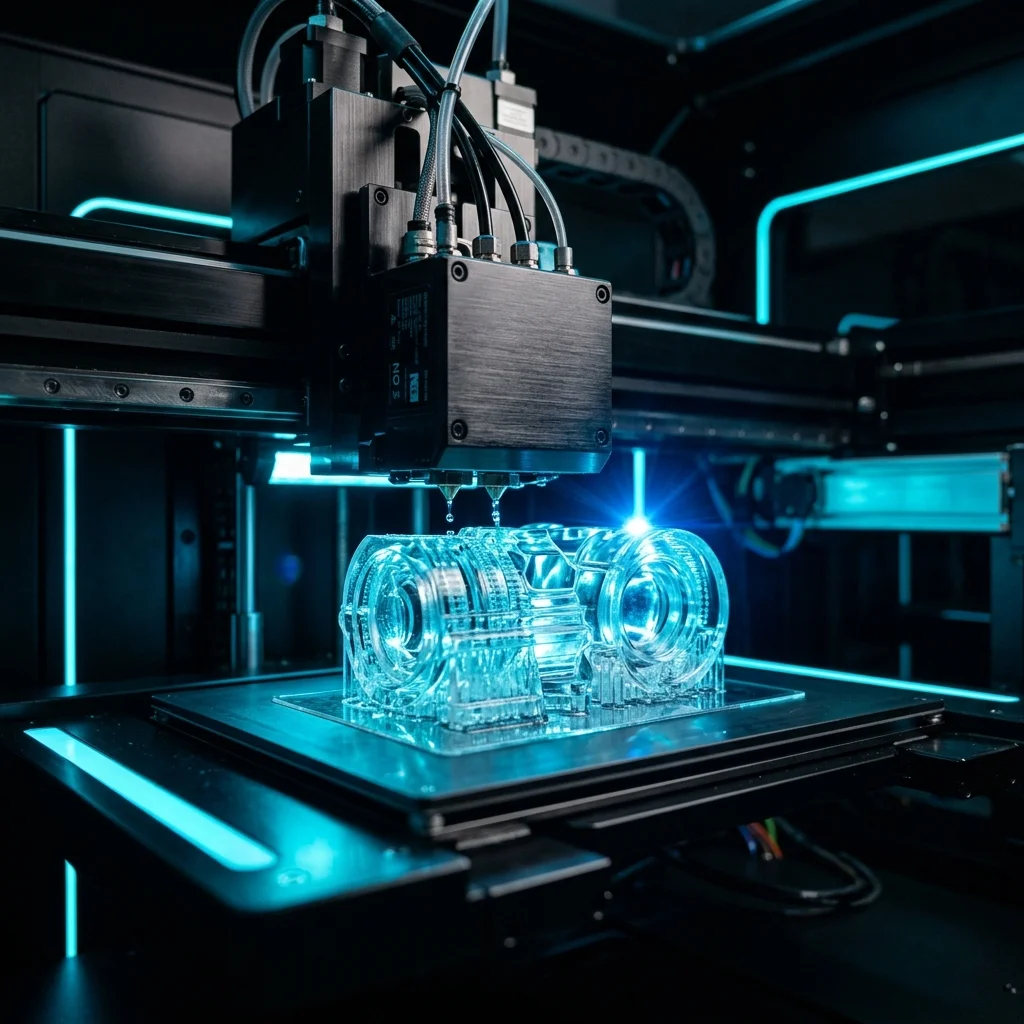
Clear (Transparent) resins are among the most impressive materials in the 3D printing world, enabling the creation of optically clear components. When utilized with PolyJet technology, the results are phenomenal: ranging from prototype lenses to intricate medical models. In this guide, we will walk you through the specifics of working with clear resins, the best hardware choices, and how to avoid common post-processing pitfalls.
Why Choose Clear Resins for PolyJet?
PolyJet technology offers an ability to print in ultra-fine layers, which is critical for achieving true transparency. While other technologies often leave distinct layer lines that scatter light, PolyJet minimizes these optical interruptions.
Clear resins are ideal for projects requiring internal visibility or the realistic simulation of glass and acrylic.
-
Optical Clarity: Allows for the creation of near-glass transparent parts with the correct post-processing.
-
Fluid Simulation: Excellent for microfluidics, pipe flows, and analyzing internal mechanisms in engineering.
-
Aesthetic Appeal: Gives concept prototypes a polished, extremely professional look.
Recommended Printers and Brands
Achieving crystal-clear results depends heavily on your choice of hardware and material formulation.
-
Stratasys J55 Prime: Ideal for design studios, offering the ability to mix clear and vibrant color materials.
-
Stratasys J850 Pro: Delivers ultra-high resolution and massive scale for industrial transparent prototypes.
-
Mimaki 3DUJ-553: Provides stunning transparent effects combined with a rich, full-color palette.
For standard MSLA/SLA ecosystems, several top-tier clear resins lead the market:
-
Formlabs Clear Resin: The benchmark for transparency, perfect for optics and lighting enclosures.
-
Elegoo ABS-Like Clear: A durable resin offering high transparency coupled with impact resistance.
-
Phrozen Crystal Clear: Delivers exceptional clarity and is perfect for highly detailed models.
Applications and Specifications
Clear resins are heavily utilized in the medical, automotive, and consumer electronics industries. Common applications include light guides, clear packaging, and fluidic models.
Glass Transition Temperature: 50 – 60 °C.
Tensile Strength: 30 – 50 MPa.
PolyJet Clear Material Cost: $200 – $300 per kilogram.
Desktop Clear Resin Cost: $30 – $50 per liter.
Common Pitfalls to Avoid
Achieving perfect transparency requires meticulous care during both the printing and post-processing phases.
-
Yellowing Effect: Clear resins are highly susceptible to yellowing if over-cured or exposed to direct sunlight for long periods.
-
Visible Layer Lines: If not properly sanded and polished, layer lines will refract light and cause a frosted appearance.
-
Trapped Bubbles: Shaking the resin vigorously before printing can introduce microscopic air bubbles into the final part.
Frequently Asked Questions (FAQ)
The Ultimate Guide To Polyjet 3D Printing With Clear / Transparent Resins Exposure Calculator
Calculate optimal resin print time.
The full picture
This article is one page from The Big Book of 3D Printing: 704 illustrated pages covering every technology, material and fix in one reference.
Read it on Kindle →Engineer, author of The Big Book of 3D Printing and additive manufacturing expert