

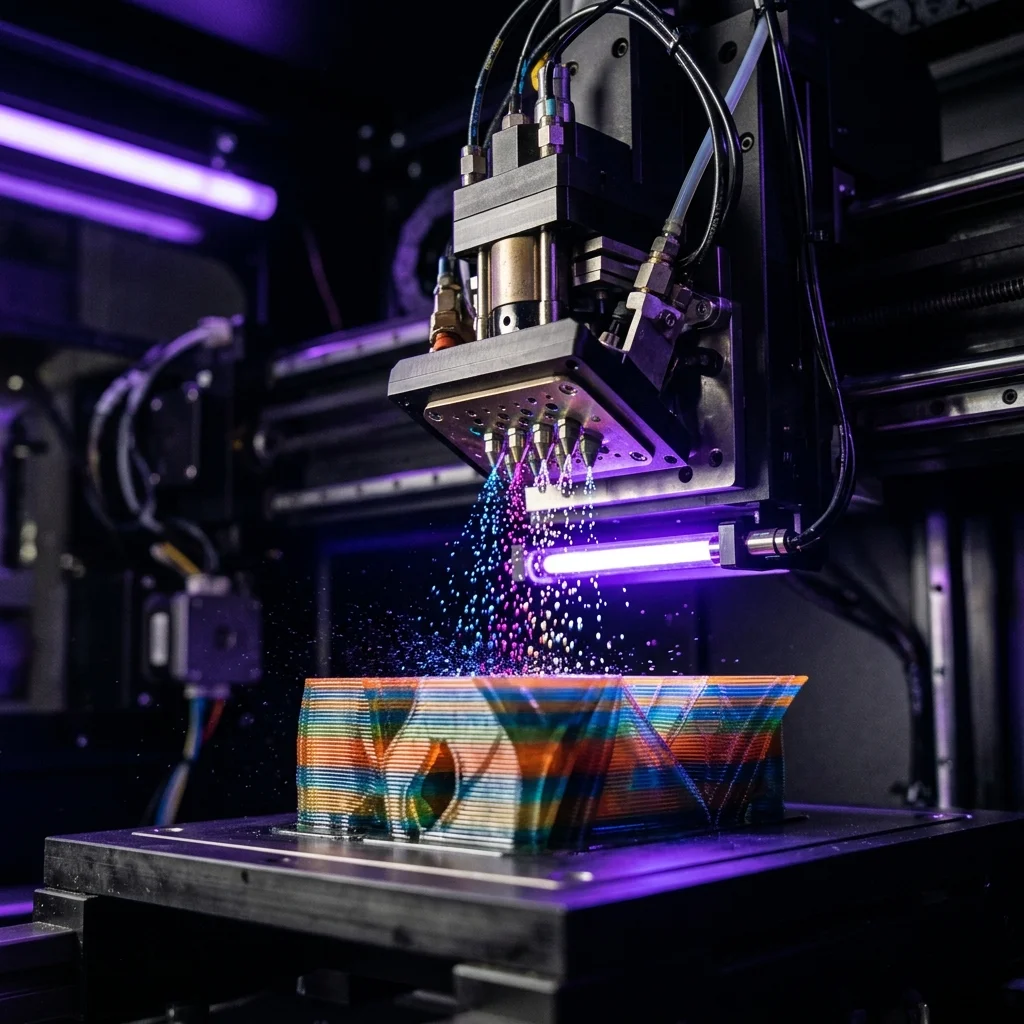
PolyJet technology offers unprecedented precision and speed, especially when utilized with Standard and Fast resins. Whether you are creating rapid prototypes or highly detailed conceptual models, this combination ensures smooth surface finishes and outstanding dimensional accuracy. In this guide, we will explore the fundamentals of the technology, why standard resins are a perfect match for it, and which printers and materials dominate the market.
What is PolyJet Technology?
PolyJet is a 3D printing technology that works similarly to inkjet printing, but instead of jetting drops of ink, it jets microscopic droplets of liquid photopolymer resin onto a build tray. Immediately after deposition, the material is cured by UV light, allowing for the creation of incredibly precise layers.
When paired with Standard or Fast resins, PolyJet achieves impressive print speeds. This makes it a preferred choice for product designers and engineers who require quick design iterations alongside premium surface quality.
-
Unmatched Accuracy: Achieves detail down to 14 microns, perfect for complex geometries and fine features.
-
High Speed Production: Standard and fast-curing resins solidify instantly, optimizing the entire manufacturing cycle.
-
Smooth Finishes: The final printed parts often require little to no post-processing for a polished look.
Recommended 3D Printers for PolyJet
Choosing the right hardware is crucial for maximizing the potential of PolyJet technology.
-
Stratasys J55 Prime: Compact yet powerful. Designed for office environments, it delivers high-quality, full-color printing.
-
Stratasys J850 Pro: An industrial-grade printer featuring a massive build volume and the capability to mix multiple materials simultaneously.
-
Mimaki 3DUJ-553: Specialized for incredible color matching, supporting over 10 million colors with exceptional dimensional accuracy.
Recommended Material Brands (Standard / Fast)
While PolyJet systems traditionally use closed material ecosystems, the broader market for fast and standard resins features several benchmark brands known for quality.
-
Siraya Tech Fast Resin: Extremely popular for its quick curing times and excellent resolution, making it ideal for rapid prototyping.
-
Formlabs Standard Resin: Guarantees reliability and a smooth surface finish, perfect for creating high-fidelity concept models.
-
Elegoo 8K Water Washable: Offers easy cleanup with tap water and excellent detail retention at an affordable price point.
Applications, Pitfalls, and Costs
Standard resins are primarily used for visual prototypes, architectural mock-ups, and figurines where speed and detail are essential. They are not suited for functional mechanical parts that endure high stress.
-
Common Pitfalls: Warping on large flat surfaces, the need for careful support removal, and potential yellowing upon prolonged UV exposure.
-
Expected Lifespan: Parts are generally more brittle than engineering plastics, so they are best kept for conceptual verification.
Average Resin Cost: $20 – $40 per liter.
Industrial PolyJet Material: $200 – $300 per kilogram.
Support Material Cost: $100 – $200 per kilogram.
Frequently Asked Questions (FAQ)
Interactive Analyzer for The Ultimate Guide To Polyjet 3D Printing With Standard / Fast Resins
Select a profile to view detailed analysis.
The full picture
This article is one page from The Big Book of 3D Printing: 704 illustrated pages covering every technology, material and fix in one reference.
Read it on Kindle →Engineer, author of The Big Book of 3D Printing and additive manufacturing expert