

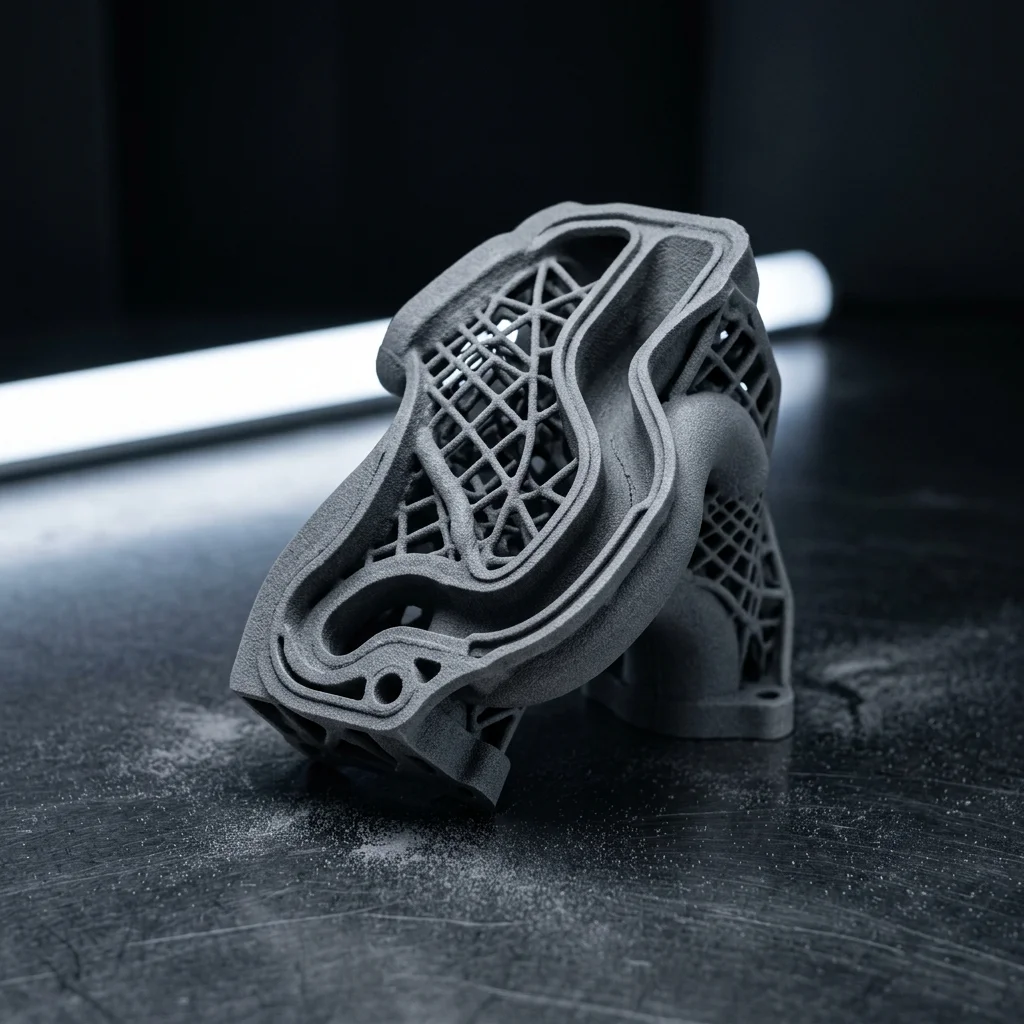
BASF Forward AM is the specialized 3D printing division of the world’s largest chemical company. They provide industrial-grade materials, including filaments, powders, and photopolymer resins, which are fully optimized for serial production, automotive, aerospace, and medical applications. With extremely rigorous quality control from raw material synthesis to the final product, BASF is synonymous with absolute reliability and repeatability in additive manufacturing.
Why the Industry Chooses BASF Forward AM?
When we talk about BASF, we are talking about materials science at the highest level. Unlike many manufacturers who simply extrude and package ready-made plastic pellets, BASF synthesizes its polymers from scratch, specifically designed and optimized for the needs of 3D printing.
Full Vertical Control: From the creation of the base chemistry, through compounding with additives, to the extrusion of the final filament or the sieving of the powder – the entire process takes place in a closed loop. This ensures that batch 1 will have exactly the same mechanical, thermal, and chemical properties as batch 1000.
Metal 3D Printing on Desktop Machines (Metal FDM): Through its Ultrafuse series, BASF has literally democratized metal 3D printing. Their innovative materials allow the creation of stainless steel parts on a standard FDM printer, bypassing the need for investments of hundreds of thousands of euros in DMLS/SLM systems.
Certified Machine Profiles: Forward AM works closely with leading 3D printer manufacturers (UltiMaker, Raise3D, BCN3D, HP, EOS). The materials come with ready-made, fully validated printing profiles, which eliminates the need for trial-and-error and guarantees 100% success right from the first print.
Leading Product Lines and Technologies
The Forward AM portfolio is strategically divided into several main brands, each targeting a specific 3D printing technology.
Ultrafuse (FDM / FFF): This line includes advanced engineering polymers (Polypropylene, Polyamide, Polycarbonate), as well as revolutionary metal filaments (Ultrafuse 316L and 17-4 PH). The metal filaments are unique – they contain over 80% fine metal powder that is homogeneously bound with a polymer matrix. After printing, the ‘green part’ goes through a catalytic removal of the polymer (debinding) and baking in a furnace (sintering), turning into a 100% solid metal part.
Ultrasint (SLS / MJF): A series of high-performance polymer powders for Powder Bed Fusion technologies. The Ultrasint TPU 88A/90A stands out brightly here – an elastomeric powder created for the production of flexible parts, which is an industry standard in the production of sports shoes and customized orthotics. Ultrasint PP offers unmatched chemical resistance for the automotive industry.
Ultracur3D (SLA / DLP / LCD): A line of reactive urethane photopolymer resins. Unlike standard brittle resins, the Ultracur3D series uses modern polyurethane chemistry, which provides mechanical properties (tensile strength, impact resistance, and elongation at break) comparable to those of injection-molded plastics.
Pros and Cons
Integrating materials of such an industrial grade has its specifics that every company must consider before making an investment.
Advantages: The biggest advantage is the absolute repeatability of the results. BASF provides full technical documentation (TDS, SDS, certificates for food and skin contact compatibility), which is critical for the production of end-use products. Furthermore, the portfolio includes highly specialized materials such as Flame Retardant and ESD-safe polymers, which are mandatory in electronics and aviation.
Disadvantages: The main disadvantage is the high initial price compared to hobby materials. Engineering filaments require high-temperature printers with a closed and heated chamber, as well as hardened steel nozzles. When working with metal filaments, the process does not end with printing – the parts must be sent to a specialized BASF center for Debinding and Sintering, which adds time and logistical costs to the production cycle.
Frequently Asked Questions (FAQ)
Interactive Analyzer for Basf Forward Am – Industrial 3D Printing Materials
Select a profile to view detailed analysis.
The full picture
This article is one page from The Big Book of 3D Printing: 704 illustrated pages covering every technology, material and fix in one reference.
Read it on Kindle →Engineer, author of The Big Book of 3D Printing and additive manufacturing expert