

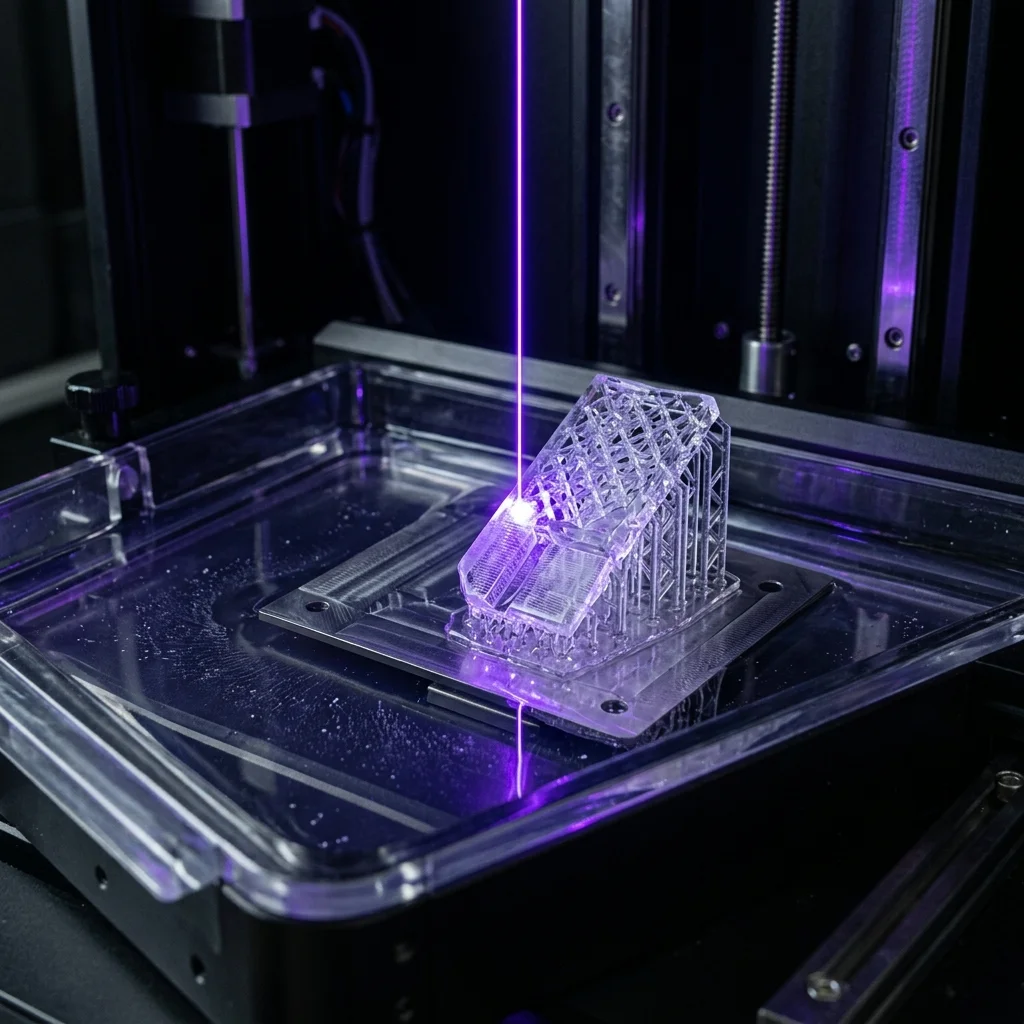
This is a comparison between two very different schools of SLA. Formlabs Form 3+ (€3500) is the closed ecosystem: LFS (Low Force Stereolithography) technology with a flexible resin tank, cartridge resin delivery, and tight integration with proprietary PreForm software. Peopoly Forge (€5800 fully equipped) is the opposite: top-down SLA with an open tank, a large build volume, and a ‘buy resin from whoever you want’ philosophy. Both print resin, both deliver studio-grade results, but which one fits whom depends on volume, material costs, and who operates the printer. In this comparison, we go through specs point by point, real-world maintenance costs, and which choice fits a dental lab, jewelry studio, or small engineering team.
Specs point by point
Price: Form 3+ €3500 with one resin cartridge and Build Platform 2. Peopoly Forge €5800 for the full package (printer + miner UV tank + 405 nm laser). Form is €2300 cheaper.
Technology: Form 3+ uses LFS, the laser works bottom-up through a flexible FEP-like tank that reduces part separation force. Peopoly Forge is top-down: the laser shines from above, the part builds on a platform that sinks into a resin pool. Different principles: top-down gives more accurate vertical walls, LFS gives cleaner support structures.
Build volume: Form 3+ 145×145×185 mm = 3.9 liters. Peopoly Forge 320×320×400 mm = 41 liters. Forge is 10× larger.
XY resolution: Form 3+ 25 µm (galvo laser). Peopoly Forge 50 µm. Form 3+ is twice as fine.
Layer thickness: Form 3+ 25-300 µm. Peopoly Forge 25-200 µm. Tied at the low end.
Resins: Form 3+ works ONLY with Formlabs resins (cartridges €175-€430/liter). Peopoly Forge accepts resin from any manufacturer (Siraya, Phrozen, MonoCure: €40-€90/liter). Forge wins on material flexibility and cost by a 4-5× factor.
Software: Form 3+ PreForm (closed, excellent, free). Forge ChiTuBox or Lychee (open, well-supported). Form 3+ is more polished, Forge is more flexible.
Print quality, detail vs large volume
Form 3+ is practically the benchmark for dental accuracy in low volumes. Because of LFS technology, corner surfaces are softer than Forge: no diagonal stepping, because the flexible tank ‘flexes’ during separation. Dental splints, surgical guides, wax casting models: Form 3+ delivers some of the best results on the market at €3500.
Peopoly Forge is a tool for engineers making large parts with acceptable accuracy. Helicopter blades for laminated molds, energy-module enclosures, full-size jewelry prototypes: Forge prints them in one working day in a single load. With a 320×320×400 mm volume, you can print a full helmet or motorcycle visor without cutting it into segments.
For a practical analogy: Form 3+ is like a precision macro camera, focuses to the micron but the frame is small. Peopoly Forge is wide-angle: captures a huge scene with acceptable sharpness.
For small parts under 50 mm: Form 3+ wins clearly. For parts above 150 mm: Peopoly Forge wins clearly. For 50-150 mm parts, it depends on surface accuracy requirements.
Both printers require IPA wash and UV curing after printing: Formlabs sells Form Wash + Form Cure (€700-€1000). For Peopoly you can use any UV chamber and a standard Wash & Cure (€300-€500).
Operating cost per kilogram
For a real comparison, look at the cost per kilogram of printed part: not just the price of the printer.
Form 3+ with standard resin: 1 kg cartridge €175, resin efficiency ~95% (small tank residue). Cost per printed kg: ~€185. With specialty resin (BioMed, Dental SG, Castable Wax): €300-€450/kg.
Peopoly Forge with Siraya Tech resin: €45/kg resin, efficiency ~92% (loss when draining the tank). Cost per printed kg: ~€50. With specialty resin (Siraya Castable, Phrozen Aqua Resin): €60-€85/kg.
Forge is 3-4× cheaper per kilogram in standard materials. For a studio printing 10-20 kg of resin per month (dental lab, jeweler in production), the difference is €1500-€3000/month. That offsets the higher purchase price of Forge in 4-6 months.
For a smaller-volume lab (1-3 kg/month, single orthodontist office), Form 3+ is more economically reasonable: amortizes over 3-5 years and runs problem-free with minimal maintenance.
Consumables: Form 3+ tank (LT Tank) €60, lifespan ~75 prints. Forge FEP film €15-€25, lifespan ~30-50 prints. Form 3+ is pricier in consumables but more reliable per print.
Maintenance, operator, and space
Form 3+ is a plug-and-play machine. Power on, resin cartridge, print. Cleaning takes 5 minutes. Suitable for a non-technical operator: a dental lab assistant can manage it after 1-2 hours of training. That matters in markets where finding an experienced SLA technician is hard.
Peopoly Forge requires an engineering approach. The open resin pool must be filled manually, the laser calibrates weekly, resin temperature must be held around 25°C (room temperature: critical for consistent prints). Not a machine for an inexperienced operator.
Space requirements: Form 3+ takes 0.4 m² + wash and cure stations (total ~1 m²). Forge takes 1.2 m² by itself + 1 m² for UV curing (total ~2.5 m²). For a small office this is a meaningful difference.
Resin off-gassing: Form 3+ is closed, practically odorless. Forge with an open pool emits resin odor (good ventilation required, especially with non-biocompatible resins).
For a dental or medical office: Form 3+ is the only choice from a regulatory standpoint (FDA-cleared process for BioMed Amber, Dental SG). For an industrial prototype studio: Peopoly Forge.
Verdict by application
Dental lab or orthodontist: Form 3+. No debate. BioMed Amber, Dental SG, and certified consumables are a legal requirement (in the EU, MDR governs medical devices), and Forge does not offer certified resins.
Jewelry in small volume (under 5 kg resin/month): Form 3+ with Castable Wax 40. Less waste, cleaner surface for direct casting, lower initial investment.
Jewelry at production volume (above 10 kg resin/month): Peopoly Forge with Siraya Castable. Resin cost offsets everything within 6 months.
Engineering prototype studio for large parts: Peopoly Forge. Nothing else at €5800 delivers 320×320 mm accurately.
Educational institution (technical university, design school): Peopoly Forge with its open ecosystem, students can experiment with different resins and understand the full process. Form 3+ is a ‘black box,’ teaches nothing about SLA principles.
Architectural studio for marketing models: Peopoly Forge, large area for 1:200 scale models of entire residential buildings without segmenting.
Frequently Asked Questions (FAQ)
Formlabs Form 3+ Vs Peopoly Forge, Sla Comparison Exposure Calculator
Calculate optimal resin print time.
The full picture
This article is one page from The Big Book of 3D Printing: 704 illustrated pages covering every technology, material and fix in one reference.
Read it on Kindle →Engineer, author of The Big Book of 3D Printing and additive manufacturing expert