

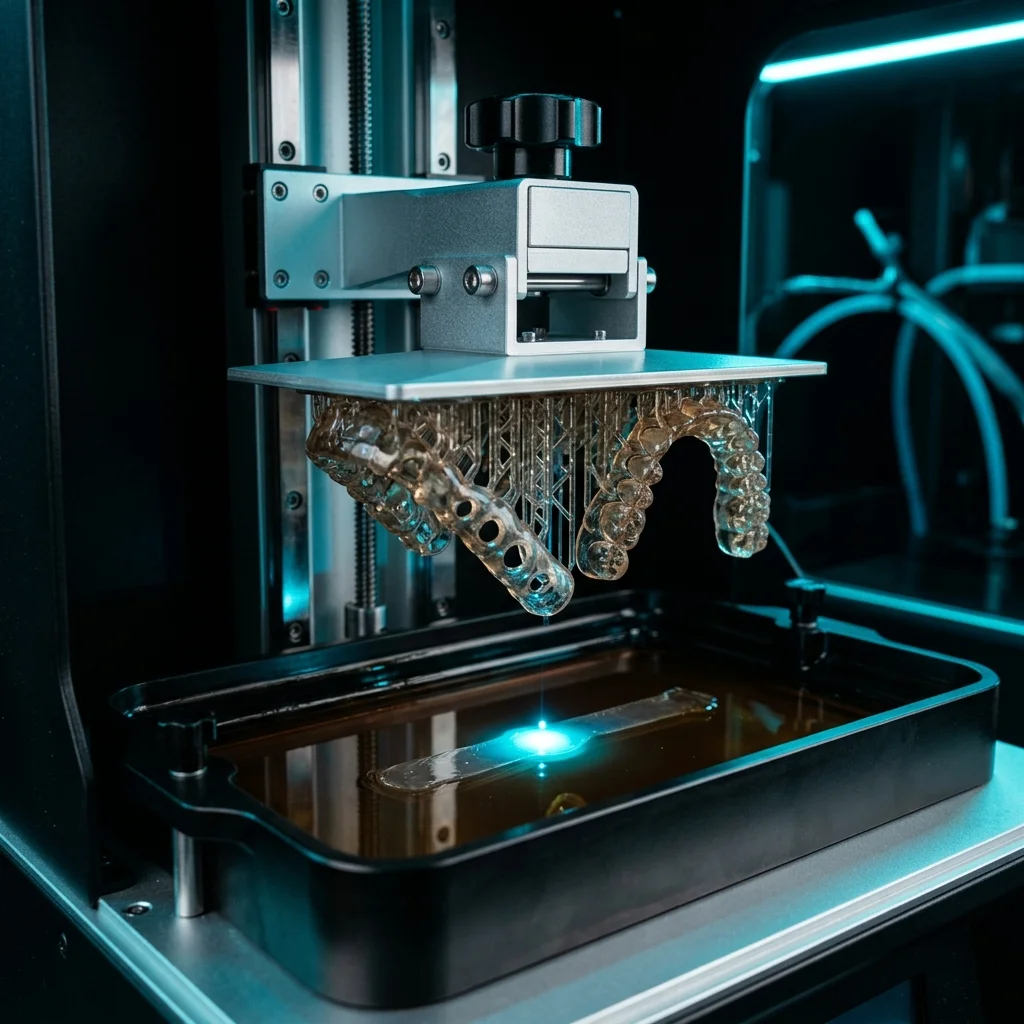
3D printing (Additive Manufacturing) has fundamentally revolutionized modern medical and dental practice. The ability to quickly and locally create patient-specific anatomical models, biocompatible surgical tools, and even implants literally saves lives, reduces surgery times by hours, and drastically accelerates patient recovery. This guide will take you through the strict standards, the most suitable technologies, and real-world use cases in a clinical environment.
Standards, Regulations, and Biocompatibility
Working in a medical and dental environment requires extremely strict compliance with international regulations. Any mistake here can have fatal consequences for the patient’s health.
Biocompatibility (ISO 10993): All materials (resins, powders, filaments) that come into contact with the human body must be certified. The classification is divided into Class I (short-term contact with intact skin), Class IIa (contact with mucous membranes up to 30 days – e.g., surgical guides and splints), and Class IIb/III (long-term implants).
Sterilization (Autoclaving): Parts used in the operating room must be completely sterile. Most medical 3D materials are formulated to withstand thermal sterilization in an autoclave (usually 121°C or 134°C at high pressure) without losing their mechanical properties or deforming.
Traceability and Validation: To maintain the medical certificate of a part, the entire workflow must be validated. This means using a specific printer model, specific software (e.g., 3Shape, ExoCAD, PreForm), and exact washing and curing machines. Any change in the chain invalidates the biocompatibility certificate.
Transformative Real-World Applications
The technology is no longer just a concept – it is used daily in clinics and hospitals worldwide in the following areas:
Surgical Guides: This is the most widespread application in implantology. Based on a 3D scan (CBCT), the dentist designs a guide that is printed from a transparent Class IIa resin. This guide is placed over the patient’s teeth and directs the drill at the perfect angle and depth, reducing the risk of nerve damage to almost zero.
Preoperative Anatomical Models: Printing an exact replica of a tumor, bone fracture, or heart based on an MRI/CT scan allows surgeons to ‘rehearse’ the complex operation before the patient even enters the OR. This drastically reduces time under anesthesia and increases the success rate.
Orthotics, Prosthetics, and Aligners: By 3D scanning a limb, therapists can print fully personalized orthotics. Unlike traditional plaster, 3D printed orthotics (usually PA12 or TPU) are lightweight, breathable, washable, and tailored to the patient’s exact anatomy. In orthodontics, clear aligners are thermoformed over 3D printed models of the patient’s jaw.
Recommended Printing Technologies
Different medical needs require different additive manufacturing technologies.
SLA, DLP, and MSLA (Vat Photopolymerization): This is the gold standard in dentistry and audiology (manufacturing hearing aids). The technology offers microscopic precision needed for the perfect fit of crowns and bridges. Manufacturers like Formlabs, SprintRay, and Asiga have a vast array of certified resins – from materials for temporary teeth to elastic resins for gingival masks.
SLS and MJF (Powder Bed Fusion): Ideal for manufacturing orthotics, prosthetic sockets, and single-use surgical instruments. Nylon (PA12 and PA11) is extremely strong, lightweight, and chemical-resistant. Some PA12 powders are certified for continuous skin contact.
DMLS and SLM (Metal 3D Printing): Used primarily for the production of permanent titanium (Titanium Ti6Al4V) implants – hip joints, cranial plates, and spinal implants. The technology allows the creation of a porous (trabecular) structure on the surface of the implant, which stimulates the bone to grow directly into the metal (osseointegration).
Frequently Asked Questions (FAQ)
Interactive Analyzer for Medical And Dental Applications Of 3D Printing: A Complete Guide
Select a profile to view detailed analysis.
The full picture
This article is one page from The Big Book of 3D Printing: 704 illustrated pages covering every technology, material and fix in one reference.
Read it on Kindle →Engineer, author of The Big Book of 3D Printing and additive manufacturing expert