

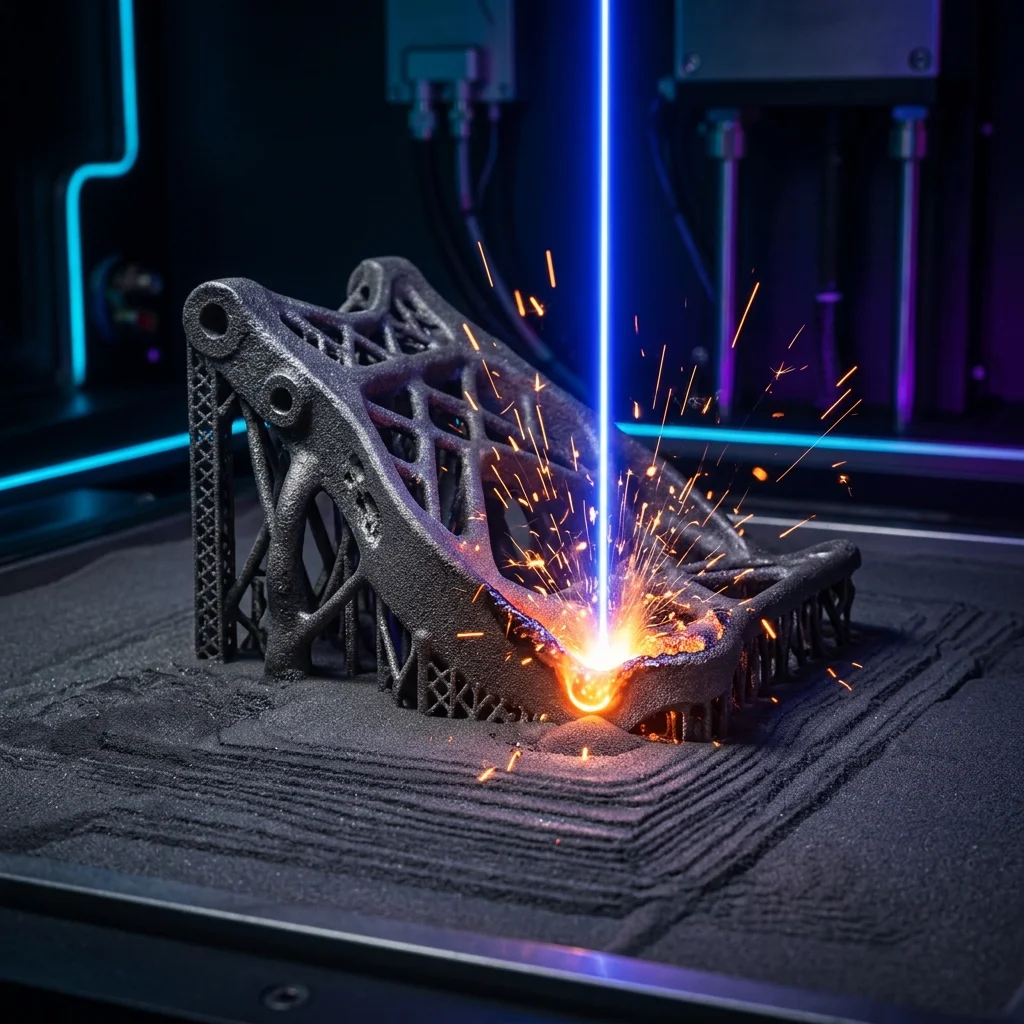
Metal Powder Bed Fusion (MPBF) has reshaped additive manufacturing by enabling the layer‑by‑layer consolidation of metal powders using focused energy sources. From aerospace brackets to patient‑specific implants, MPBF offers design freedom, material efficiency, and performance that rivals traditional subtractive methods. This article unpacks the physics, process families, material options, real‑world use cases, and the financial calculus every decision‑maker needs to evaluate before committing to a metal‑AM line.
Fundamentals of Metal Powder Bed Fusion
MPBF starts with a thin spread of metallic powder (typically 20‑100 µm in diameter) on a build platform. A high‑energy laser or electron beam selectively fuses regions defined by a CAD model, creating a solidified track. The platform then lowers by one layer thickness and the cycle repeats. Critical parameters include laser power, scan speed, hatch spacing, and powder bed temperature, all of which dictate melt pool dynamics, porosity, and residual stress. Pros/Cons: • High design flexibility and part consolidation • Near‑net‑shape production reduces waste • Excellent mechanical properties comparable to wrought alloys • High capital expense and operational complexity • Post‑processing (stress relief, support removal) is often required.
Process Variants and Implementation Timeline
Three dominant MPBF families dominate the market: Direct Metal Laser Sintering (DMLS), Selective Laser Melting (SLM), and Electron Beam Melting (EBM). DMLS and SLM use fiber lasers in an inert gas atmosphere, while EBM employs a high‑energy electron beam in a vacuum, allowing higher build temperatures that mitigate residual stress. Understanding the nuances guides equipment selection and timeline planning. Step 1: Define part geometry, tolerances, and material grade. Step 2: Select the appropriate MPBF technology based on thermal requirements and surface finish. Step 3: Conduct design for additive manufacturing (DfAM) analysis to optimize support structures and orientation. Step 4: Validate process parameters through test coupons and mechanical testing. Step 5: Scale to production runs, integrating in‑process monitoring and quality assurance protocols.
Materials Landscape and Cost Breakdown
MPBF supports a growing portfolio of alloys, including 316L stainless steel, Ti‑6Al‑4V, Inconel 718, and aluminum 6061. Each material presents distinct powder costs, handling considerations, and performance trade‑offs. A typical cost structure for a midsize metal‑AM cell is: • Machine acquisition (laser‑based system): $250,000 • Powder inventory (annual consumption): $50,000 • Build chamber maintenance & consumables: $30,000 • Labor (operators, engineers): $20,000 • Facility overhead (power, climate control): $10,000 Total:
Industrial Applications and ROI Analysis
Aerospace leverages MPBF for lightweight lattice structures, reducing part weight by up to 40 % and fuel consumption. Medical device manufacturers produce patient‑specific implants with porous architectures that promote osseointegration, shortening recovery times and commanding premium pricing. Robotics firms fabricate complex actuator housings and heat‑sink lattices that improve performance while cutting assembly steps. ROI hinges on part consolidation (fewer components), material savings (up to 70 % powder reuse), and reduced lead times (weeks vs months). A case study from a turbine‑blade supplier reported a 25 % cost reduction and a 3‑year payback after integrating an SLM line for low‑volume, high‑value components.
Implementation Roadmap: Decision Factors and Best Practices
Adopting MPBF requires a holistic approach that balances technical capability with financial prudence. Key decision factors include expected annual part volume, material certification requirements, and the availability of skilled engineers. Best practices recommend starting with a pilot program focused on a high‑margin part, establishing a data‑capture workflow for melt‑pool monitoring, and partnering with experienced service bureaus for early builds. Continuous improvement cycles (capturing build data, refining parameters, and updating design guidelines) ensure that the technology scales efficiently while maintaining part quality.
Frequently Asked Questions (FAQ)
Metal Powder Bed Fusion Basics: A Deep Dive Into Technology, Applications, And Business Roi Calculator
Interactive optimization calculator.
The full picture
This article is one page from The Big Book of 3D Printing: 704 illustrated pages covering every technology, material and fix in one reference.
Read it on Kindle →Engineer, author of The Big Book of 3D Printing and additive manufacturing expert