

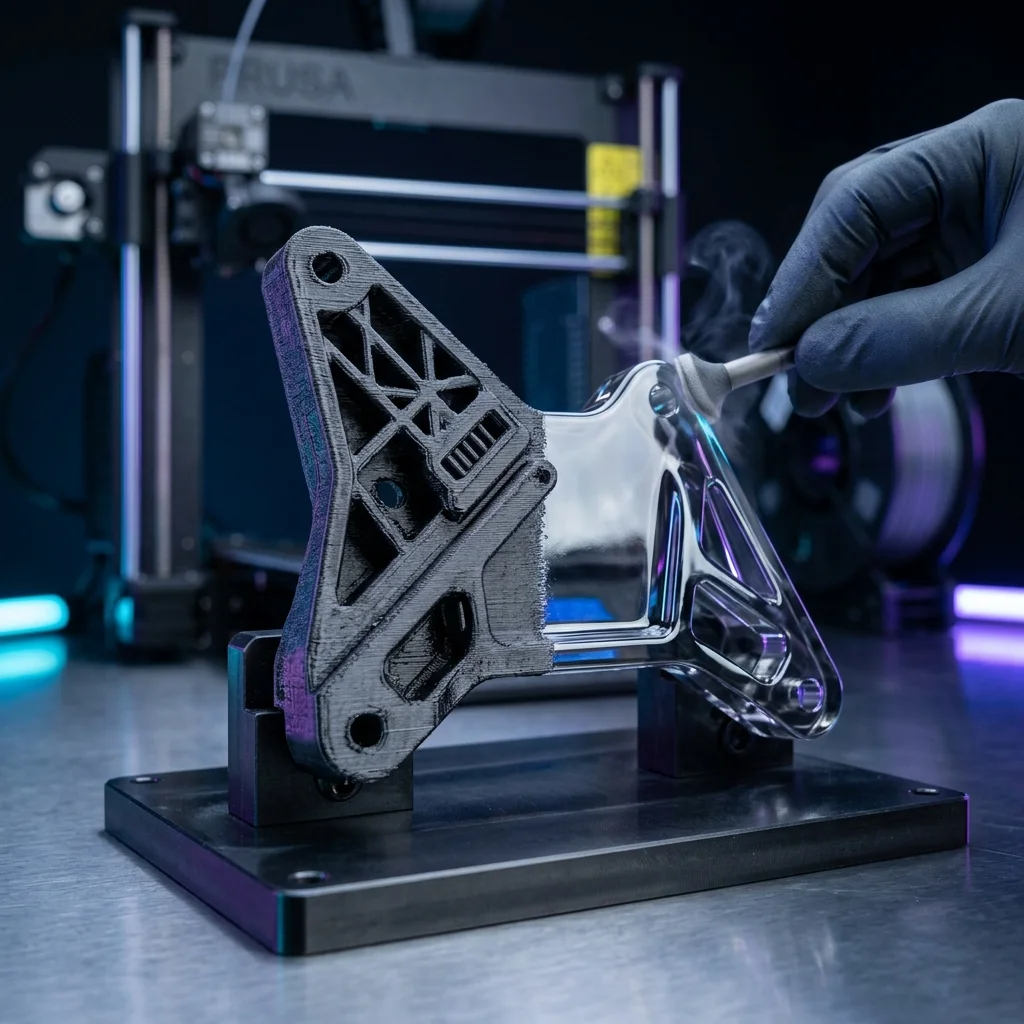
Post‑processing is the bridge between a raw 3D‑printed geometry and a market‑ready component. Modern finish techniques (ranging from vapor smoothing to laser sintering) enable engineers to meet aerospace tolerances, biomedical surface requirements, and consumer aesthetic expectations while preserving the cost advantage of additive manufacturing. This article unpacks the science, applications, and financial implications of the most effective post‑processing strategies.
Surface Smoothing Technologies
Chemical vapor smoothing, abrasive blasting, and ultrasonic polishing are the primary routes to achieve sub‑micron surface roughness on polymers and metals. Vapor smoothing dissolves the outer layer of ABS or PLA, allowing surface tension to create a glossy finish, while abrasive blasting can impart a controlled matte texture on aluminum alloys. Ultrasonic polishing uses cavitation bubbles to micro‑polish metal parts without contact, preserving dimensional accuracy. Pros/Cons:
- Pros: rapid cycle time, improved aerodynamic performance, reduced post‑print support removal.
- Cons: potential dimensional shrinkage, limited material compatibility, additional safety protocols. These methods are especially valuable in aerospace turbine casings and consumer‑grade enclosures where surface integrity directly influences performance.
Mechanical Reinforcement Methods
Reinforcement post‑processing adds strength through infiltrations, resin coating, and metal plating. Epoxy infiltration fills micro‑porosity in polymer lattices, raising tensile strength by up to 45%. Electroless nickel plating on stainless steel prints provides a hard, wear‑resistant shell ideal for robotic joint components. Cost Breakdown: Material Infiltrant (epoxy, 1 L): $120 Nickel Plating Chemicals (per 10 kg batch): $250 Labor (2 h per part @ $45/h): $90 Equipment Depreciation (annual, allocated per part): $35 Total:
Functional Coatings for Electronics & Robotics
Conductive inks, dielectric sprays, and thermally conductive paints transform printed parts into active system elements. Conductive silver ink can be screen‑printed onto PLA sensor housings to create integrated antenna traces, while dielectric silicone coatings protect high‑voltage components from arcing. Thermally conductive ceramic paints enable heat‑sink functionality on lightweight polymer brackets used in collaborative robots. Timeline/Steps: Step 1: Clean and mask the printed surface. Step 2: Apply base conductive or dielectric layer using a spray gun or screen printer. Step 3: Cure the coating at the manufacturer‑specified temperature (typically 80‑120 °C) for 30 minutes. Step 4: Inspect thickness with a micrometer and perform electrical continuity testing. Step 5: Apply secondary protective overcoat if required and repeat curing.
Biomedical Post‑Processing and Sterilization
Medical implants demand biocompatible finishes and stringent sterility. Plasma treatment introduces hydroxyl groups on Ti6Al4V lattice structures, enhancing osseointegration. Gamma irradiation and low‑temperature ethylene oxide (ETO) sterilization are validated for polymeric scaffolds without compromising mechanical properties. In orthopedic applications, a combination of plasma‑etched surfaces and hydroxyapatite sputter coating reduces infection rates by 30% and accelerates bone in‑growth, delivering measurable ROI for hospitals through reduced revision surgeries.
Business Considerations and ROI
Integrating post‑processing into the additive workflow adds upfront expense but unlocks premium market segments. A typical aerospace supplier sees a 12% price premium for parts that meet Class 5 surface roughness after vapor smoothing, while a medical device maker can command a 20% higher reimbursement rate for sterilized, bio‑active implants. ROI calculators show payback within 6‑9 months when volume exceeds 500 units per year, assuming a 15% margin uplift and a 5% reduction in scrap due to improved dimensional stability.
Frequently Asked Questions (FAQ)
Interactive Analyzer for Advanced Post‑Processing Finish Techniques For 3D‑Printed Parts
Select a profile to view detailed analysis.
The full picture
This article is one page from The Big Book of 3D Printing: 704 illustrated pages covering every technology, material and fix in one reference.
Read it on Kindle →Engineer, author of The Big Book of 3D Printing and additive manufacturing expert