

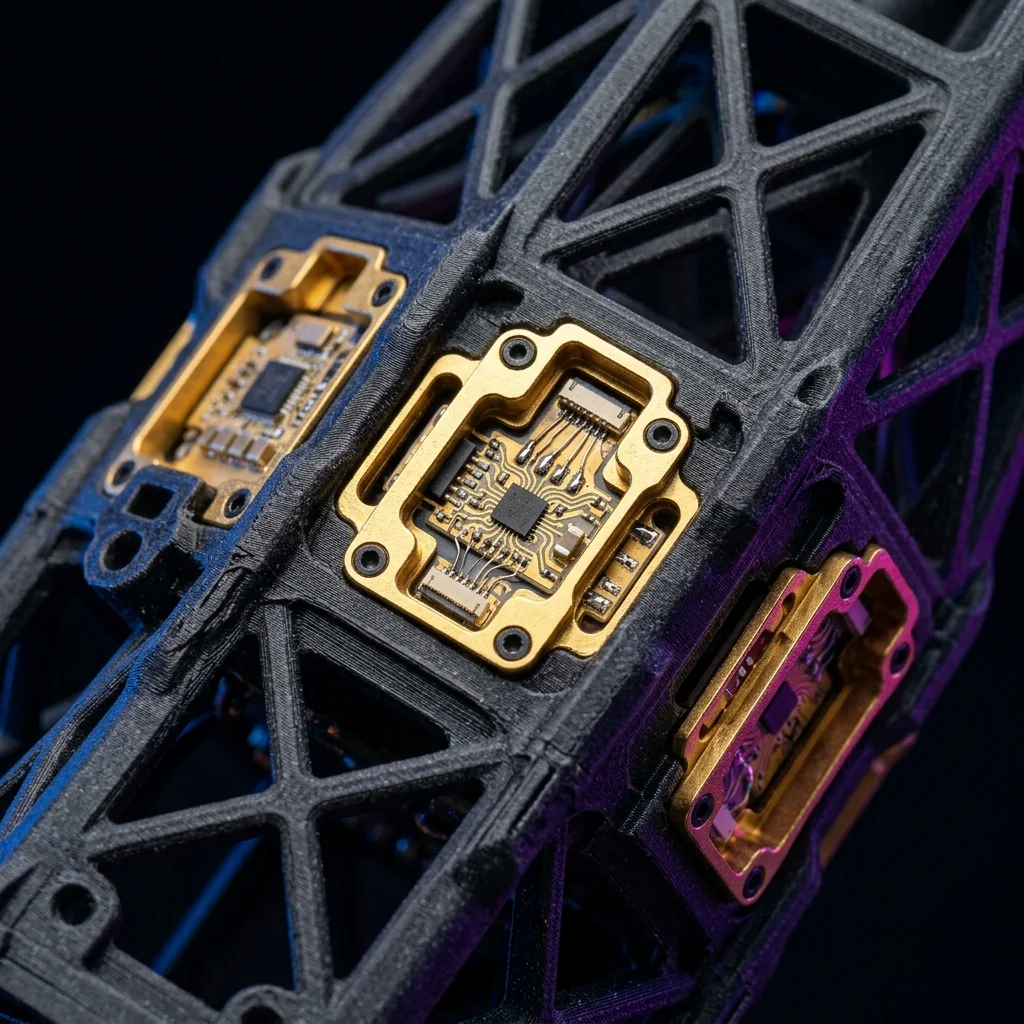
Additive manufacturing is reshaping how satellites are conceived, built, and launched. By printing structural components, antennae, and even functional electronics in‑situ, space agencies and commercial operators can cut mass, shorten lead times, and unlock design geometries impossible with traditional machining. This article dives into the technical underpinnings, real‑world use cases, and the financial calculus behind 3D‑printed satellites and payloads.
Technical Advantages of Additive Manufacturing in Space
Layer‑by‑layer laser powder‑bed fusion enables lattice structures that retain stiffness while shedding up to 60% of mass. High‑resolution printing (≤30 µm) supports integrated waveguides and thermal conduits, reducing part count. In‑orbit printers can fabricate replacement brackets, mitigating single‑point failures. Pros/Cons:
- Pros: mass reduction, design freedom, rapid iteration, on‑demand spare parts.
- Cons: material certification challenges, limited high‑temperature alloys, post‑process requirements.
Innovative Payload Applications
Medical research benefits from microgravity bioreactors printed as single‑piece chambers, eliminating leaks. Robotics payloads leverage articulated joints printed with embedded conductive traces, cutting assembly time. In aerospace, 3D‑printed antenna arrays with conformal geometry improve signal gain while staying within strict volume envelopes, demonstrating cross‑domain versatility.
Cost Breakdown for a 3D‑Printed Satellite Bus
Cost Breakdown:
- Design & simulation: $120,000
- Material feedstock (AlSi10Mg powder): $45,000
- Print time (including machine amortization): $30,000
- Post‑processing (heat treat, surface finish): $25,000
- Testing & qualification: $80,000 Total:
Development Timeline and Process Steps
Step 1: Conceptual design and trade‑study of additive vs. traditional architecture. Step 2: Material selection and qualification testing in a thermal‑vacuum chamber. Step 3: CAD modeling and topology optimization for mass savings. Step 4: Print of structural components using laser powder bed fusion. Step 5: Post‑processing, inspection, and non‑destructive testing. Step 6: Integration of electronics, payloads, and final system verification. Step 7: Launch vehicle interface review and delivery.
Business ROI and Market Outlook
The payload‑mass savings translate directly into launch‑cost reductions of $10,000–$15,000 per kilogram. Faster design cycles shrink time‑to‑market by 30%, allowing operators to capture emerging orbital slots. Industry analysts forecast a CAGR of 22% for space‑qualified additive manufacturing, positioning early adopters for a competitive advantage and higher profit margins.
Frequently Asked Questions (FAQ)
Interactive Analyzer for Space Mission 3D-Printed Satellites & Payloads: Transforming Orbit
Select a profile to view detailed analysis.
The full picture
This article is one page from The Big Book of 3D Printing: 704 illustrated pages covering every technology, material and fix in one reference.
Read it on Kindle →Engineer, author of The Big Book of 3D Printing and additive manufacturing expert